
A promotional stop at a New York pop up shop became far more than a routine celebrity appearance when Ellen DeGeneres arrived to showcase her GapKids x ED collection. What began as a brand visit highlighting clothes designed to encourage girls soon turned into a playful retail takeover built on improvisation, customer interaction, and moments of surprise generosity.
The segment opened with a clear message about the purpose of the collaboration, which Ellen described as a way to inspire girls to be themselves and follow their dreams. That mission gave the visit a sincere foundation, even as the tone quickly shifted into the kind of spontaneous comedy that made the store feel less like a sales floor and more like a stage.
Ellen framed the collection as clothing with a point of view, not simply another celebrity partnership or seasonal display. The emphasis was on confidence, self-expression, and the idea that girls should feel free to imagine big futures without being boxed in by expectations.
From there, the visit pivoted into a joke about Ellen fulfilling what she called a lifelong dream of working in retail. She attached herself to an employee named Natalie, shadowing her around the store with exaggerated seriousness and treating ordinary customer service duties as if they were part of an elite professional training program.
The humor worked because Ellen approached the job with a mix of confidence and complete disregard for retail norms. Instead of quietly helping shoppers find sizes or pointing them toward racks, she transformed each interaction into a small comic scene, often leaving customers laughing before they had fully understood what was happening.
One of her first strategies was to offer shoppers orange juice and muffins, as though the store were hosting a breakfast buffet instead of selling clothes. The gesture was silly but harmless, and it immediately established her version of service as overly attentive, slightly intrusive, and determined to make customers feel both welcomed and amused.
The snack routine also gave the segment an easy rhythm, because it allowed Ellen to move through the space while creating quick exchanges with real shoppers. Rather than relying on a scripted setup, she found comedy in the awkwardness of approaching strangers with refreshments in the middle of their browsing.
The fitting room area became another major source of humor, with Ellen treating the boundary between customer privacy and helpful service as something to be comically misunderstood. She called out to shoppers, checked on them with exaggerated concern, and behaved as though every clothing decision required her immediate personal involvement.
In one exchange, she joked about pants being too long and offered an absurd solution involving oversized scissors. The gag worked as physical comedy because the idea of a celebrity casually threatening to tailor store merchandise on the spot was both ridiculous and delivered with deadpan certainty.

Her mock fashion advice became increasingly inventive as she demonstrated unusual ways to wear clothing. At one point, she styled a sweater like a dramatic cowl neck, turning a basic item into a deliberately impractical statement piece and inviting the audience to laugh at the gap between fashion confidence and actual usefulness.
The segment’s strongest running joke centered on a shopper named Robert, whose simple request for help with a size became a storewide event. Ellen turned his shopping details into public announcements, repeatedly sharing his pants size, his location in the store, where he was from, and even his relationship status.
The comedy in that bit came from escalation, as each announcement made the original interaction more unnecessarily dramatic. What might have been a quiet customer service moment became a mock broadcast, with Robert transformed into the most discussed shopper in the building.
Importantly, the tone remained playful rather than mean-spirited, because Ellen’s teasing was delivered with warmth and the customer appeared to be part of the joke rather than the target of it. The audience response, full of laughter and cheers, suggested that the humor landed as affectionate chaos rather than embarrassment.
Natalie’s presence helped anchor the retail parody, giving Ellen someone to follow, question, and gently disrupt. By positioning herself as a trainee, Ellen created a comic contrast between the professionalism expected on the floor and her own impulsive, celebrity-powered version of customer care.
That contrast carried much of the segment, because Ellen seemed eager to help while being almost comically unsuited to the quiet efficiency of actual retail work. She was enthusiastic, generous with attention, and completely unpredictable, which made the shoppers’ reactions feel fresh and unscripted.
The store itself also became part of the performance, with racks, fitting rooms, display tables, and public address style announcements all used as comic tools. Instead of presenting the pop up shop as a polished brand environment only, the segment allowed it to become lively, messy, and human.
Still, the promotional message never disappeared completely, and the GapKids x ED collection remained the reason for the visit. The clothes functioned as both merchandise and conversation starters, especially when the segment moved toward the children’s area and returned to the theme of empowerment.
That shift brought a warmer tone, as Ellen interacted with young shoppers exploring the ED GapKids section. The comedy softened into encouragement, with her complimenting the girls, celebrating their choices, and reinforcing the idea that personal style can be a way to express confidence.
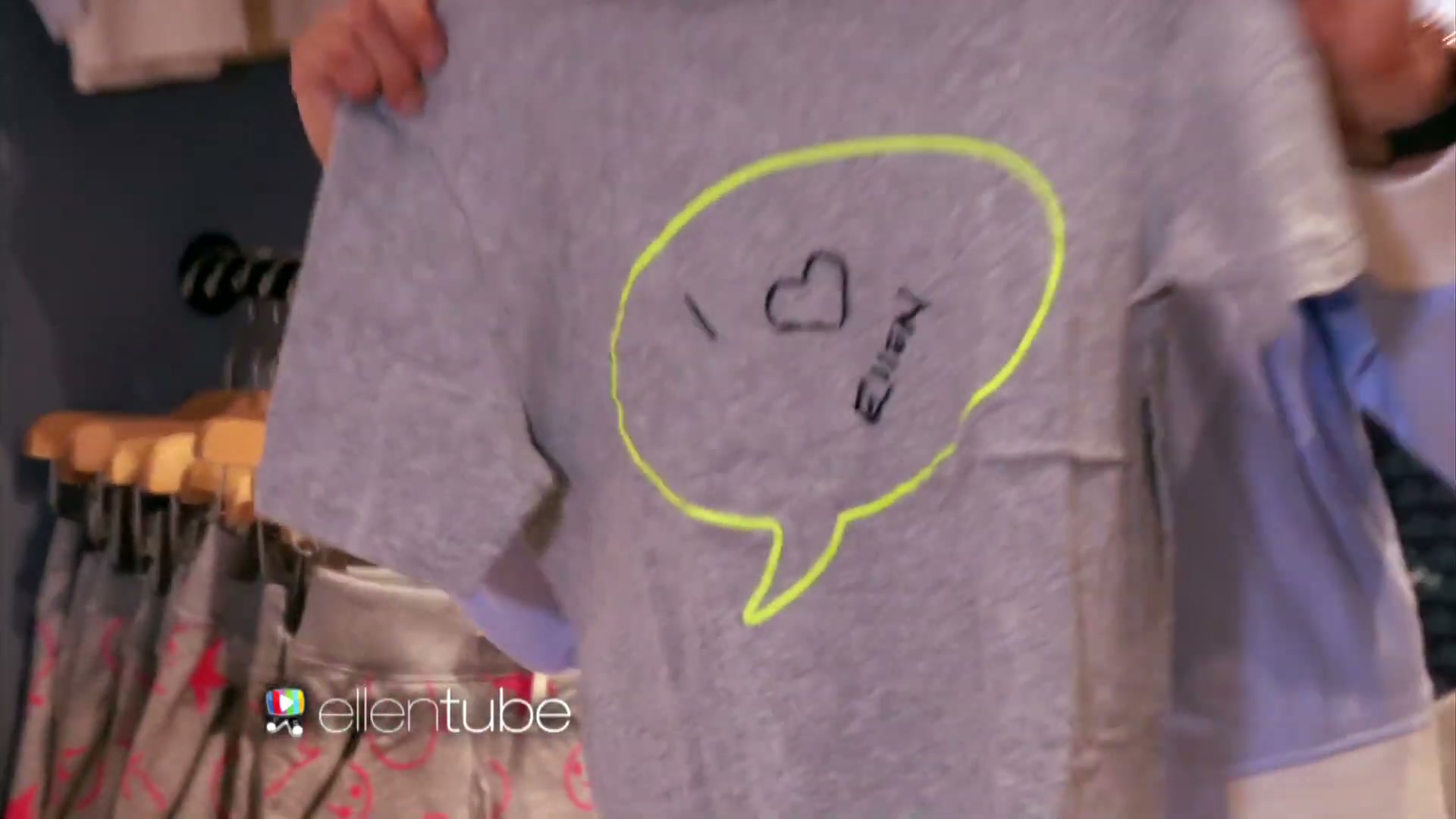
The surprise came when Ellen offered the young shoppers $300 to put toward their purchases. The moment produced delighted squeals and visible excitement, changing the energy from retail parody to a feel-good scene of unexpected generosity.
This gesture connected neatly with the broader message of the collection, because the money was not presented only as a shopping spree. It was framed within an atmosphere of encouragement, suggesting that the girls should choose items that felt true to them and enjoy the process of making creative decisions.
The shoe customization area gave that message a hands-on form. As the girls decorated and personalized shoes, the segment highlighted creativity not as an abstract slogan but as something practical, playful, and immediately visible.
Ellen’s interactions with the children were gentler than her exchanges with adult shoppers, but they still carried her familiar comic timing. She balanced encouragement with light humor, allowing the young shoppers to remain the focus while keeping the segment entertaining for the studio audience.
The audience response throughout the piece helped shape its momentum. Laughter followed the stranger moments on the sales floor, while cheers and delighted reactions greeted the giveaway, creating a progression from absurdity to warmth.
As a piece of branded entertainment, the visit succeeded by avoiding the feel of a straightforward advertisement. The collection was promoted clearly, but the segment’s appeal came from watching a familiar comic personality collide with everyday retail situations and turn them into small improvised scenes.
That balance is what made the takeover effective. Viewers received the message that the clothing line supported confidence and self-expression, but they also got a fast-moving comedy bit filled with real reactions, unpredictable exchanges, and a clear sense of fun.
The retail setting gave Ellen a structure, but her performance depended on spontaneity. Whether offering breakfast foods, loudly assisting a shopper, joking about alterations, or inventing new ways to style clothing, she kept the pace loose enough for surprises while maintaining control of the overall tone.
The result was a segment that blended promotion, sketch comedy, and sincere outreach without letting any one element dominate for too long. It moved from brand introduction to workplace parody to customer interaction to generosity, creating a complete arc within a simple store visit.
By the end, the pop up shop had become a temporary playground where shoppers, employees, children, and the audience all participated in the joke. The final impression was not just of a clothing line being advertised, but of a retail space briefly transformed into a cheerful showcase for humor, confidence, and kindness.