
Dustin Tavella’s 2021 America’s Got Talent run stood out because it treated magic less as a display of impossible feats and more as a vehicle for personal meaning. Across the compiled performances, his act repeatedly fused mentalism, audience participation, and family-centered storytelling into routines designed to surprise viewers while making them feel personally connected to the outcome.
From his first appearance, Tavella positioned himself differently from many stage magicians who rely on spectacle, danger, or rapid-fire visual tricks. He arrived with his wife and young son, introducing the audience not only to his profession but to the story that would define his season: the adoption of his son Xander and the belief that one decision can change a life.
That audition became the foundation for everything that followed because it made the emotional stakes clear before the magic fully began. Rather than simply asking the judges to pick cards or numbers, he framed each choice as part of a larger reflection on timing, kindness, and the hidden ways people affect one another.
The structure of the routine depended on familiar tools of interactive magic, including photographs, written words, calendar dates, names, and apparently random selections. What elevated the presentation was the way those elements gradually aligned with his family’s adoption story, creating a reveal that felt less like a puzzle solution and more like an emotional payoff.
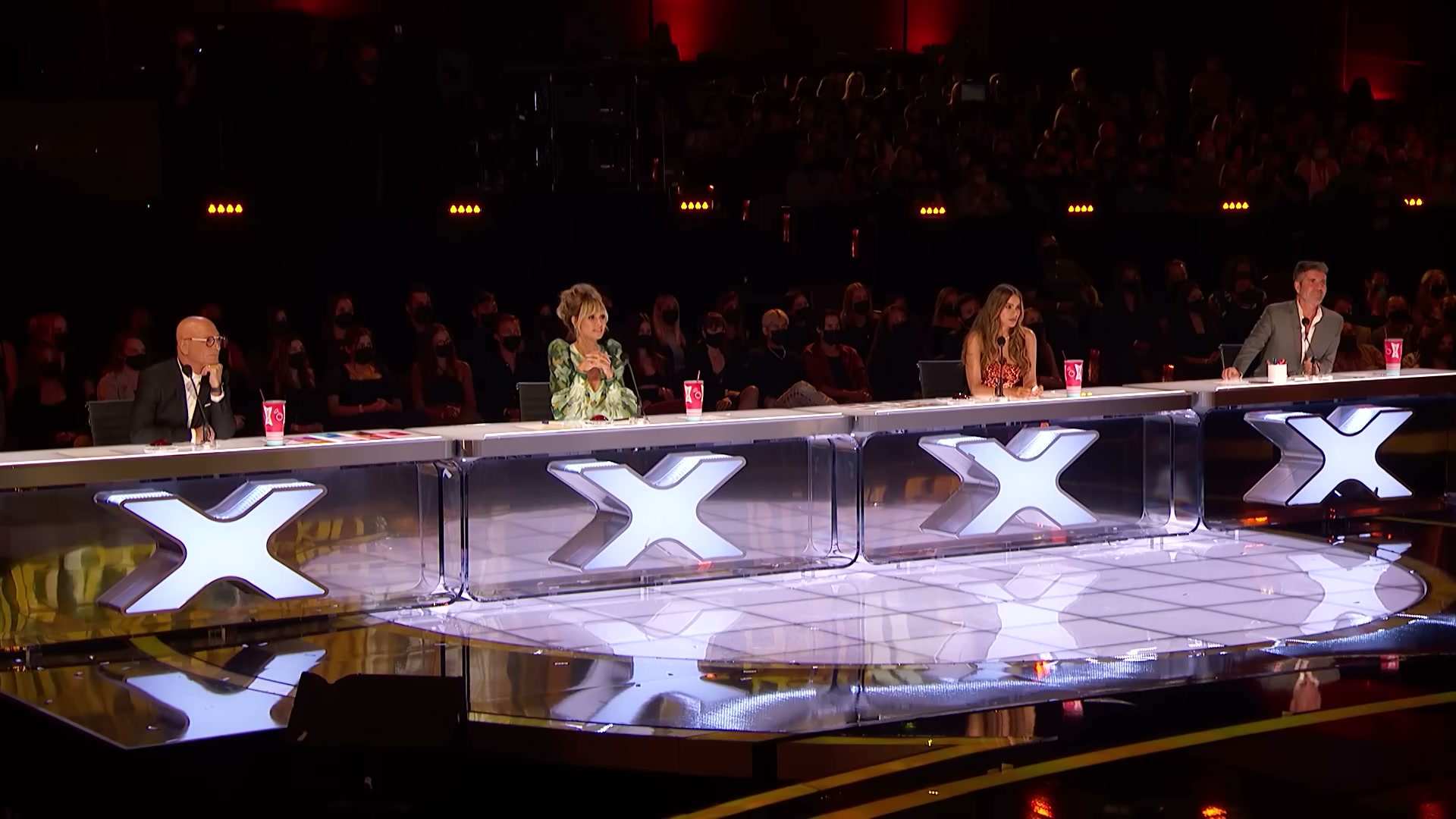
Host Terry Crews and the judges were not passive observers in the act, and that participation helped sell the sense of unpredictability. Their choices appeared to guide the routine in real time, giving the audience the impression that the final message was being discovered rather than merely performed.
The emotional reveal in the audition connected individual decisions to the broader idea that helping one person can alter the course of many lives. By tying the mechanics of the trick to the story of becoming a father, Tavella made the performance feel intimate without abandoning the structure expected from a polished magic act.
The judges’ reactions reflected that dual appeal, with their surprise at the reveals matched by visible warmth toward the story behind them. Their response suggested that the performance succeeded not only because it was technically intriguing but because it gave the audience a clear reason to care about each moment.
As the competition moved into the live rounds, Tavella faced the challenge of proving that the audition was not a one-time emotional breakthrough. His quarterfinal and semifinal performances expanded the same core formula, using audience involvement and carefully staged choices to explore themes of connection, encouragement, and the lasting impact of small acts.
These later routines showed both the strengths and the risks of his approach. When the emotional storytelling landed, the magic felt unusually personal and memorable, but the style also depended heavily on sincerity, pacing, and the viewer’s willingness to embrace sentiment as part of the illusion.
Tavella’s live-round work continued to blur the line between close-up mentalism and theatrical storytelling. Even on a large television stage, he often built routines around objects and decisions that felt personal in scale, turning simple selections into symbols of memory, gratitude, or shared experience.
That intimacy was important because America’s Got Talent is a variety show where performers must communicate quickly to a broad audience. Tavella’s routines were easy to follow emotionally, even when the mechanics remained mysterious, which made them accessible to viewers who might not usually pay close attention to the technical language of magic.
The compilation also highlights how carefully he used pacing to build tension. He tended to begin with casual conversation and gentle humor, then layered in choices and callbacks until the final reveal tied together details that had seemed separate only moments earlier.
In the semifinals and finals, the performances became more polished and more openly designed around his public identity as the heartfelt magician of the season. The messages grew broader, moving beyond his own family story toward ideas about love, kindness, human connection, and the unseen influence people can have on strangers.
That broader emotional frame helped explain why his act resonated within the competition’s format. Viewers were not just watching to see whether he could fool them; they were watching to see how the final reveal would transform an ordinary choice into a statement about relationships or purpose.
The final performance carried the weight of that established identity, and it needed to confirm that his style could sustain a championship case. By then, audiences understood the pattern: personal setup, participatory choices, moments of apparent randomness, and a closing reveal that converted the trick into a message.
This predictability could have weakened the suspense, but it also created a recognizable artistic signature. Tavella was not trying to reinvent himself every round; he was refining a lane in which magic functioned as a form of motivational storytelling.
The judges’ continuing support showed how effectively that lane fit the season’s emotional arc. Their praise emphasized not only astonishment but also authenticity, suggesting that they saw his warmth and family-centered perspective as central to his appeal.

Still, a balanced view of the performances recognizes that viewers may respond differently to this style of magic. Those who prefer pure sleight of hand, large-scale illusions, or a sharper theatrical edge might find the emotional framing heavy, while others may see that same sincerity as the reason the routines work.
What the compilation makes clear is that Tavella understood the television stage he was on. A successful America’s Got Talent act must register in a theater, through a camera, and in short edited segments, and his combination of clean visuals, simple emotional themes, and judge participation translated well across all three.
His victory also reflects the show’s long-standing affection for performers who offer more than technical proficiency. AGT often rewards acts that create a narrative audiences can follow over weeks, and Tavella’s journey from adoptive father sharing a family story to feel-good champion gave the season a coherent emotional through line.
The later performance with former winner Mat Franco added another layer to that framing. It placed Tavella within the show’s history of successful magicians while also underscoring the distinctiveness of his approach, which leaned more into intimate emotional connection than flashy showmanship.
That appearance after his win served almost like a confirmation of his new status. He was no longer only a contestant proving himself round by round, but a recognized AGT champion whose style had become familiar to the audience.
Across the full compilation, the most compelling element is the consistency between his public persona and his performance design. The routines return again and again to the idea that people are shaped by love, timing, generosity, and family, and the magic is built to make those abstract ideas feel concrete.
The adoption story that launched his audition remains the emotional anchor of the journey. Even when later routines move into broader themes, the audience remembers that the act began with a real family experience, which gives the subsequent messages a sense of personal credibility.
In that sense, Tavella’s AGT run is less about one spectacular trick than about a sustained performance philosophy. He used illusion to make invisible connections visible, presenting magic as a way to dramatize the moments when people choose to care for one another.
The result is a season-long arc that feels carefully crafted for both the stage and the heart. Whether viewers are most impressed by the reveals, the storytelling, or the warmth of the presentation, the compilation shows why his blend of craft and emotional resonance carried him all the way to the win.