
A horror-themed magic act transformed the America’s Got Talent stage into a scene of theatrical dread, replacing the usual sparkle of illusion with silence, shadows, and fear. From the first moments, the performance made clear that its goal was not simply to fool the eye, but to unsettle everyone watching.
The act opened with a burst of fire, giving the entrance the feeling of a supernatural apparition rather than a standard stage arrival. Flames framed the performer as she appeared with a still, haunted presence, immediately setting a tone closer to a horror film than a variety show.
That opening image mattered because it established danger before any traditional trick had even begun. Instead of asking the audience to admire a polished illusion, the performance invited them into a tense atmosphere where every movement felt unpredictable.
The performer’s silent character became the center of the act, using stillness and slow gestures to create discomfort. Her expressionless stare and deliberate body language gave the routine a chilling rhythm, allowing suspense to build even during moments when very little seemed to be happening.
This approach separated the act from conventional magic, where charm and showmanship often soften the mystery. Here, the mystery was sharpened by restraint, and the lack of explanation made the performance feel stranger and more threatening.
The judges were not left as passive observers, which helped raise the emotional stakes. Mel B became a focal point of the routine, and the performer’s attention toward her turned the judging panel into part of the story.
That interaction gave the act a personal edge, because the fear was no longer abstract or safely contained onstage. As Mel B reacted with visible unease, the audience could see the intended effect of the performance in real time.
Judge involvement can be risky in a magic act, especially when the tone is this intense. In this case, it worked because the routine depended less on comedy or friendliness and more on the sensation that boundaries were being crossed.
The staging then expanded beyond close interaction into a larger physical spectacle. The performer appeared to scale a wall, a striking image that shifted the act from psychological unease into full visual shock.
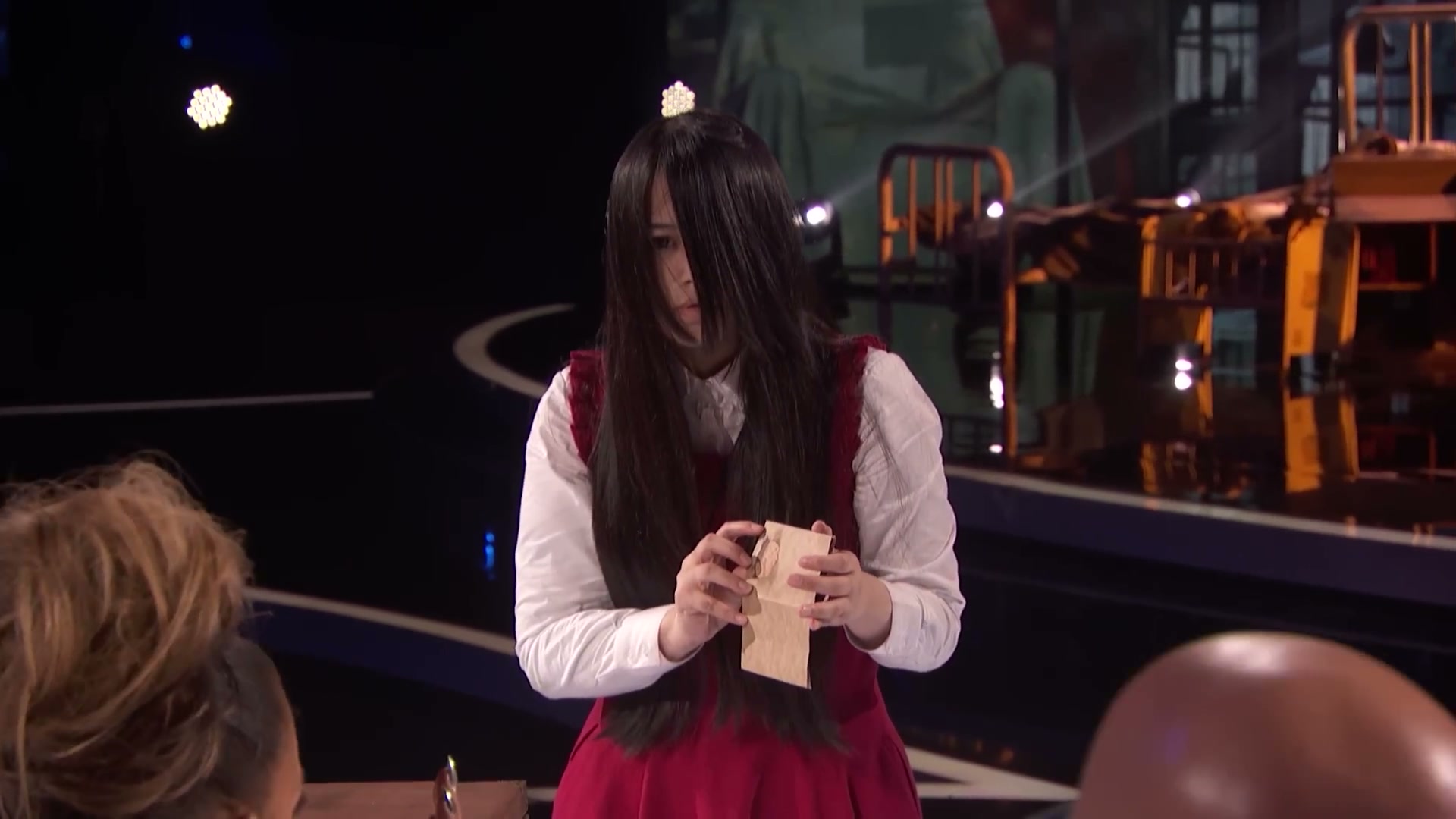
The wall-climbing sequence gave the performance a sudden burst of motion after its slower opening. That contrast made the moment feel more startling, as though the quiet figure from the beginning had become something impossible to contain.
It also broadened the routine’s scale in an important way. What began as a creepy character piece became a stage-wide event, using height, movement, and spatial surprise to keep the audience off balance.
The strongest element of the act was its commitment to atmosphere. Every choice, from the fiery entrance to the unnerving silence, served the same central idea of creating a nightmare that appeared to be unfolding live.
That consistency helped make the routine memorable even for viewers who might not focus on the mechanics of the illusions. The performance sold fear as effectively as it sold magic, and the emotional response became part of the spectacle.
The climax pushed that idea further with the appearance of multiple look-alikes. By multiplying the performer’s image, the act created a disturbing sense that the character had spread beyond normal limits.
This finale was effective because it turned a single unsettling figure into a crowd of identical presences. The visual suggested loss of control, as if the act had escaped the boundaries of a planned performance and become something stranger.
The audience response reflected that mix of fascination and alarm. There were moments of shock, nervous laughter, and visible discomfort, all of which showed how carefully the routine manipulated tension.
The judges also appeared caught between admiration and unease. Their reactions suggested that the performance succeeded not only as a magic act, but as a piece of immersive horror theater.
What made the act especially compelling was that it did not rely on constant speed or nonstop effects. It trusted silence, pacing, and anticipation, allowing the crowd to imagine danger before each major reveal.

That patience is difficult to maintain on a competition stage, where performers often try to impress as quickly as possible. Here, the slower build made the later shocks feel larger, because the audience had been trained to wait anxiously.
The use of fire, physical movement, and doubles showed a strong understanding of escalation. Each new element raised the stakes, moving from atmosphere to intimidation, then to impossible movement, and finally to unsettling multiplication.
The performance also benefited from a clear identity. It was not trying to be elegant, funny, or traditionally glamorous, and that confidence made its horror style feel deliberate rather than gimmicky.
At the same time, the act’s intensity could divide viewers. Some may find the disturbing imagery thrilling and original, while others may prefer magic that feels lighter, warmer, or more openly playful.
That divide is part of what makes the performance notable. It proves that a talent show act can be memorable not by pleasing everyone in the same way, but by creating a strong reaction that people continue discussing afterward.
The routine’s theatrical design also showed how magic can overlap with performance art. The illusions were important, but the character, staging, music, and reactions all worked together to form a complete experience.
In that sense, the act was less about isolated tricks and more about a sustained mood. The audience was not merely watching a magician perform; it was being pulled into a staged haunting.
The finale with the look-alikes provided the clearest example of that ambition. It left the stage feeling crowded by one repeated nightmare figure, turning a familiar talent show setting into something eerie and unstable.
By the end, the performance had delivered more than a sequence of shocks. It had built a coherent horror world, used the judges as part of the tension, and left the audience balancing fear with fascination.
That is why the act stood out within the competition format. It embraced a bold identity, escalated with discipline, and showed that magic can be most powerful when it makes viewers feel unsure of what might happen next.