
A light talk show visit became a warm portrait of a father realizing that childhood does not pause for anyone, even a movie star known for turning discomfort into jokes. Adam Sandler’s appearance on The Ellen Show moved easily from grooming, movie promotion, and award show stories into a more personal conversation about his daughters growing up in front of him.
The exchange began with the kind of teasing that has long defined daytime celebrity interviews, as Ellen DeGeneres complimented Sandler’s beard and mustache while he immediately undercut the praise. He joked that although the look might work for a film or a red carpet, it was less popular at home because his wife did not enjoy the feel of the facial hair.
That opening set the tone for the rest of the conversation, where almost every compliment became an invitation for Sandler to make himself the punchline. When the discussion turned to his appearance in Murder Mystery, including a polished tuxedo look connected to the film, he leaned into the contrast between Hollywood styling and his own deliberately unglamorous comic persona.
Jennifer Aniston’s approval of the look came up as part of the playful banter, giving the segment a familiar promotional rhythm before it shifted into something more intimate. Sandler did not treat the movie talk as separate from the family stories, because his public image now often blends his career, his marriage, and his role as a father.
The emotional center of the interview arrived when Ellen asked about his daughters, Sadie and Sunny, who were still young but clearly entering new stages of independence. Sandler explained that his older daughter, Sadie, was preparing for her bat mitzvah, a milestone that made him proud while also forcing him to notice how quickly she was growing up.
His humor became especially relatable when he described overhearing his daughter and her friends talk about boys, a normal preteen topic that nevertheless made him feel suddenly nervous. Rather than presenting himself as stern or controlling, he framed the moment through exaggerated anxiety, admitting that conversations he might once have found harmless now made him feel jumpy as a dad.
The biggest laugh came when he described seeing boys interact with his daughter and realizing that even eye contact could rattle him. He joked about boys “locking eyes” with her, and Ellen quickly caught the awkward phrasing, pushing the moment just far enough for Sandler to recognize the absurdity and join the audience in laughing at himself.
That quick recovery was the key to why the bit landed warmly rather than harshly, because Sandler did not make the story about blaming his daughter or villainizing other children. The joke was aimed at his own panic, at the universal parental shock of watching a child become more socially aware, more independent, and less easily protected from ordinary growing up.
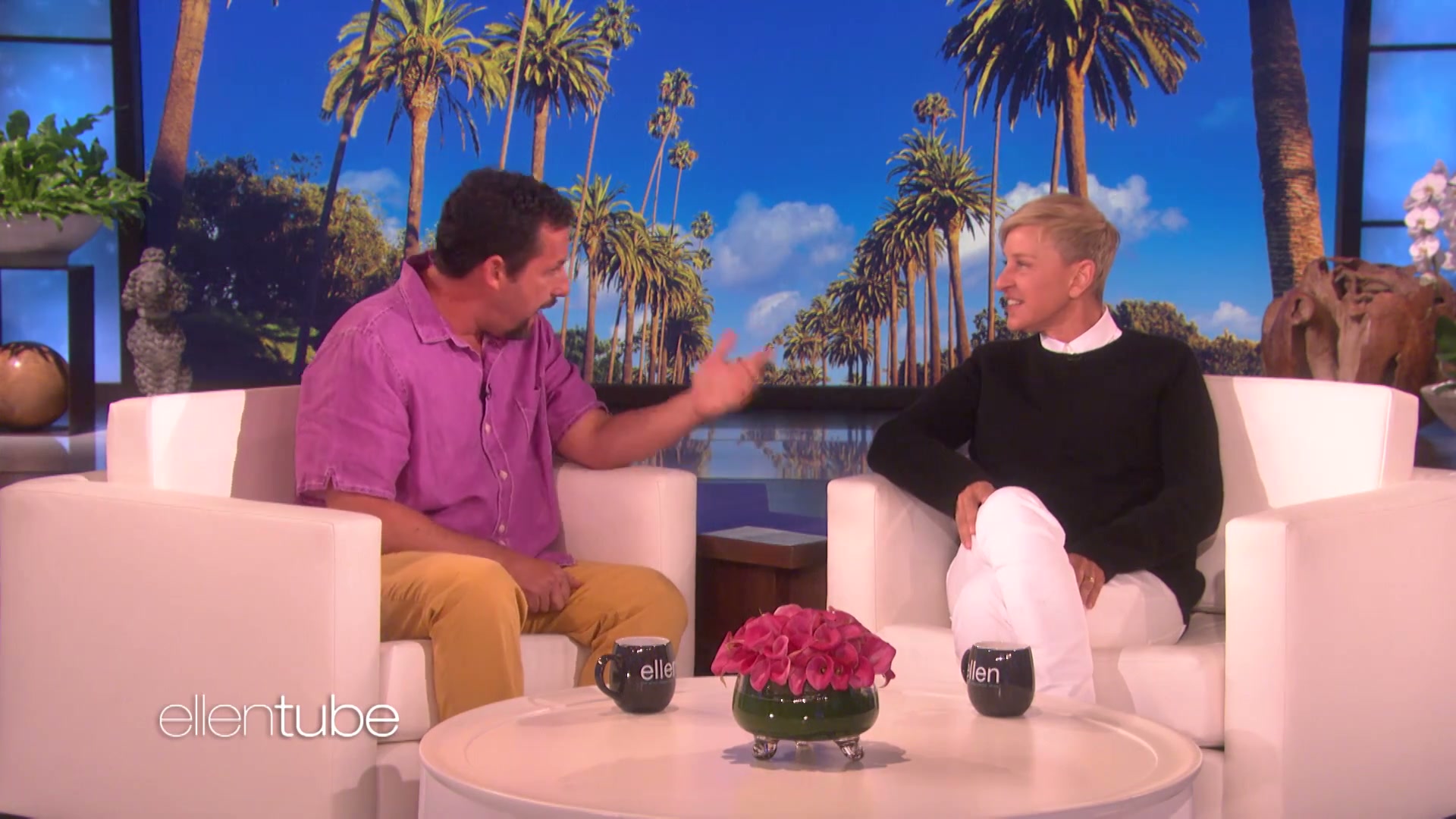
The audience response reflected that balance, with laughter that sounded affectionate rather than uncomfortable. Sandler’s physical reactions, nervous timing, and willingness to look ridiculous allowed him to talk about protective fatherhood without turning the moment heavy or moralizing.
He also spoke about his younger daughter, Sunny, in a story from the Kids’ Choice Awards that showed a different version of the same family dynamic. Sandler said he initially declined the chance to be slimed, a messy honor that many children would consider thrilling, but changed his mind after sensing his daughter’s disappointment.
The detail made the story feel less like a celebrity anecdote and more like a familiar parenting calculation. A father may not want to be drenched in green slime on television, but if his child thinks the moment would be amazing, the answer can quickly change from no to yes.
In telling the story, Sandler again chose self-mockery over self-importance, presenting the decision as proof that his daughters can still persuade him when it matters to them. The audience seemed to enjoy the image of a famous comedian agreeing to public embarrassment not for publicity, but because a 10-year-old’s reaction mattered more.
The segment also touched on a major career milestone, his upcoming return to Saturday Night Live as host. For Sandler, that appearance carried special weight because the show was central to his early career, and returning to that stage meant revisiting the place where many viewers first discovered him.
Even there, the interview did not become overly sentimental, because Sandler kept the mood loose and funny. Still, the mention of Saturday Night Live gave the conversation a broader arc, linking the young comic who once built a career on goofy songs and oddball characters to the father now joking about bat mitzvah planning and preteen crushes.
What made the appearance effective was not any single joke, but the way Sandler connected career promotion with everyday family vulnerability. He could discuss a movie, a beard, an awards show stunt, and a historic hosting gig, yet the most memorable material came from the small domestic details that made him sound like any parent caught off guard by change.
The interview also showed how his public comedy has softened with time without losing its instinct for embarrassment. Instead of relying only on loud absurdity, he found humor in the gap between how prepared parents think they are and how unprepared they feel when their children suddenly seem older.

Ellen’s role was important because she kept the conversation moving while knowing when to press a joke. By teasing his phrasing and reactions, she encouraged him to heighten the comedy, but she also left room for the affection underneath the nervous-dad routine.
That affection was evident whenever Sandler spoke about his daughters, even while exaggerating his fears for laughs. His stories suggested a parent who knows his children are becoming their own people, and who is trying to respond with humor instead of panic.
The bat mitzvah reference added a meaningful layer because it marked a real transition, not just a comic setup. For Sadie, it represented a coming-of-age moment, while for her father it represented the realization that the little-girl stage he knew so well was giving way to something new.
Sunny’s slime story offered a lighter but equally revealing example of how his family shapes his public choices. The decision to participate in a silly awards show spectacle became less about the event itself and more about the private approval of a child watching her father decide whether to play along.
Together, the two daughter stories formed a portrait of a celebrity parent navigating ordinary emotions in extraordinary settings. Whether the issue was boys at a bat mitzvah age or green slime at a televised ceremony, Sandler described himself as a father trying to keep up.
That is why the conversation resonated beyond fans of his films or his Saturday Night Live years. The humor came from a recognizable truth: parents can celebrate their children’s growth while still feeling startled by every sign that childhood is moving forward.
By the end of the segment, Sandler had promoted his projects, joked about his appearance, revisited a major career landmark, and delivered the kind of family material that made the room respond with warmth. The lasting impression was of a performer comfortable enough to be silly, anxious, proud, and sentimental all at once.
His reaction to his daughter growing up was funny because it was exaggerated, but it was also touching because it was honest. In a few minutes of talk show banter, he turned a standard celebrity interview into a reminder that even famous parents are not fully ready when their children start looking toward the wider world.