
A simple studio game can reveal a great deal about comic timing, especially when the players care less about winning honestly than about finding the funniest possible way to survive. In this segment, a quick round of “5 Second Rule” becomes a lively contest of suspicion, loopholes, mock outrage, and escalating absurdity.
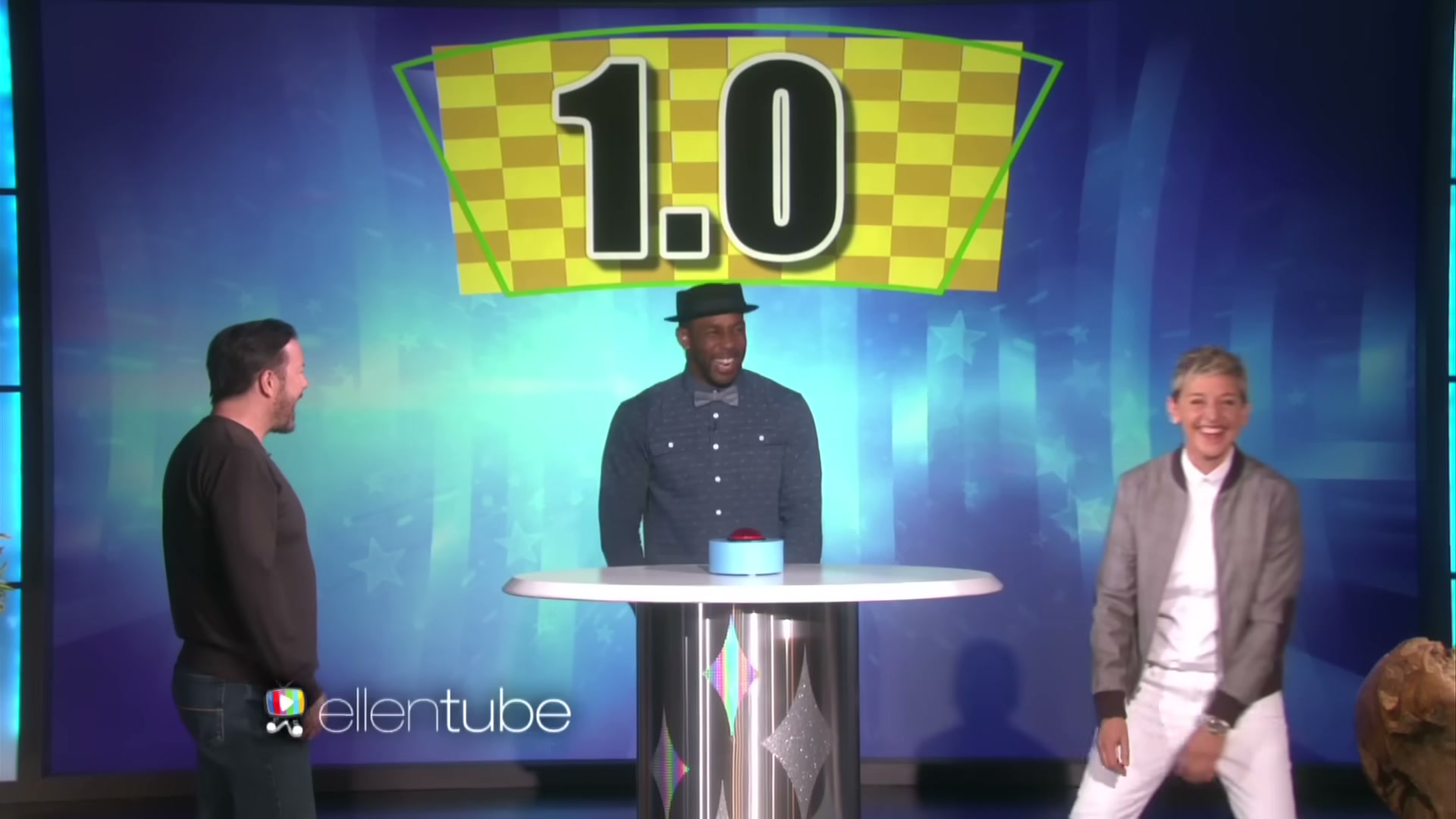
The premise is clean enough for anyone to understand immediately, which is part of why the bit works so well. A host explains that each player will receive a category, must name three items in five seconds, and then hit the buzzer before time runs out.
From the beginning, however, the guest refuses to accept the game as a neutral system. Before any real question is answered, he asks where the clock is, demands proof that the timing is fair, and turns a basic party game into a miniature courtroom drama.
That early challenge sets the tone for the whole exchange. Instead of presenting the rules as fixed and respected, the segment becomes a negotiation over what counts, who gets to decide, and how far a player can stretch language before the room revolts.
The first major stumble comes when the host is asked to name three shows she has binge-watched. She quickly offers “Game of Thrones” but cannot smoothly produce two more, leaving an opening for her opponent to pounce on the failure.
His reaction is not just to celebrate her missing the point, but to accuse the answer of sounding suspiciously performative. The joke lands because the category should be easy for a television personality, yet the pressure of five seconds makes even an obvious prompt suddenly feel impossible.
That moment also reveals the true engine of the segment. The humor does not depend on deep knowledge or clever trivia, but on watching confident performers become flustered under artificial pressure and then defend themselves with more confidence than evidence.
When the guest receives a category involving female body parts, he immediately exposes how elastic the game can become. Instead of offering expected answers, he says “two eyes and a nose,” treating the request as a technical puzzle rather than a social prompt.
The studio response makes clear that the answer is ridiculous and somehow difficult to disqualify at the same time. That tension is the sweet spot of the scene, because he has not really followed the spirit of the category, yet he has created just enough logical cover to argue his case.
The host pushes back, but the pushback only gives the guest more room to perform indignation. He behaves as if he has been wronged by an unfair system, even though the entire room understands that he is gleefully exploiting the rules.

This pattern repeats as the game moves through music, movies, clothing, food, and excuses. Each category becomes less a test of memory than an invitation to find shortcuts, repeat words, exaggerate definitions, or argue that a borderline answer deserves full credit.
One of the best examples comes with the request for Tom Hanks movies. Rather than producing three separate titles in the expected sense, the guest names successive “Toy Story” films, using a franchise as a loophole and daring anyone to say those do not count.
The answer is funny because it is both lazy and valid enough to create debate. It also fits the guest’s persona in the game, which is that of a man who believes every rule is poorly written unless it benefits him directly.
The host is not merely a referee in these moments, though. She also joins the nonsense, answering in ways that reveal how the time limit scrambles judgment and makes ordinary categories feel like traps.
When asked to name undergarments, for instance, she includes socks, which invites immediate challenge. The choice is absurd in the ordinary sense, but under the pressure of the buzzer it becomes exactly the sort of answer a person blurts out and then tries to defend.
That willingness to look silly is essential to the segment’s rhythm. If one performer were only cheating and the other only enforcing rules, the bit would become repetitive, but both participants show a readiness to abandon dignity for a laugh.
The game also benefits from the presence of the questioner and timekeeper, who provides a steady structure while the players create chaos around it. His role is not to dominate the scene, but to keep the prompts moving and give the performers fresh material before any one argument grows stale.
Because the categories are so ordinary, the comedy remains accessible. Viewers do not need specialized knowledge to understand why three dog breeds, three Michael Jackson songs, or three chocolate-covered things should be answerable within five seconds.
The fun comes from seeing how quickly that simplicity collapses. A category that would be easy in conversation becomes strangely difficult when the clock is running, the audience is laughing, and an opponent is waiting to mock any hesitation.
The guest’s skepticism about timing also continues to echo throughout the game. Even when he answers quickly, he behaves as though the entire production might be conspiring against him, turning competitiveness into a comic character trait.
That mock paranoia gives his rule-bending an additional edge. He is not just trying to win; he is acting as though winning requires constant vigilance against invisible corruption, faulty clocks, and biased judgment.
The host counters with a different kind of authority. She can declare answers unacceptable, tease him for stretching the rules, and at one point try to end the segment by announcing herself as the winner.
That declaration is funny because it feels less like an official result than another move in the same chaotic game. After so much arguing over categories and technicalities, simply deciding victory by announcement seems perfectly in keeping with the segment’s comic logic.
Yet the guest does not let the ending arrive too neatly. He pushes for one more round, receives a cocktail category, and manages to name three drinks successfully, giving himself a final burst of credibility after so much deliberate mischief.
The audience’s laughter throughout depends heavily on the chemistry between the two players. Their bickering feels playful rather than hostile, and each accusation of cheating or unfairness is framed as part of the shared performance.
The segment also shows how effective a short-form game can be when the rules are clear but the boundaries are loose. The audience understands the challenge immediately, so attention can shift from mechanics to personality, improvisation, and reaction.
In that sense, “5 Second Rule” functions less as a contest than as a comedy framework. The buzzer creates urgency, the categories provide direction, and the performers supply the disorder that makes the bit memorable.
What stands out most is the balance between structure and sabotage. The game needs real rules to create stakes, but it also needs players willing to break, bend, question, and mock those rules at every opportunity.
By the end, the actual score matters far less than the pattern of escalation. A failed binge-watching answer leads to teasing, a technical answer leads to debate, a franchise answer leads to loophole logic, and a final cocktail answer allows the chaos to end on a note of triumph.
The segment succeeds because it understands that comedy often lives in the space between what is technically true and what is socially acceptable. “Two eyes and a nose” may be a cheeky answer, socks may be a dubious undergarment, and naming sequels may be strategic laziness, but each response keeps the room alive.
As a result, the game becomes a compact showcase of fast thinking, comic defensiveness, and mutual provocation. What begins as a five-second challenge turns into a reminder that the funniest contestants are not always the ones who know the answers, but the ones who know how to argue for them.