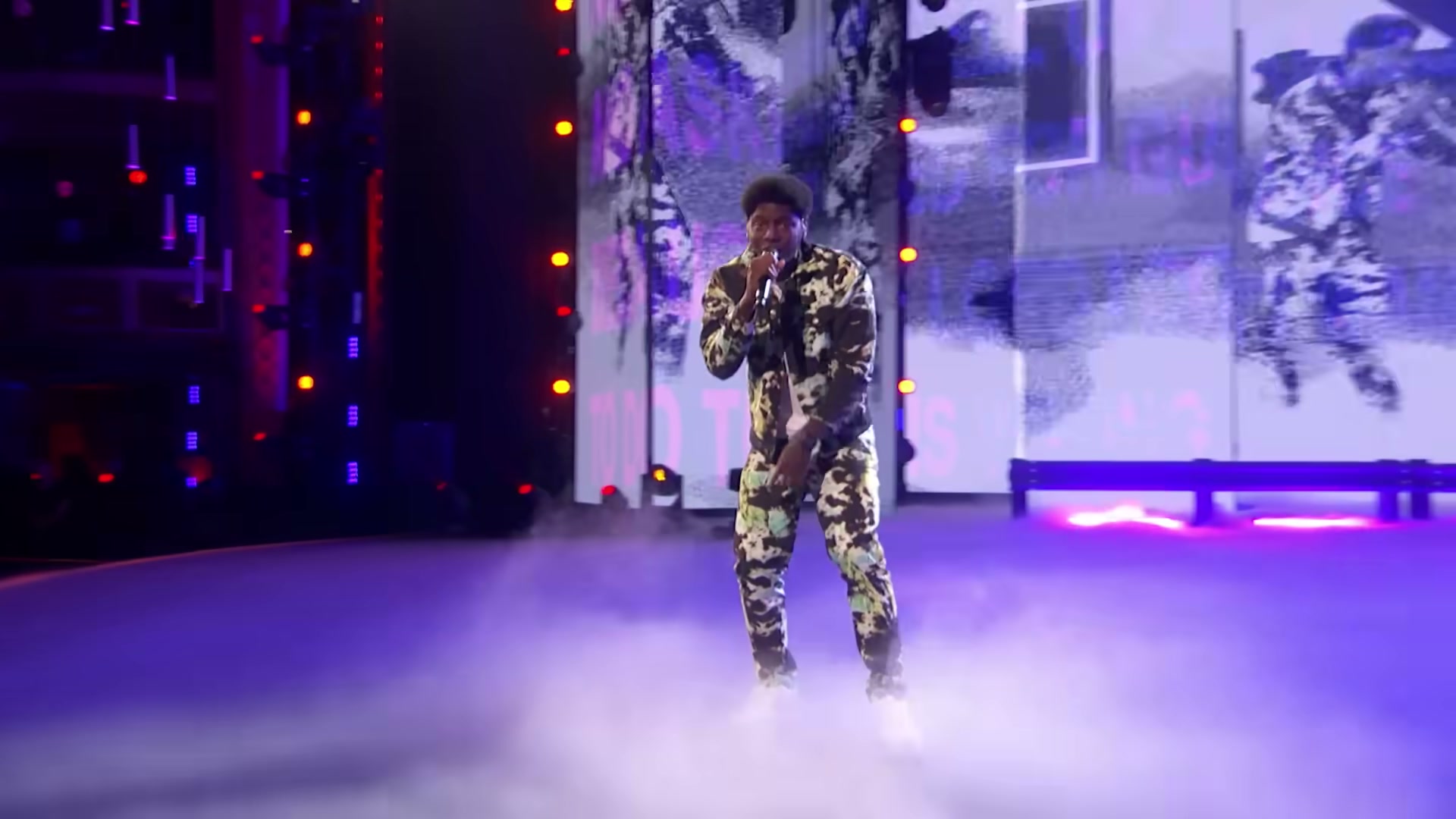
A return to the America’s Got Talent stage can carry a different kind of weight than a first audition, because expectations arrive before the first note. Joseph Allen stepped back into that spotlight with “Mama,” an original song built around family, fear, ambition, and the fragile hope that a dream might finally be coming true.
The performance was not designed as a detached showcase of technique, even though it gave him room to sing, speak, and rap with confidence. Its central purpose was emotional storytelling, using the national stage as a place to thank the people who helped him reach it and to explain what the moment meant.
From the opening lines, Allen places his mother at the heart of the song. He imagines her watching with tears in her eyes, proud and overwhelmed as he stands before an audience that represents both opportunity and pressure.
That image gives the performance its intimate scale, even inside a large televised competition. Rather than treating the stage as only a contest platform, he turns it into a family conversation, speaking directly to the people who raised him and believed in him.
The song’s title, “Mama,” signals its emotional anchor, but the lyrics reach beyond a simple dedication. Allen uses his mother’s support as a way to explore the fear that can come with chasing something bigger than oneself.
One of the most vivid ideas in the performance is his description of feeling as if he is standing on a cliff. That image captures the uncertain space between wanting to leap toward a dream and fearing what might happen if the fall is too steep.
Instead of pretending that ambition is easy, he admits that pressure has been part of the journey. The song suggests that the brighter the opportunity becomes, the more frightening it can feel, because success and failure both become visible to everyone watching.
His mother’s advice becomes the turning point of the narrative. When he calls her in a moment of fear, she reminds him that pressure can shape a person rather than destroy them, giving him a reason to keep moving forward.
That message gives the song its uplifting core. Allen does not deny anxiety, but he reframes it as a sign that he is standing close to something meaningful, and that growth often arrives through uncomfortable moments.
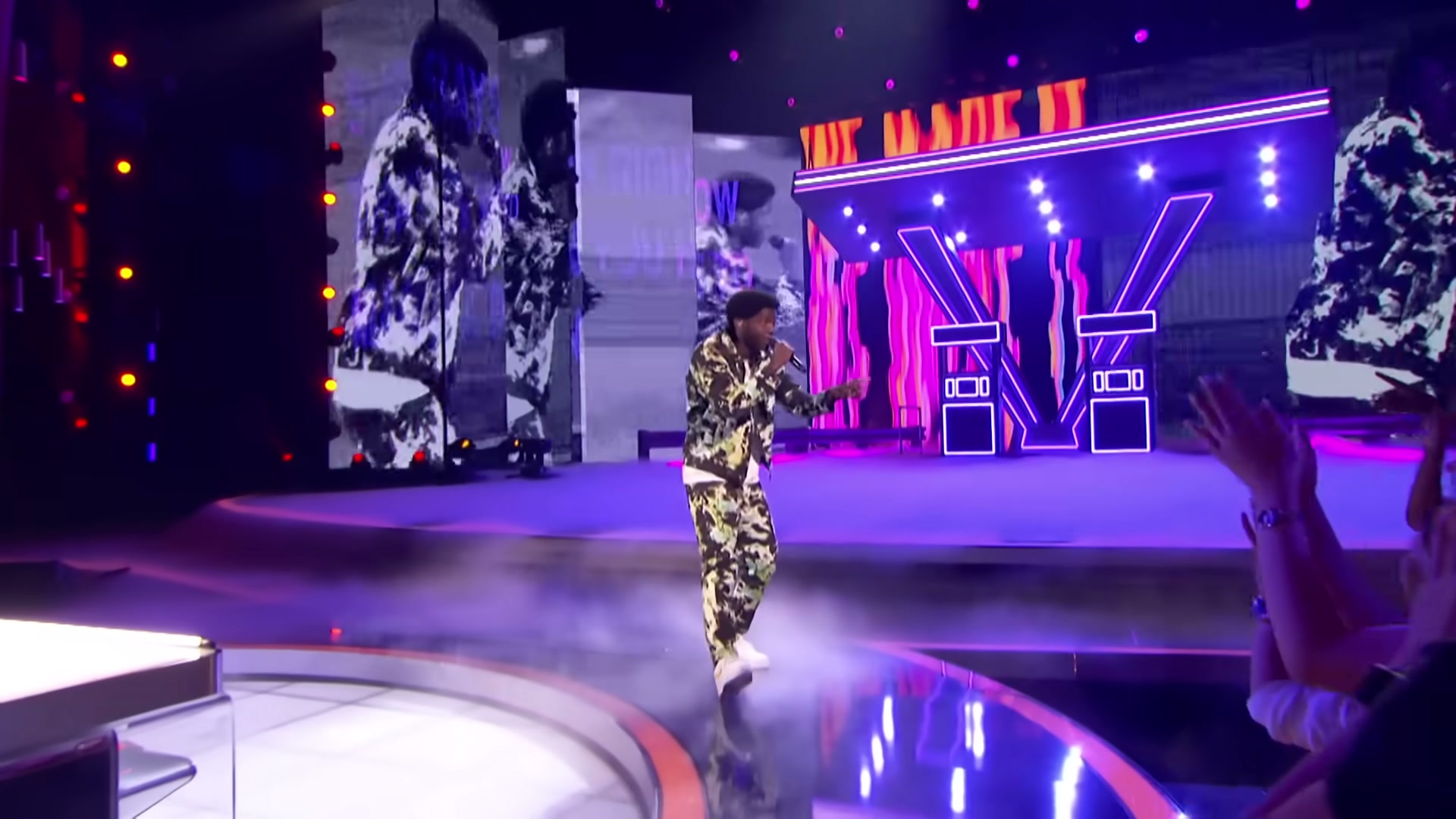
Musically, the performance blends singing with spoken word and rap-influenced phrasing. This hybrid delivery suits the lyrics, because the song feels less like a conventional ballad and more like a personal letter set to rhythm and melody.
The conversational structure helps him connect with the audience in direct terms. He is not hiding behind abstraction, and the lines feel grounded in everyday calls home, family pride, and the quiet encouragement that can make a public risk possible.
Allen also treats the America’s Got Talent stage as a symbol of arrival. Being on television is not presented merely as exposure, but as proof that years of hoping, working, and imagining have led to a once-in-a-lifetime chance.
That sense of arrival is balanced by humility. He repeatedly returns to the idea that this achievement belongs not only to him, but also to the family members who carried him emotionally before the cameras ever found him.
One of the performance’s warmest images is his mother telling others, “That’s my son.” The line is simple, but it captures the kind of pride that artists often chase as much as applause, awards, or recognition.
In that moment, Allen understands success through the eyes of a parent. The dream is not just to be seen by strangers, but to give loved ones a reason to celebrate the journey they helped make possible.
The performance also includes a birthday message for his father, widening the tribute beyond the title’s focus. That shoutout adds another layer of sincerity, reminding viewers that the act is rooted in a real family moment rather than a manufactured television sentiment.
By closing with love for the audience and gratitude for his family, Allen turns the song into a communal celebration. The phrase “we made it” matters because it refuses to frame the achievement as solitary.
That collective spirit is one reason the performance feels emotionally accessible. Viewers do not need to know every detail of his life to understand the desire to make family proud and to hear reassurance when fear feels louder than confidence.
The song also reflects a broader theme common to talent competitions. Contestants often stand between private dreams and public judgment, and Allen’s performance acknowledges how vulnerable that position can be.

What makes his return notable is the way he leans into that vulnerability rather than smoothing it away. He lets the audience hear the tension between excitement and doubt, then uses the song’s momentum to move toward courage.
His delivery carries the energy of someone aware that the moment could change his life. At the same time, he grounds that energy in gratitude, which keeps the performance from becoming only a declaration of personal ambition.
The balance between confidence and tenderness is important. Allen wants to show that he belongs on the stage, but he also wants to show that belonging there means something because of the people connected to him.
As an original song, “Mama” also serves as a statement of identity. He is not simply interpreting someone else’s emotions, but presenting his own story in his own words, with a structure that reflects how he processes pressure and hope.
That choice gives the performance authenticity, though it also places extra responsibility on the writing. The lyrics are direct and sometimes plainly conversational, which may appeal most to viewers who value sincerity and storytelling over polish alone.
In the context of America’s Got Talent, that directness can be powerful. A stage built for spectacle can still make room for a performer who asks the audience to listen to a family story and feel the stakes behind it.
The emotional arc is clear from start to finish. Allen begins with tears, fear, and uncertainty, moves through his mother’s encouragement, and ends in a place of celebration, gratitude, and renewed belief.
That arc gives the performance a satisfying shape. It allows the audience to travel with him from the edge of doubt to the relief of standing tall in a moment he once only imagined.
The song’s message is ultimately about transforming pressure into purpose. Allen suggests that fear does not have to mean retreat, and that the people who love us can help turn a frightening leap into a defining step.
His return to the stage therefore becomes more than another performance in a competition lineup. It becomes a public thank-you, a family milestone, and a reminder that success often feels most meaningful when it can be shared.