
The audition stood out because it brought a form of performance rarely seen on a prime time talent stage. Brandon Leake arrived not with music, dance, magic, or comedy, but with spoken word poetry shaped by family, grief, and lived experience.
At 27, Leake introduced himself as an educator and youth poetry workshop leader from Stockton, California. His goal was clear from the start, as he wanted to make poetry more than a calling he practiced after work.
Before stepping fully into the performance, he explained the world that had shaped his voice. He described growing up around instability in his community while being anchored by a mother whose sacrifice and work ethic gave him a path forward.
Writing became his outlet long before it became his art. He spoke about using poetry to process anger, pain, and confusion, turning private emotion into language that could help both himself and the young people he mentored.
That background gave the audition a sense of urgency beyond the usual dream of winning a competition. Leake had recently become a father, and the stage represented a chance to build a future where creativity, family, and purpose could exist together.
The judges initially responded with curiosity when he said he would perform spoken word. The moment carried extra weight because he was being presented as the show’s first spoken word artist, which made the audition feel both unfamiliar and significant.
Asked about his larger ambition, he said he hoped to create a full one man production built around poetry. That answer framed him not as someone trying a novelty act, but as an artist with a serious vision for what the form could become.
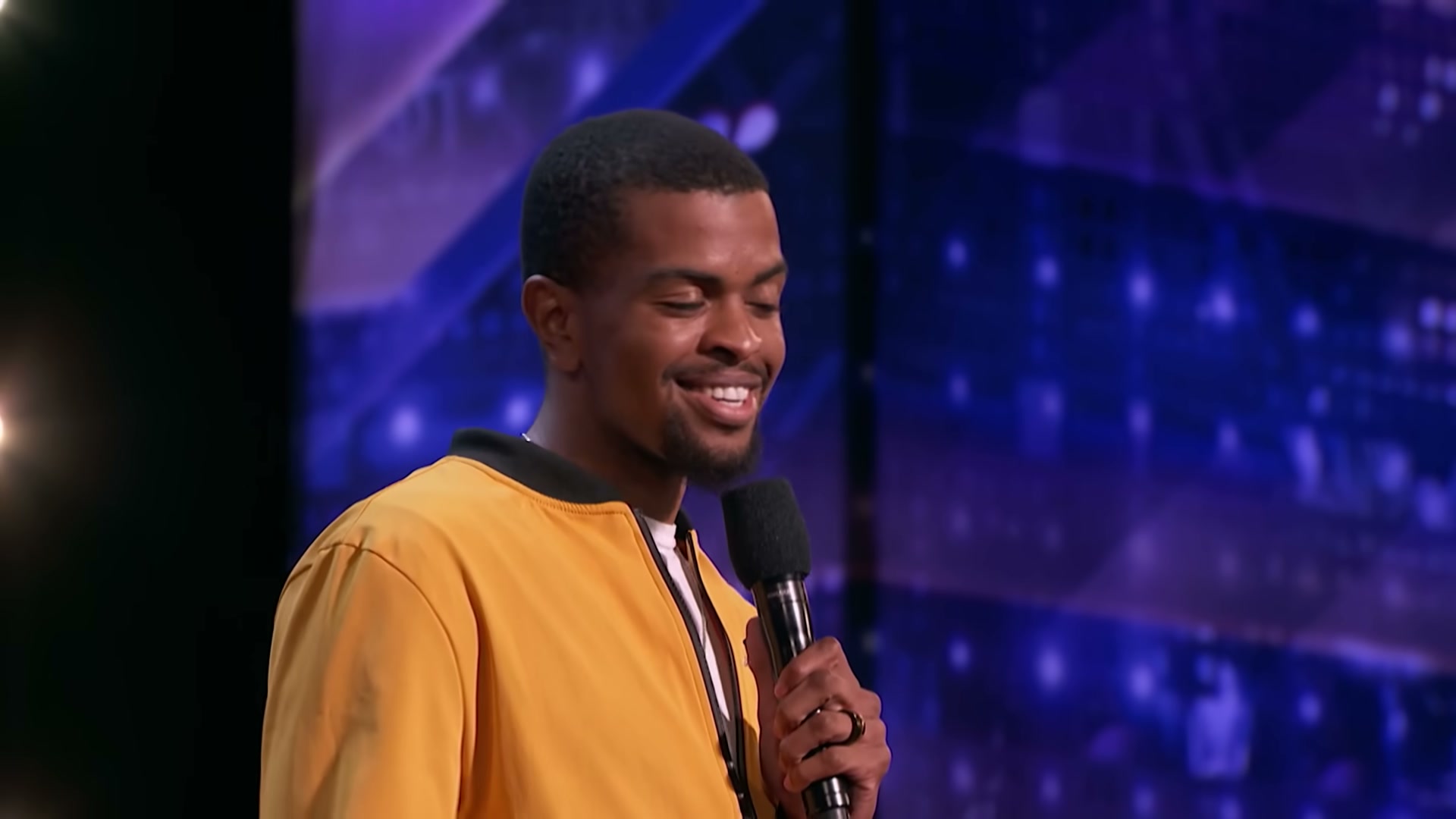
He then introduced the piece as an original poem dedicated to his sister, Danielle “Puff” Gibson. From that point forward, the mood in the room changed, because the performance was rooted in memory rather than spectacle.
His delivery began quietly, with a controlled pace that asked the audience to lean in rather than be overwhelmed. Every pause mattered, and the restraint made the emotion feel more immediate than any dramatic gesture could have.
The poem moved through love, loss, absence, and the painful way memory can remain vivid after someone is gone. Leake’s language carried the intimacy of a conversation with someone he still held close, which gave the performance its emotional center.
What made the audition powerful was not only the subject, but the sincerity of the presentation. He did not try to decorate the grief or soften its edges, instead allowing the audience to sit with the weight of what he was saying.
As the piece continued, the judges’ expressions shifted from interest to visible emotion. The audience, which might have expected a more traditional talent show act, grew still as the words filled the theater.
That silence became one of the strongest measures of the performance’s impact. In a room designed for applause, noise, and instant reaction, Leake created a moment where listening became the event.
The performance also challenged assumptions about what belongs on a talent competition stage. Spoken word depends on voice, timing, presence, writing, and emotional truth, and his audition demonstrated that those tools can be as compelling as any more familiar act.

The judges appeared moved by the originality of the choice as much as by the personal story behind it. The act was not simply different for the sake of being different, because the form matched the subject with unusual precision.
Leake’s history as a teacher and mentor also deepened the meaning of the audition. He was not only performing for himself, but showing the kind of expression he encourages in young people who may be carrying their own difficult stories.
That connection between art and service helped separate the audition from a purely personal showcase. His poetry became a bridge between private grief and public understanding, allowing the room to feel part of a larger human experience.
The emotional response was earned through patience rather than manipulation. Leake trusted the strength of the words, the clarity of his voice, and the truth of the memory he was honoring.
By the end, the atmosphere had transformed from curiosity into full emotional recognition. Applause followed not just because the performance was moving, but because it had expanded the audience’s idea of what a breakthrough audition could look like.
The moment became historic because it introduced spoken word to the show in a way that felt undeniable. It proved that a performer standing alone with a poem could command the same stage usually reserved for larger and louder productions.
Leake’s audition ultimately worked because it balanced vulnerability with craft. He brought personal loss into the spotlight without losing control of the performance, creating a piece that felt intimate, disciplined, and deeply human.
For viewers, the audition remains memorable because it was not built around surprise alone. Its lasting force came from the courage to speak plainly about love and grief, and from the rare stillness that followed when an entire room understood.