
Lindsay Lohan’s 2007 visit to Ellen arrived with the familiar rhythm of a celebrity talk show, but the conversation carried more weight than a routine promotional stop. She was there to discuss Georgia Rule, a drama that asked audiences to see her not simply as a tabloid fixture or a former child star, but as an actor taking on darker and more complicated material.
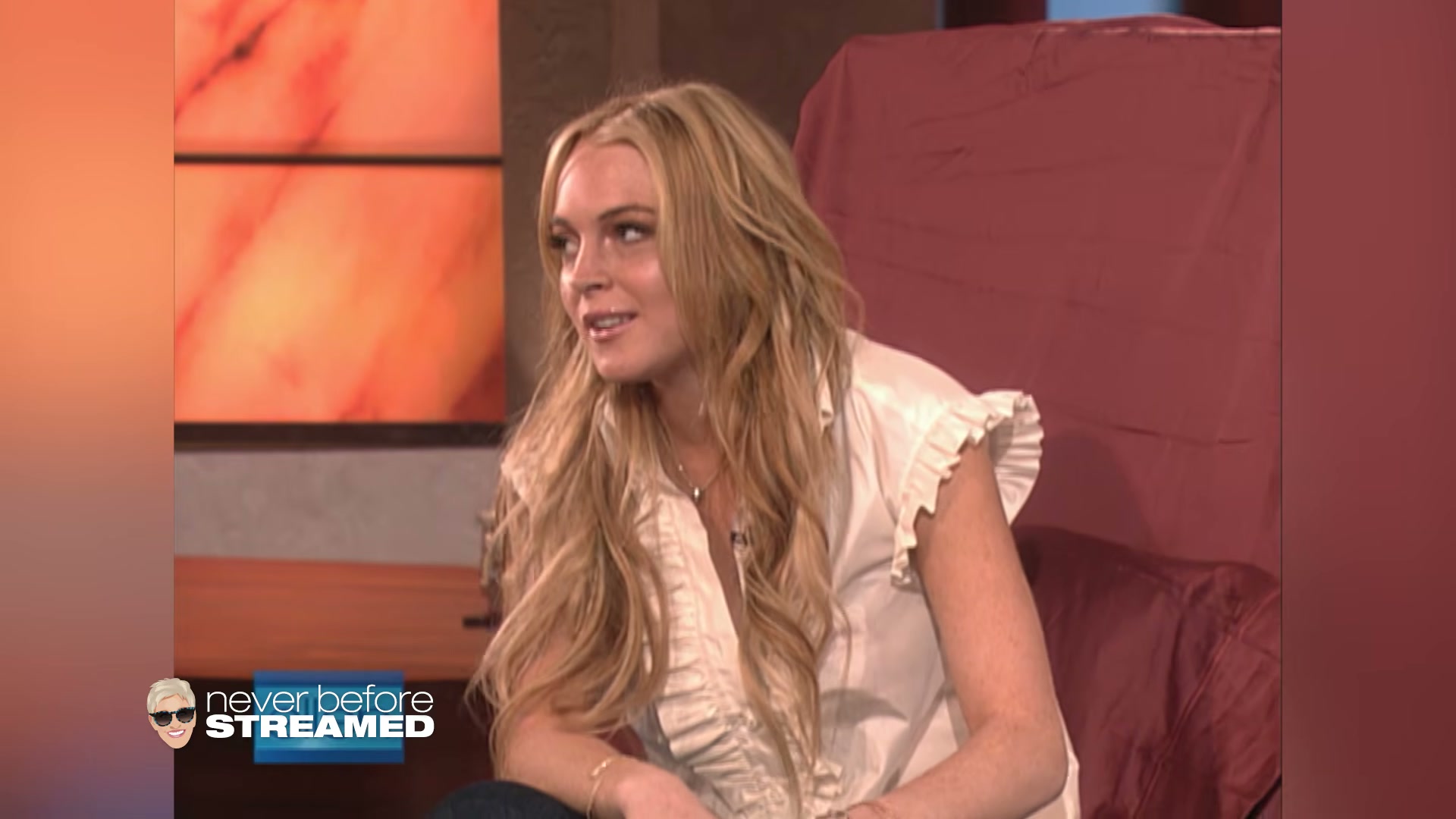
The appearance opened with a small physical complication that quickly became part of the show’s light comic texture. Lohan came out injured, and rather than allowing the moment to become awkward or overly sympathetic, she leaned into humor and echoed the old show business idea that the show must go on.
That easy banter mattered because the interview moved between very different tones, from injury jokes and studio laughter to a serious discussion of family pain, credibility, and emotional damage. Ellen DeGeneres helped manage that shift by keeping the conversation relaxed while still making room for the film’s heavier themes.
Ellen was notably enthusiastic about Georgia Rule, offering more than the usual polite praise that often accompanies a promotional segment. She highlighted the demands of Lohan’s performance and emphasized how much the role required her to move through anger, charm, vulnerability, defiance, and sorrow without letting any one emotion flatten the character.
Lohan described the movie carefully, aware that its central tension depended on uncertainty and gradual revelation. She explained that the story follows a rebellious young woman whose behavior has become too much for her mother to handle, leading to a move into the stricter household of her grandmother.
That setup could sound like a standard generational clash, but the film pushes beyond simple comedy or family melodrama. As Lohan explained it, the character’s outward recklessness is tied to deeper turmoil, including a troubling allegation involving her stepfather and a question that the film deliberately refuses to resolve too quickly.
The challenge of discussing that storyline on daytime television was clear, and both host and guest seemed conscious of the need to avoid spoiling the movie. Lohan spoke in broad terms, framing the plot around truth, trauma, and the difficulty of knowing what is really happening inside a family when each person is carrying a different version of events.

That careful wording also reflected the kind of performance Ellen was praising. A character written as difficult, confrontational, and wounded can easily become one note, but Lohan suggested that she saw the role as a chance to show how defensive behavior can hide fear, confusion, and a desperate need to be believed.
The conversation also gave Lohan an opportunity to speak about working alongside Jane Fonda and Felicity Huffman, two actors with substantial reputations and very different screen energies. She described them warmly and admiringly, calling them amazing and suggesting that their presence helped raise the emotional stakes of the production.
Those comments fit the film’s structure, which depends heavily on the friction among three generations of women. The grandmother represents discipline and old wounds, the mother carries her own guilt and frustration, and the younger woman forces the family to confront truths that may be painful, disputed, or long avoided.
Ellen’s praise carried an implicit argument about Lohan’s career at that moment. Rather than treating her only as a celebrity surrounded by headlines, Ellen presented the performance as evidence that she could handle demanding adult roles and remain compelling in a story that did not rely on glamour or easy charm.
That point was especially relevant because the interview took place during a period when public discussion of Lohan often centered on her offscreen life. The segment did not ignore that context, but it also did not allow controversy to become the only subject, instead placing it beside the work she had come to promote.
When Ellen raised reports of tension during filming, the conversation became more direct. A letter criticizing Lohan’s conduct on set had become public, and Ellen asked about it in a way that acknowledged the news without turning the interview into an interrogation.
Lohan’s response was measured and defensive, but not combative. She said the situation had been misrepresented, explaining that an illness and a serious asthma attack contributed to her absence from work and that the public version had made the matter seem more like misconduct than a health problem.
Her explanation also emphasized resolution rather than grievance. She indicated that everyone involved was now on good terms, an answer that allowed her to push back against the reports while keeping the focus from spiraling into blame or resentment.
The exchange revealed one of the central tensions of the interview. Lohan was promoting a film about a young woman whose truth is questioned, while she herself was answering questions about whether the public had been given an accurate account of her behavior.
That parallel was not stated too heavily, but it hovered over the segment. Both the movie discussion and the controversy discussion involved credibility, interpretation, and the gap between what outsiders assume and what people inside a situation say actually happened.
Ellen’s role was important because she neither dismissed the controversy nor dwelled on it at the expense of the film. She gave Lohan room to respond, then guided the interview back toward a broader portrait of an actor navigating a high pressure moment in her career.
The audience response appeared supportive, which helped soften the atmosphere around the more serious questions. Applause and laughter signaled that the room was willing to accept Lohan’s humor, listen to her explanation, and engage with the film as something more substantial than a headline accessory.
After the heavier discussion, the segment shifted back toward playful celebrity show territory. A mention of a Lindsay Lohan doll and a nod to earlier images associated with Mean Girls restored the lighter rhythm that viewers expected from Ellen’s daytime format.
That closing turn was more than a simple gag because it reflected the unusual duality of Lohan’s public image at the time. She was being asked to discuss emotional trauma, professional controversy, and serious acting, while also remaining the familiar young star whose likeness could become a toy and whose past roles still shaped audience affection.
The interview’s lasting interest lies in that balancing act. It captured a performer trying to be taken seriously, a host trying to keep a difficult conversation accessible, and a promotional machine trying to sell a film whose subject matter was not easily reduced to cheerful sound bites.
In the end, Lohan came across as both guarded and game, aware of the scrutiny around her but still willing to joke, explain, and advocate for the work. Georgia Rule was presented not merely as another release on her schedule, but as a demanding project that asked viewers to look past easy assumptions, both about a fictional family and about the young actor speaking for it.