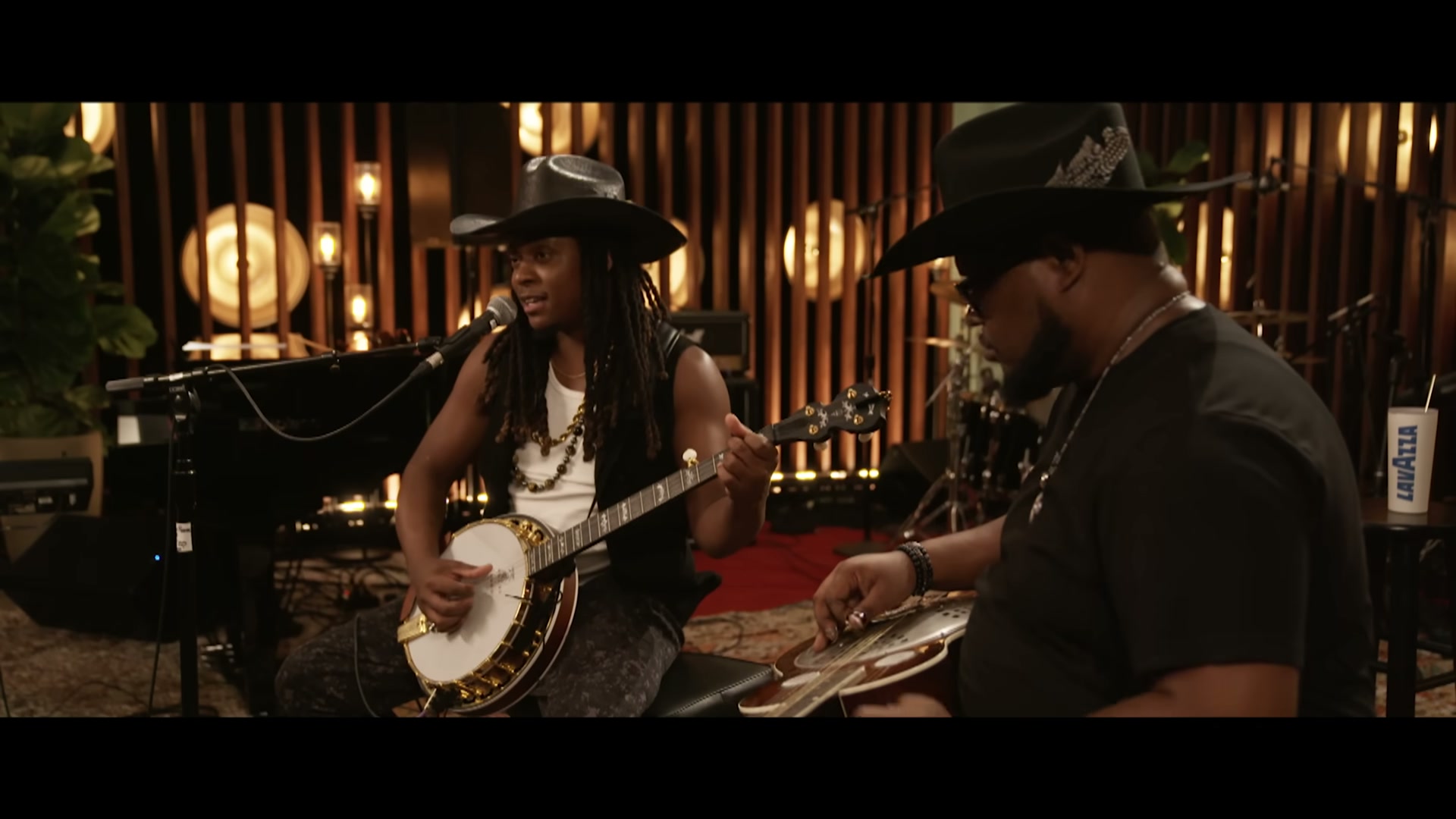
The AGT Music Room offered a lively new showcase this week as Steve Ray Ladson brought his original song Back of My Truck into the intimate performance space. Joined by dobro player Deshawn Hickman, the singer turned a small room into a warm country gathering built on charm, rhythm, and easy audience connection.
From the opening moments, Ladson established a relaxed tone, greeting the room with playful confidence and a smile that suggested everyone was about to be included. That casual setup mattered because it framed the performance not as a polished distance piece, but as a shared experience rooted in personality and direct conversation.
He soon introduced Hickman and moved into the song, letting the arrangement do exactly what the Music Room format promises by stripping everything down without losing momentum. The result was spare in instrumentation yet full in spirit, with banjo, dobro, and voice combining for a rootsy sound that still carried party energy.
Back of My Truck leans hard into familiar country imagery, but in this setting those details felt affectionate rather than formulaic as Ladson sang about lifted trucks, diesel, mud, guitars, and nights on backroads. The lyrics sketched a whole social world where small adventures become memories, and where motion itself feels like freedom.
What made the performance stand out was not simply the content of the song, but the way Ladson delivered it with a mix of swagger and invitation. He sounded confident without seeming distant, as if he were narrating a night out while making sure every listener had a place in the story.

Hickman’s dobro work added texture throughout, answering the vocal lines with clean, expressive phrases that widened the sound despite the minimal setup. The interplay between the two musicians helped the song breathe, giving each verse a little more lift and making the groove feel loose, conversational, and alive.
As the song progressed, Ladson steadily raised the room’s energy, proving that an intimate arrangement can still feel expansive when a performer understands timing. He built from easy storytelling into a stronger rhythmic push, letting the hook arrive with enough force to shift the room from listening mode into participation.
That turning point came when he asked the audience, “Do you want to ride,” a simple prompt that instantly transformed the performance into a call and response celebration. The crowd answered enthusiastically, and the singalong response gave the song a communal quality that matched its picture of friends gathering for one more run down the road.
Even in stripped form, Back of My Truck never lost its sense of movement, because Ladson treated every line as part of a larger ride. The banjo drive kept the arrangement rolling forward, while the relaxed pacing between phrases preserved the sense that the audience was being welcomed rather than pushed.
After the performance, the mood shifted from celebration to reflection as Ladson spoke about where his music comes from and why this song matters to him. He shared that he bought his own first banjo, a detail that underscored both his independence and the personal investment behind the sound he now brings onstage.
He also spoke about coming from a talented family, presenting his path not as an isolated breakthrough but as part of a broader musical lineage. Those comments gave extra weight to the upbeat set, suggesting that the joy in his performance is connected to memory, example, and a long relationship with making music.

The inspiration behind Back of My Truck, he explained, came from a real experience riding in an older F 150 with friends gathered in the back. Music was playing loudly, the atmosphere was carefree, and that snapshot of youth and companionship eventually became the foundation for the song’s bright, nostalgic spirit.
That origin story fits the track well because its strongest appeal lies in how vividly it turns ordinary moments into scenes that feel almost cinematic. Rather than chasing grandeur, the song celebrates details many listeners recognize, including open air, familiar roads, and the pleasure of being together with no urgent destination.
Within the AGT setting, the Music Room performance also served as a reminder that television exposure can reveal dimensions that a larger stage sometimes compresses. Here, viewers got to see Ladson’s humor, timing, and off the cuff ease as clearly as they heard his singing, which made the segment feel especially revealing.
The clip closes on gratitude and ambition, two qualities that often define artists at an important moment in public view. Ladson thanked the room, reflected on his desire to make people smile, and said he hopes to create timeless music that lasts beyond him, a goal both humble and boldly aspirational.
For country fans, the performance offered a compact example of how traditional signifiers like banjo, dobro, and truck life can still sound fresh in the right hands. For broader audiences, it worked because the emotional message was simple and accessible, turning specific rural imagery into a universal invitation to enjoy music, company, and a good memory.
In the end, the AGT Music Room appearance succeeded by balancing performance and personal storytelling without overcomplicating either side of the equation. It showcased an artist comfortable in his style, generous with his audience, and clear about the kind of enduring, smile inducing music he wants to leave behind for many years to come.