
Three Brooklyn friends walked onto the AGT stage with the kind of nervous energy that usually belongs to people who know they are about to try something deeply unusual. Tej, Ibhan, and Lars introduced themselves not as polished entertainers, but as tech workers with a shared appetite for building strange ideas and seeing where they might lead.
Their backgrounds immediately set them apart from the usual lineup of singers, dancers, magicians, and comedians. With work in cybersecurity and software engineering, the trio framed their audition as a leap from office life into a world where their odd inventions could become a full-time creative pursuit.
That dream gave the segment a surprisingly sincere foundation before the act turned chaotic. They explained that winning would allow them to leave their day jobs behind, a goal that made their strange presentation feel less like a prank and more like an eccentric business pitch wrapped inside a comedy routine.
The judges seemed unsure what to expect from the beginning, and that uncertainty became part of the performance. When fruit appeared at the judges’ table, the panel reacted with confusion and suspicion, trying to determine whether the audition had already started or whether they were being set up for something they could not yet see.
That slow reveal was risky because it tested the room’s patience before the main idea had fully landed. Still, the trio leaned into the discomfort, allowing the awkward silence and puzzled reactions to become part of the joke rather than something to avoid.
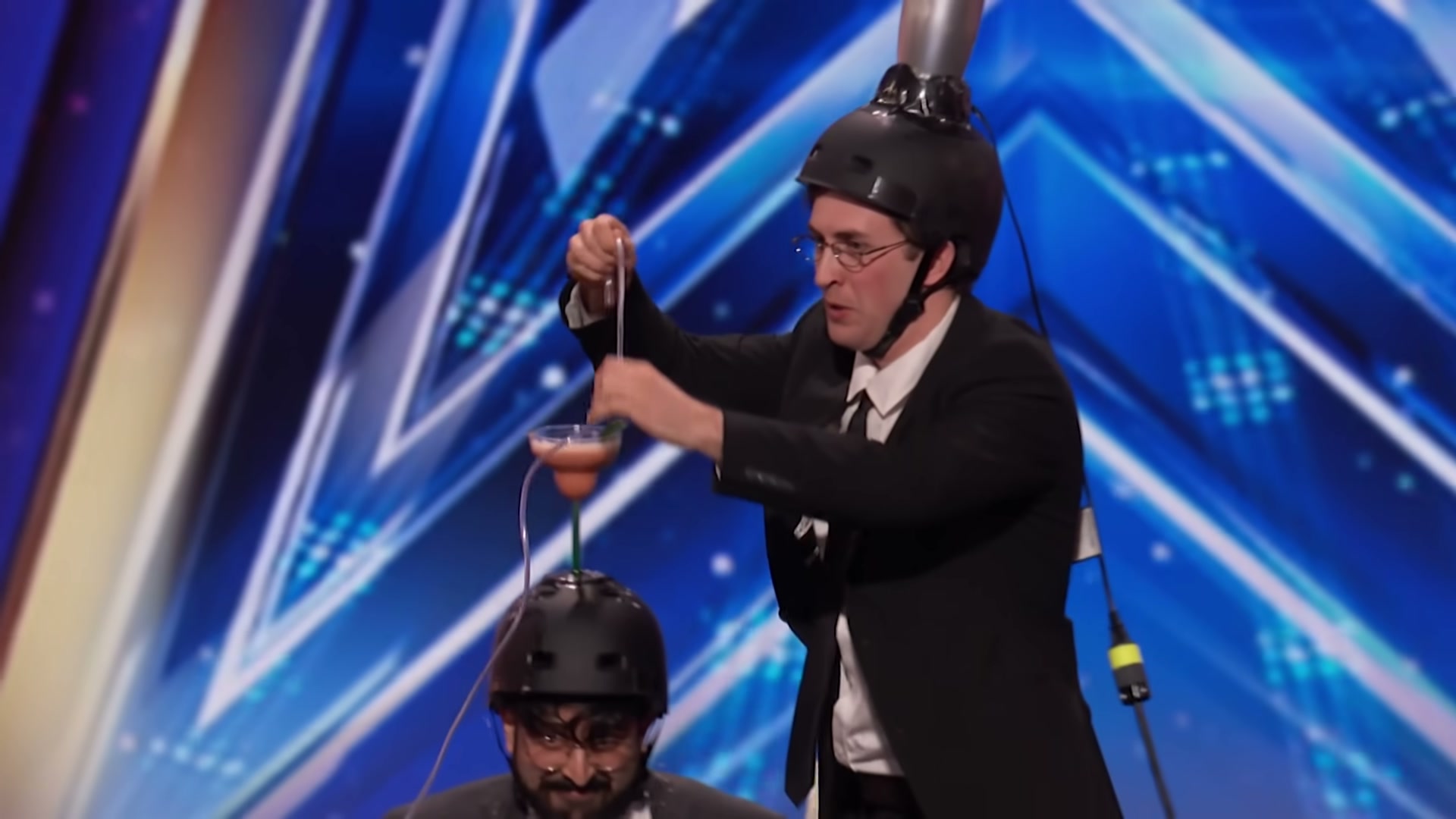
Eventually, the act took shape around what they called a “human blender,” a bizarre invention concept that combined homemade engineering, physical comedy, and smoothie making. The device and routine did not unfold with sleek precision, but its rough edges added to the sense that the audience was watching three friends turn a late-night brainstorm into a stage spectacle.
The humor came less from punchlines than from commitment. They treated the absurd idea with complete seriousness, and that contrast between technical confidence and ridiculous execution gave the audition its offbeat charm.
Not every judge was immediately convinced, and the performance clearly dragged in moments. One buzzer cut through the room, signaling that at least one member of the panel felt the act was too slow, too silly, or too strange to justify moving forward.
Yet even the hesitation did not stop the act from generating laughter. As the stunt continued, the judges appeared caught between impatience and curiosity, unsure whether they were watching a failed invention demo or a surprisingly original comedy format.
That tension became the central appeal of the audition. The trio did not fit neatly into any single category, which made the panel debate not just whether they were funny, but whether their brand of invention comedy had enough room to grow.
Simon seemed particularly interested in the question of potential. While he acknowledged the oddness of what had just happened, he also appeared drawn to the possibility that these performers might return with something even more outrageous and better developed.
The turning point came when the trio mentioned a future idea involving a “human piñata.” That tease helped the judges imagine a broader world of strange inventions, suggesting that the audition was not a one-off stunt but the beginning of a larger comic laboratory.
Sofía remained unconvinced and ultimately said no, reflecting the valid concern that the act might be too messy or niche for the competition. Her reaction grounded the moment, reminding viewers that originality alone does not always guarantee a fully satisfying performance.
Even so, the other judges were willing to reward the trio’s creativity, nerve, and undeniable weirdness. Their yes votes pushed the Brooklyn inventors into the next round, turning an uncertain and uneven audition into a surprising success.
The result felt appropriate for an act built on confusion, risk, and delayed payoff. Tej, Ibhan, and Lars looked relieved as the decision sank in, and their advancement suggested that AGT still has room for performers who arrive without polish but with a genuinely strange point of view.
What made the audition memorable was not perfection, but the feeling that no one in the room knew exactly what would happen next. In a season filled with practiced talent, three tech friends with fruit, machinery, and a questionable smoothie concept managed to create one of the more unexpected conversations of the night.