
A recent television segment placed a Utah couple at the center of a difficult public debate about love, law, family boundaries, and social judgment. The pair, first cousins who married in Colorado, described their relationship as something that felt emotionally undeniable, while the host pressed them on the legal and ethical complications that followed them home.
The discussion unfolded around Angie and Michael, who said their connection had existed long before they became a couple. Both had previously been married to other people, and Michael described years of quietly longing for Angie while believing that she represented the kind of love he had never been able to ignore.
Rather than presenting the story as a simple romance, the segment framed it as a collision between private conviction and public consequence. The couple said they saw their relationship as sincere and meaningful, but the show repeatedly returned to the reality that Utah law does not permit first cousins to marry or engage in a sexual relationship.
Michael spoke about looking at Angie’s photos online and feeling emotionally overwhelmed by what he believed was an enduring bond. He said the distance between them was painful, and he characterized his feelings as something stronger than ordinary attraction or passing curiosity.
The emotional turning point, according to the couple, came when they reconnected through messages. What began as conversation became more personal, more affectionate, and eventually openly romantic, creating a path from family familiarity into a relationship that both acknowledged was controversial.
Angie said the shift did not feel forced or calculated to her. She described the relationship as something that seemed natural in the moment, even though she understood that many people would see it as troubling or unacceptable.
Their story became even more complicated because they were not only dealing with family opinion or public discomfort. They were also navigating state law, since Utah prohibits the kind of marriage they wanted and places restrictions on sexual relationships between first cousins.
To obtain a marriage license, the couple traveled to Colorado, where marriage between first cousins is legally permitted. They said they were direct with the clerk about being blood relatives, and they recalled the official reacting with visible surprise before processing the paperwork.
That moment became one of the clearest examples of the gap between legal permission in one state and social shock almost everywhere else. Even in a jurisdiction where the marriage could be issued, the couple said they sensed disbelief from someone whose job was to handle marriage licenses.
Onstage, Dr. Phil focused less on whether the couple felt certain and more on what their certainty meant in practical terms.
He questioned whether returning to Utah after the Colorado ceremony created legal exposure, particularly if the state did not recognize the marriage or if their conduct remained prohibited.

The couple did not appear surprised by the scrutiny, but they insisted that they were trying to change the law rather than quietly evade it. They said their public advocacy began with a petition, which they hoped would challenge Utah’s current restrictions and make room for couples in their position.
That decision to go public raised one of the central tensions of the segment. If they knew the subject would draw shock and criticism, the host asked, why invite media attention and place themselves under even greater examination?
Their answer suggested that they saw visibility as part of their cause. By speaking out, they hoped to frame their situation not as a scandal but as a rights issue involving consenting adults who wanted the state to recognize their marriage.
Still, the program made clear that public sympathy was far from guaranteed. Many viewers would likely see the relationship through the lens of family boundaries, genetic concerns, religious values, or longstanding cultural taboos, regardless of how the couple explained their feelings.
The segment carefully highlighted that legality varies by state, which complicates any simple conclusion. A marriage license obtained legally in Colorado did not resolve the question of how Utah would view the couple’s relationship once they returned home.
This legal mismatch became one of the most important parts of the conversation. It showed how a couple can cross a border, enter a marriage under one state’s rules, and then face uncertainty or possible penalties under another state’s laws.
Dr. Phil’s questioning also underscored the difference between emotional certainty and legal protection.
The couple could believe deeply that their marriage was valid in a moral or personal sense, but that belief did not automatically shield them from the consequences of living in a state with conflicting statutes.
The issue is especially sensitive because first-cousin relationships sit at the intersection of law, culture, medicine, and family systems. Some states permit cousin marriage, some ban it outright, and others allow it only under specific conditions, reflecting a patchwork of policies rather than a single national standard.
Supporters of allowing such marriages often argue that consenting adults should have broad freedom to choose their partners. They may also point out that public assumptions about risk can be exaggerated or inconsistently applied when compared with other accepted reproductive risks.
Opponents tend to emphasize the importance of maintaining family boundaries and preventing relationships that could create pressure, confusion, or long-term conflict within extended families. They may also raise concerns about children, social stigma, and whether changing the law would weaken norms that many communities consider essential.
The television segment did not resolve those larger questions, but it gave them a human face. Angie and Michael were not treated merely as an abstract legal case; they were shown as two people trying to explain how they moved from family connection to romantic commitment.
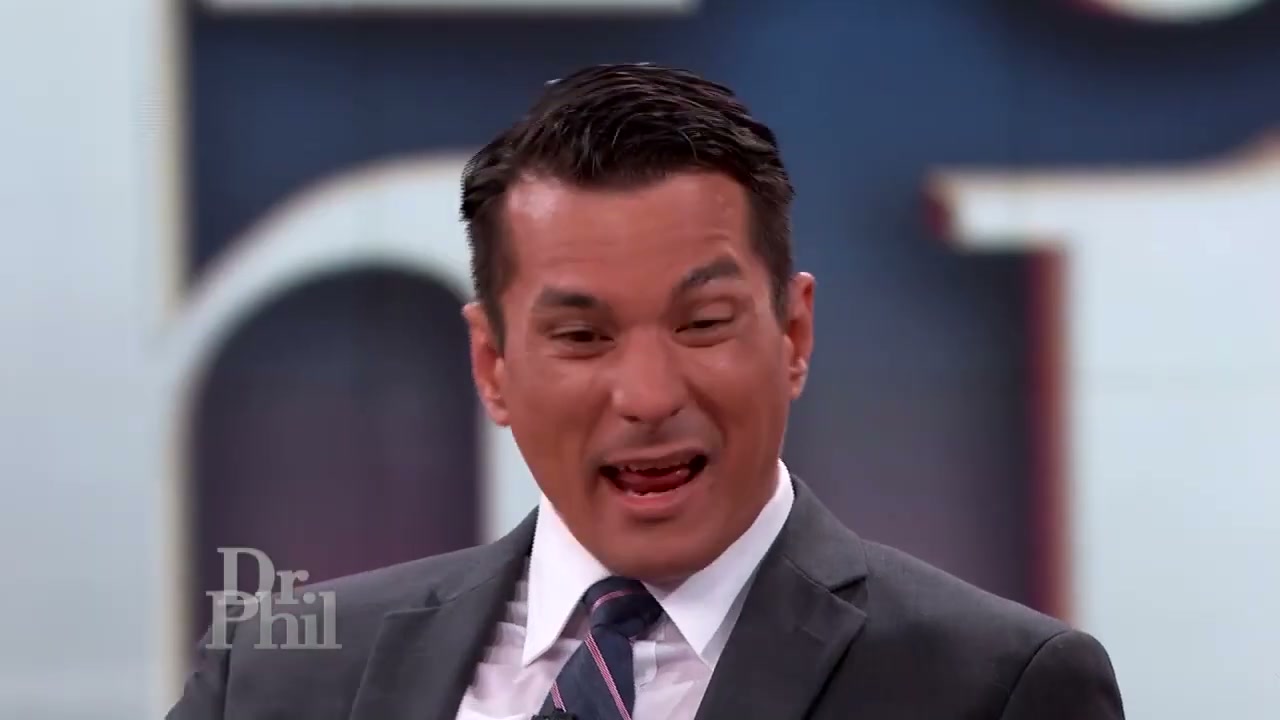
At the same time, the program did not allow their emotional narrative to stand unchallenged. The host repeatedly returned to accountability, asking whether they had fully considered the legal risks and whether their public campaign might intensify those risks rather than reduce them.
The couple’s description of their reconnection was emotional and direct. They portrayed the relationship as escalating quickly after years of unspoken feeling, with messages becoming more intimate and the eventual in-person meeting confirming what they believed was already true.
For many viewers, that rapid shift would be part of what made the story unsettling. A relationship that crosses a major family boundary can raise questions not only about personal choice but also about how people reinterpret long-standing roles once romantic feelings enter the picture.
The couple appeared to understand that their marriage would not be widely accepted. Yet they also seemed to believe that opposition came from outdated assumptions rather than from concerns they considered decisive.
Their petition to change Utah law became the practical expression of that belief. By seeking reform, they moved the story beyond private romance and into public policy, asking lawmakers and citizens to reconsider where the state should draw the line.
Media attention then transformed their campaign into a national talking point. Local coverage amplified the story, and the television appearance placed them before a much larger audience, where their personal choices could be debated by people with no connection to their family or community.
That exposure can be both empowering and punishing. It gives advocates a platform, but it also invites harsh judgment, simplified narratives, and the possibility that a deeply personal relationship becomes defined by the most controversial detail about it.
The segment’s strongest moments came when it held multiple truths in tension. The couple’s feelings may be sincere, the marriage may have been legal in Colorado, and Utah may still have the authority to restrict or refuse recognition of the relationship within its own borders.
Those tensions are why the story continues to provoke strong reactions. It is not only about one couple’s decision, but about how society balances adult autonomy with legal tradition, family structure, and collective moral boundaries.
In the end, Angie and Michael presented their marriage as the outcome of a connection they could no longer deny. Dr.
Phil presented it as a choice that required more than emotion to defend, especially when state law, public scrutiny, and family norms all stood in the way.
The broader debate is unlikely to be settled by a single interview or petition. But the segment demonstrated how one couple’s controversial wedding can force a wider conversation about where personal freedom ends, where law begins, and how society responds when love challenges deeply rooted expectations.