
A dance crew from Anaheim, California, turned a familiar workplace setting into a burst of movement, ambition, and theatrical surprise on the America’s Got Talent stage. Performing as GRV, the group arrived with a concept built around office life, but their audition quickly became about far more than desks, suits, and synchronized steps.
Before the music began, the dancers introduced themselves as working professionals who spend their days in ordinary jobs and their nights chasing a larger dream. Members described careers that included nursing, engineering, and other demanding paths, making clear that dance was not a hobby squeezed into spare time but a calling they hoped to make central to their lives.
That contrast gave the audition an emotional frame before the first move landed. One member shared that they had recently put in their two weeks’ notice at work, a decision that signaled how much faith the crew had in its talent and future.
Their stated goal was to show that dance can stand on its own as a headline act, not merely as background entertainment or a supporting element for singers. That ambition fit the scale of the stage, where novelty, precision, and emotional clarity often determine whether an act feels ready for the next round.
The routine opened with the dancers dressed in professional attire, using desks as both scenery and choreography tools. Set to The Weeknd’s “Open Hearts,” the performance blended the everyday rhythm of office life with sharp musicality, turning a corporate environment into something restless, stylish, and alive.
Rather than treating the desks as simple props, GRV built movement around them, across them, and between them. The dancers used the furniture to create levels, patterns, and visual punctuation, giving the routine a clear identity from the moment it began.
The choreography leaned heavily on synchronization, with the group moving as a unit through tight formations and quick transitions. Their timing helped sell the concept, suggesting the pressure and repetition of a workday before exploding into something freer and more expressive.
The office theme also gave the act a theatrical quality that made it easy to follow. Even viewers who were not focused on technical dance details could understand the transformation taking place, as workers trapped in routine became performers claiming space and agency.
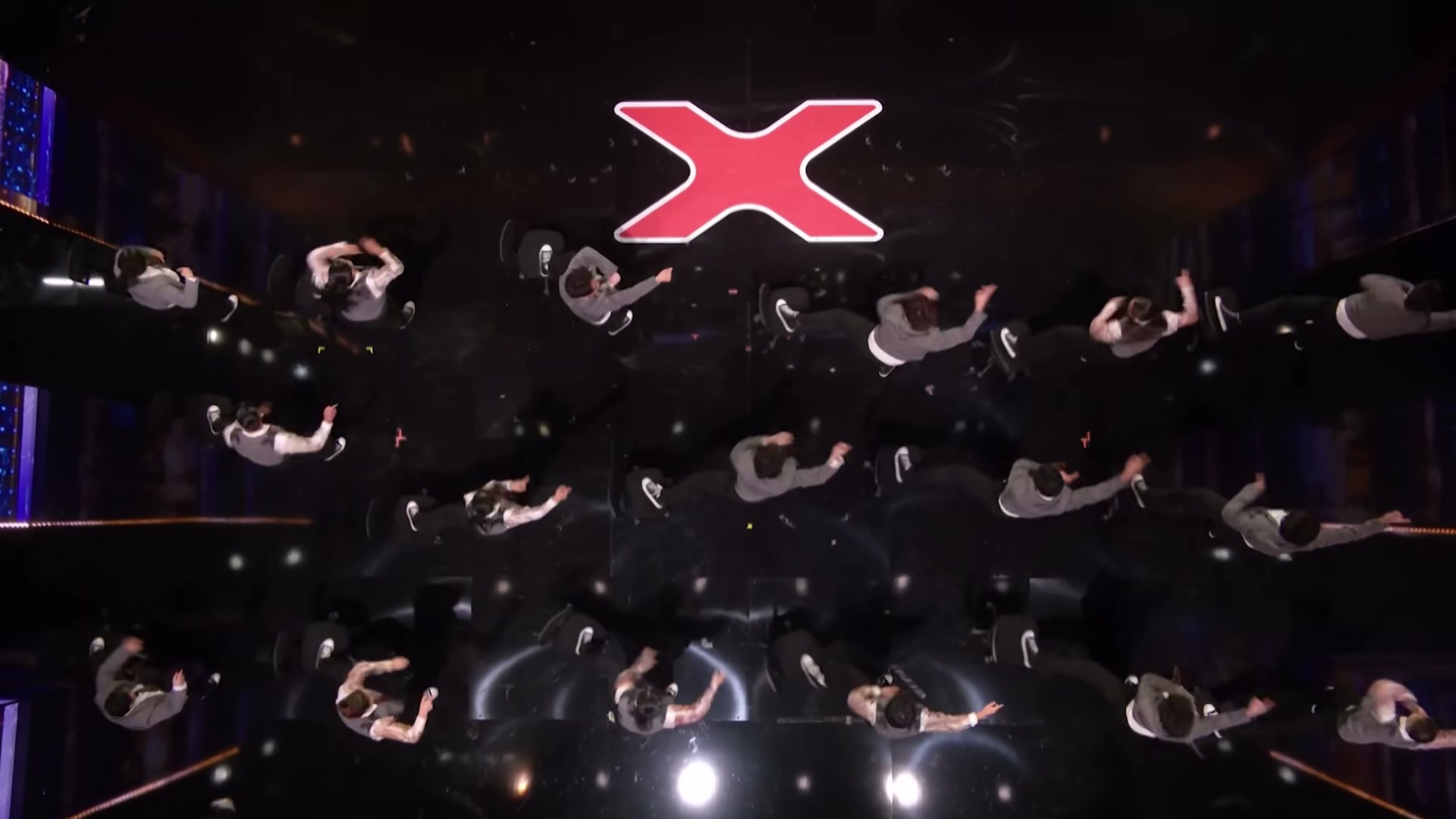
Audience response during the routine suggested that many in the room connected with that energy. Cheers and visible excitement followed several of the larger moments, especially when the dancers used the desks to expand the scale of the stage picture.
Still, the audition did not win over everyone. Partway through the performance, Howie Mandel hit the red buzzer, abruptly introducing tension into what had otherwise appeared to be a strongly received routine.
His criticism centered less on the dancers’ skill than on whether the act felt big enough for the moment. He acknowledged that the group was polished, but argued that the twentieth season of the show demanded something more surprising, more explosive, and more unmistakably elevated.
That reaction created a sharp split on the panel. For a dance crew presenting a carefully staged concept with clear personal stakes, the buzzer was a reminder that technical ability and creative structure do not always guarantee unanimous approval.
Simon Cowell pushed back against the dismissal and defended the act’s originality. He appeared to value the way the group took a simple idea and built a full performance around it, giving the audition a recognizable point of view rather than relying only on tricks or spectacle.
Sofía Vergara also responded warmly, praising the choreography as beautiful and spectacular. Her reaction reflected the view that the act’s strength came from its polish, presentation, and the disciplined way the dancers worked together as a collective.
The difference in responses highlighted a common tension on variety competition shows. Some judges look for shock and scale above all else, while others reward concept, execution, and the ability to make a familiar style feel newly engaging.
For GRV, the red buzzer could easily have become the defining image of the audition. Instead, the group’s calm response and the support from the other judges shifted the focus back toward resilience and forward momentum.

The final vote gave the dancers the result they needed. With three yeses, GRV advanced to the next stage, proving that one strong objection was not enough to stop their office-inspired routine from continuing in the competition.
The outcome also gave the group a useful narrative moving forward. They had not simply received universal praise and moved on; they had faced a public challenge, heard a direct critique, and still earned enough belief to keep their dream alive.
That may matter as much as the choreography itself in later rounds. Audiences often follow acts not only because they are talented, but because they can see them respond to pressure and refine their identity under scrutiny.
GRV’s audition worked because it combined a relatable premise with a visible sense of commitment. The idea of professionals leaving behind the safety of routine to pursue a creative dream gave the routine a human center beyond its staging.
The dancers also understood that a strong concept needs clean execution to succeed. Their formations, desk work, and collective energy made the office setting feel intentional rather than gimmicky, which helped the act stand apart from a standard group dance performance.
Whether the routine was large enough for the season’s biggest expectations remains a fair question. The criticism that it needed a more surprising peak may become valuable if the crew uses the next round to expand its staging, increase its risk, and sharpen its emotional arc.
Even so, the audition succeeded at introducing GRV as a serious dance act with a clear voice. They showed discipline, personality, and ambition, while presenting dance as something capable of carrying a complete story on its own.
By the end, the message from the supportive judges was clear: take the criticism, use it, and return stronger. For a crew built around working people chasing a larger purpose, that challenge may be exactly the motivation needed to turn a memorable audition into a bigger breakthrough.