
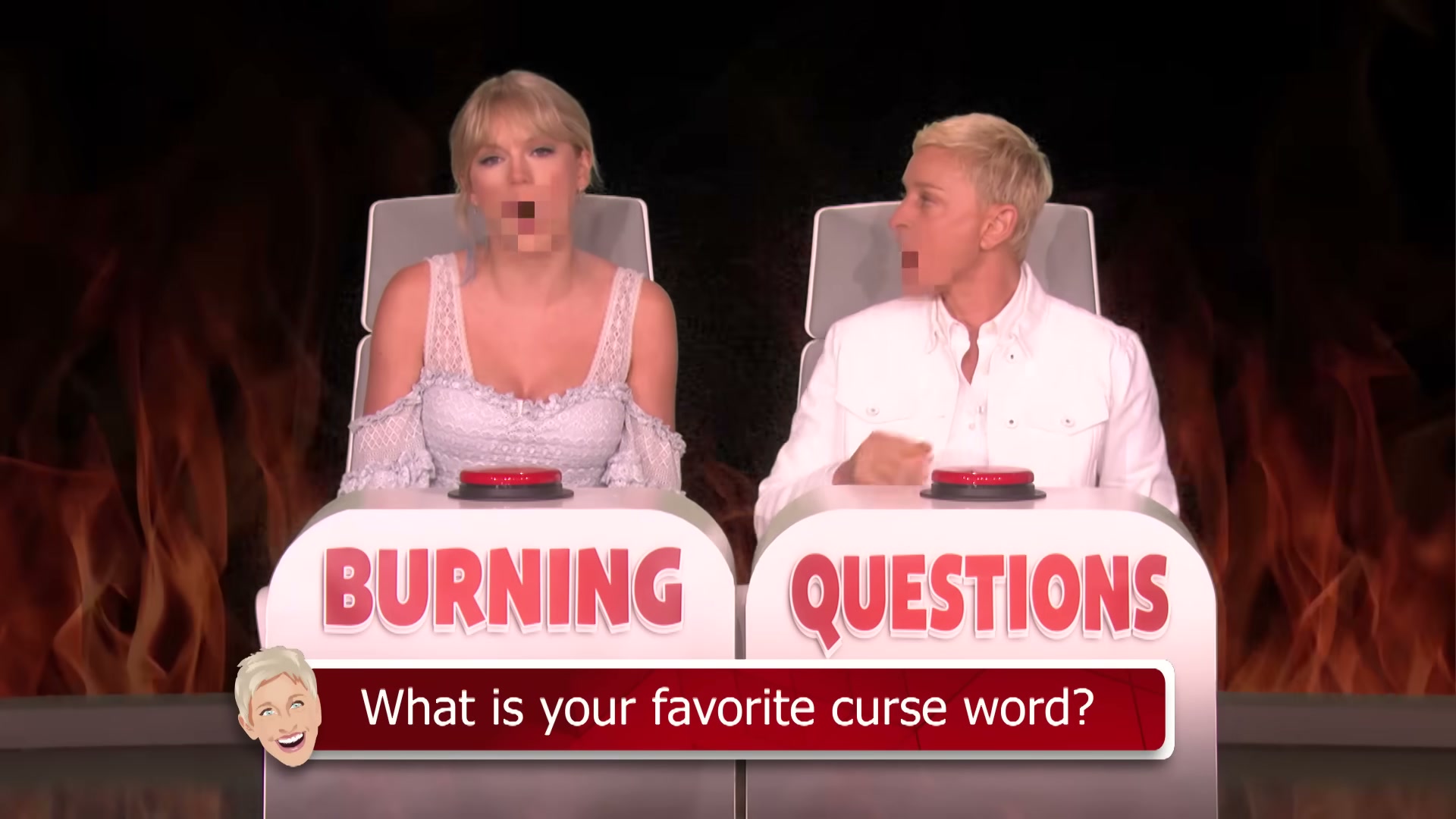
Taylor Swift’s appearance in a “Burning Questions” segment on The Ellen Show worked because it treated promotion as a game rather than a hard sell. Instead of delivering a polished list of announcements, Swift leaned into the format’s teasing pace, answering just enough to entertain while withholding exactly the kind of information fans wanted most.
The setup was simple, familiar, and effective, with Ellen DeGeneres asking quick prompts while Swift sat ready to respond and ring a bell. That bell became part of the rhythm, punctuating her answers like a sitcom button and giving the audience permission to laugh at both the answers and the evasions.
The first major tease came when Ellen asked about Swift’s next single, a question that any fan watching would have treated as the real headline. Swift declined to reveal the title or sing even a small piece of the melody, turning refusal into performance and making secrecy feel like part of the entertainment.
That evasiveness fit neatly into Swift’s long-running relationship with fan speculation, where hints, symbols, and partial answers can fuel days of decoding. By refusing to give away the song, she protected the rollout while also rewarding viewers with the sense that they had witnessed a near miss.
The segment quickly shifted from suspense to comedy when Swift was asked what she does when she cannot sleep. Her answer moved away from glamour and into the kitchen, where she described rummaging for food late at night with the chaotic intensity of “a raccoon in a dumpster.”
The image landed because it was deliberately unflattering, and Swift played it with enough self-awareness to make the exaggeration charming rather than rehearsed. Ellen seized on the answer immediately, joking that Swift might be sleep-eating and returning to the idea as a small running bit.
That exchange captured the best version of the segment’s tone, with Swift offering an odd personal habit and Ellen gently stretching it into a comic premise. The humor did not depend on embarrassment so much as contrast, placing a global pop star in the very ordinary position of standing in front of a refrigerator at an unreasonable hour.
Swift also used the segment to reveal some of her viewing habits, naming shows that ranged across prestige drama, period television, fantasy spectacle, and makeover warmth. She mentioned Killing Eve, Game of Thrones, Downton Abbey, and Queer Eye, choices that helped sketch a personality interested in intensity, escapism, manners, and emotional uplift.
Her reaction while listing those shows mattered as much as the titles themselves, because she seemed genuinely eager before stopping herself from saying too much. That little burst of excitement gave the answer the feel of an actual fan talking too quickly, not a celebrity carefully curating taste.
One of the most memorable turns came when Ellen brought up an older moment from Swift’s history with the show. Years earlier, as a teenager, Swift had publicly criticized Joe Jonas during an appearance, and the new segment invited her to look back at that pop-culture flashpoint with adult distance.
Swift did not defend the moment as a righteous stand or pretend it had never happened. Instead, she admitted it was too much, framed it as an immature teenage reaction, and said that she and Jonas can laugh about it now.
That answer did important image work without feeling heavy. It allowed Swift to acknowledge a messy public memory, show perspective, and move on, all within the breezy structure of a rapid-fire game.
The audience’s response throughout the segment was central to its momentum. Laughter and applause followed the raccoon comparison, the evasive single answer, the personal admissions, and the moments when Swift knowingly played into her reputation for planting clues.
The reference to Easter eggs was especially effective because it nodded to one of the defining features of Swift’s modern public persona. She has trained her audience to search for meaning in colors, dates, captions, outfits, and repeated phrases, so even a simple admission that she enjoys hidden clues becomes a spark for fan activity.
Ellen’s role was to keep the game moving while pushing gently at the edges of Swift’s answers. She teased, redirected, and occasionally reframed a response, but she did not drag the conversation into confrontation or make the guest seem cornered.
That balance is why the interview felt relaxed rather than promotional in the narrow sense. Swift was clearly there in the context of new music, yet the segment used personality, humor, and memory to create interest instead of relying on a straightforward announcement.
Some of the later questions moved into softer lifestyle territory, giving Swift room to answer quickly about wine, Christmas, Rhode Island, movies, and how she would describe herself. These details were small, but they added texture by presenting her as someone with favorite comforts, recurring places, seasonal attachments, and a willingness to joke about her own tendencies.
The Christmas material fit especially well with the broader image of Swift as someone who often links music and memory to seasons, homes, and rituals. Even in a quick answer, it pointed toward the nostalgic and domestic side of her celebrity, the side that fans often connect to as much as the stadium-scale performance.
Her mention of Rhode Island also carried a familiar resonance for followers who associate that location with friendship, parties, privacy, and a particular chapter of her public mythology. In the fast-moving context of the game, it functioned less as a full story than as a recognizable marker in the world Swift has built around her songs and public life.
The movie and self-description answers continued the same pattern, offering enough personality to feel revealing without becoming overly serious. Swift’s delivery suggested she understood that the best quick answers are not necessarily the most shocking ones, but the ones that sound specific and lightly unguarded.

What made the segment engaging was the combination of control and looseness. Swift controlled the information that mattered most professionally, especially anything connected to unreleased music, while allowing herself to seem spontaneous around food, television, embarrassment, and personal quirks.
That is a difficult balance for any celebrity, because excessive polish can make a light segment feel stiff, while too much candor can hijack the promotional purpose. Swift found a middle lane by giving the audience jokes, callbacks, and small admissions while keeping the central mystery intact.
The refusal to reveal the single also demonstrated how modern pop promotion often operates through withholding. In an earlier era, a television appearance might have been built around premiering a clip or naming a release, but here the absence of information became the event.
Fans watching could still leave with something to discuss, even if they did not receive the title or melody they wanted. They could analyze her expressions, her jokes, her mention of clues, and the way she reacted when pressed, turning the segment into another piece of the puzzle.
The Joe Jonas reflection added a note of maturity that broadened the segment beyond pure teasing. By acknowledging that a teenage comment had gone too far, Swift showed awareness of how public narratives can outlive the emotions that created them.
That kind of retrospective comment is valuable because celebrity culture often freezes people at their most dramatic moments. Swift’s answer gently unfroze the moment, replacing old tabloid tension with the simpler idea that people grow up and sometimes laugh at what once felt enormous.
The food answer, by contrast, worked because it moved in the opposite direction, away from growth and perspective and toward comic messiness. The idea of Swift prowling through the kitchen in the middle of the night punctured any overly pristine image and gave Ellen an easy comic lane.
Even the bell-ringing helped shape the mood, giving Swift a playful prop and making the segment feel like a party game rather than an interview. Each ring marked her participation in the silliness, especially when the audience responded as though the smallest gesture had become part of the joke.
In the end, the “Burning Questions” appearance succeeded because it understood what viewers wanted from this particular guest at this particular moment. They wanted the thrill of almost getting news, the pleasure of seeing a star be funny, and the reassurance that old public moments could be revisited without reopening old drama.
Swift delivered all of that while keeping the focus light, controlled, and warmly self-deprecating. The segment did not reveal the next single, but it revealed the promotional skill behind not revealing it, which may have been the sharper performance.