
America’s Got Talent The Champions turns familiar performers into fresh contenders by asking them to return under brighter lights and heavier expectations. In this comedy focused compilation, the stage becomes both a showcase and a second chance, especially for veteran standups trying to prove they still belong among elite global acts.
The opening emphasis falls on Tom Cotter, whose history with the franchise gives the segment an immediate emotional hook. He was not simply another returning contestant, but a former runner up still linked to one of the show’s most memorable outcomes, finishing behind a dog act after coming closer than any other human performer that season.
That framing gives his comeback more texture than a standard comedy set. Cotter’s backstage reflections present a performer who has spent decades chasing laughs through lean years, professional uncertainty, and the constant pressure of proving that a room full of strangers should care what he has to say.
The segment does a strong job of balancing humor with career context. Cotter speaks about the grind of standup with enough candor to make the return feel meaningful, yet the tone never becomes overly sentimental because the show keeps bringing the focus back to performance, timing, and the energy of the live audience.
His previous loss becomes the central comic wound, and he smartly turns it into material before anyone else can define it for him. By joking about being the top human finisher, he reframes disappointment as a badge of resilience, using self mockery to win the room before his formal set even begins.
The judges’ reception helps establish his credibility for viewers who may not remember his original run. Howie Mandel, himself deeply connected to standup comedy, signals that Cotter is respected on the circuit, while the rest of the panel’s attention suggests that the return is being treated as more than a nostalgic cameo.
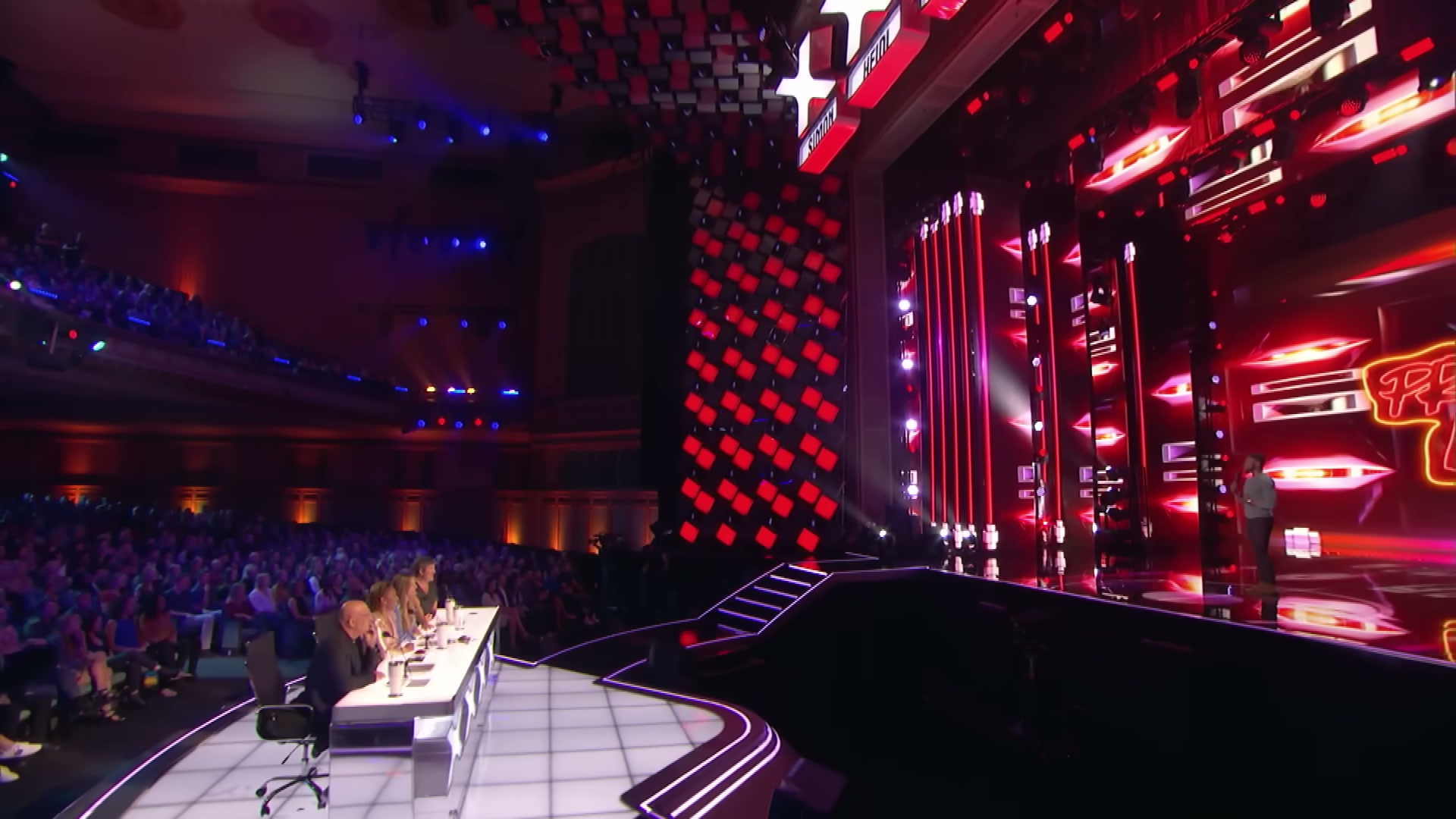
Once the set begins, Cotter works with the confidence of a comic who understands pace. His jokes move quickly, often starting in familiar family territory before taking a sharp turn, and that rhythm keeps the audience engaged because each punchline arrives before the previous laugh has fully faded.
The material leans into subjects that are common to standup, including marriage, parenting, twins, pregnancy, and the absurd pressures of domestic life. What makes the routine effective is not novelty alone, but the precision of the reversals, as Cotter repeatedly sets up ordinary situations and then tilts them into something more surprising.
The compilation also shows why comedy can be uniquely difficult in a competition format. Singers, dancers, and danger acts often create immediate spectacle, while standups must build momentum with nothing but language, personality, and timing, making each pause and audience reaction feel unusually important.
Cotter’s performance benefits from his ability to keep the room warm without seeming desperate for approval. Even when the jokes edge toward darker or more mischievous territory, the delivery remains controlled and polished, allowing the act to feel playful rather than harsh.
The audience response is a major part of the segment’s success. Laughter arrives steadily throughout the routine, not just at isolated punchlines, and that consistency helps create the impression of a seasoned professional reconnecting with the exact environment that first expanded his national profile.
There is also a clear narrative satisfaction in watching him return to the franchise that changed his career. The show reminds viewers that America’s Got Talent opened doors for him, but it also makes clear that he came back not merely to revisit old applause, but to test whether his comedy could still compete on an international champions stage.

That pressure is central to the appeal of The Champions format. Returning acts are not judged only against their past selves, but against winners, finalists, and fan favorites from across the world, which raises the stakes for a comedian whose craft depends on personal connection rather than visual scale.
The judges’ engagement reinforces the celebratory tone of the compilation. Their smiles, attention, and willingness to play along with the runner up narrative make the set feel like part reunion, part audition, and part redemption bid.
As a piece of television, the segment understands that the best comedy performances often begin before the first joke. The backstage nerves, the reminder of past disappointment, the warm introduction, and the onstage banter all prepare the audience to root for a comeback, giving the laughs more emotional weight.
The broader compilation appears designed to honor comic resilience within a talent show ecosystem often dominated by grand production. By placing standup in the same arena as international variety acts, it highlights how a microphone, a point of view, and a well timed punchline can command a room just as powerfully as spectacle.
Cotter’s return stands out because it is built on both humility and confidence. He acknowledges the sting of losing, even to a beloved animal act, but he refuses to let that moment define him as anything less than a hardworking comic with more to say.
The result is a buoyant and effective opening to a best of collection. It presents comedy not as filler between larger acts, but as a disciplined performance form where experience, honesty, and timing can turn old disappointment into fresh applause.