
The audition begins with a young magician walking onto the America’s Got Talent stage in 2014, looking nervous but composed as he introduces himself to the judges. At 25, Mat Franco presents himself not as a grand illusionist with smoke and spectacle, but as a self-taught performer ready to make a deck of cards carry an entire story.
His opening conversation is simple and disarming, built around the idea that he has spent most of his life chasing one fascination. He tells the panel that he is a magician, then quickly makes it clear that the routine he has prepared is not just a standard card trick.
Before the performance, the profile segment gives the act emotional context by tracing his interest in magic back to early childhood. Franco explains that he first discovered magic on television when he was about four years old, becoming so captivated that watching was not enough.
He describes recording magic specials and playing them back in slow motion, studying tiny gestures and hidden rhythms as if he were decoding a secret language. That image of a child rewinding tapes again and again helps frame him as someone shaped by patience, obsession, and trial rather than formal instruction.
The segment also highlights the role of family support, especially the patience of his grandmother. Franco recalls practicing constantly for relatives, often failing before improving, while his grandmother continued to sit through trick after trick.
That detail gives the audition a softer emotional center, because the performance is not only about impressing a television audience. It is also about showing how years of awkward practice, encouragement, and persistence can become a polished moment under bright lights.
When Franco returns to the stage, he tells the judges he has created something specifically for them and for the show. He describes it as a story written for America’s Got Talent, immediately shifting expectations from a simple reveal to a personalized piece of close-up theater.
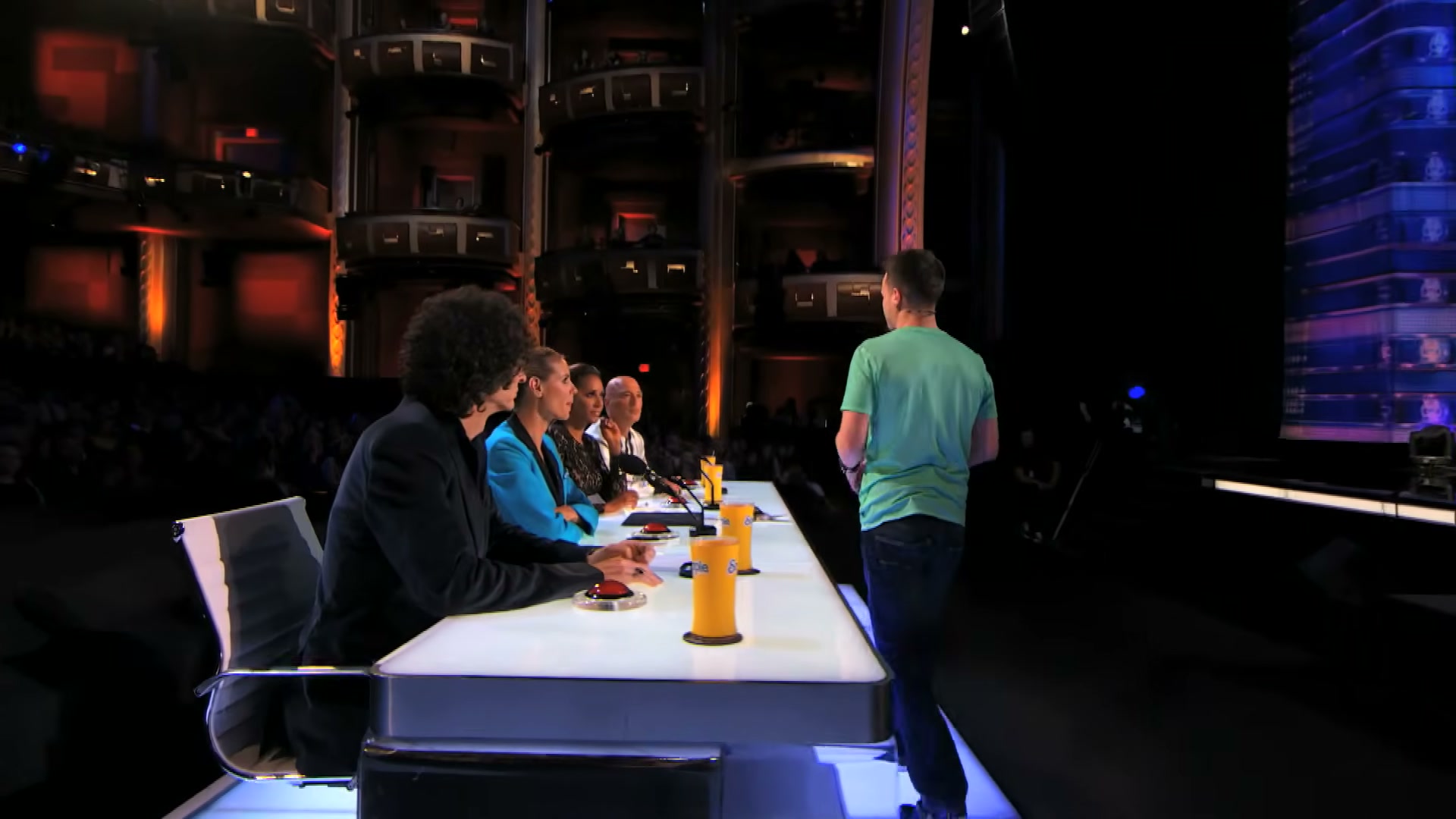
He then moves from the main stage to the judges’ table, reducing the distance between performer and panel. This choice is important because close-up magic depends on intimacy, and the routine gains tension from being performed inches away from skeptical eyes.
With a shuffled deck in hand, Franco begins weaving the judges into the structure of the trick. Howard Stern, Heidi Klum, Mel B, and Howie Mandel are not merely spectators in the routine, but characters represented through cards, timing, and wordplay.
The host, Nick Cannon, also becomes part of the story, as do the Dolby Theatre and the fact that the competition is in its ninth season. By tying those details to the deck, Franco makes the performance feel created for that exact room, on that exact night.
The strength of the routine lies in how casually it blends technical card handling with verbal storytelling. Cards appear to change meaning as the narrative develops, and each new reference gives the audience another reason to lean forward.
Rather than presenting magic as a puzzle with one final answer, Franco treats it as a sequence of surprises. The method is hidden, but the emotional hook is visible: he wants the judges to feel as if the cards are telling their own version of the AGT story.
The comedy also plays a major role in keeping the room relaxed. Franco uses quick lines, playful associations, and judge-specific references to turn the table into a small stage where everyone is part of the act.
That humor matters because close-up card magic can risk feeling overly technical if the performer focuses only on precision. Franco avoids that problem by making the handling serve the story, allowing the audience to enjoy the personalities involved instead of simply waiting for a reveal.
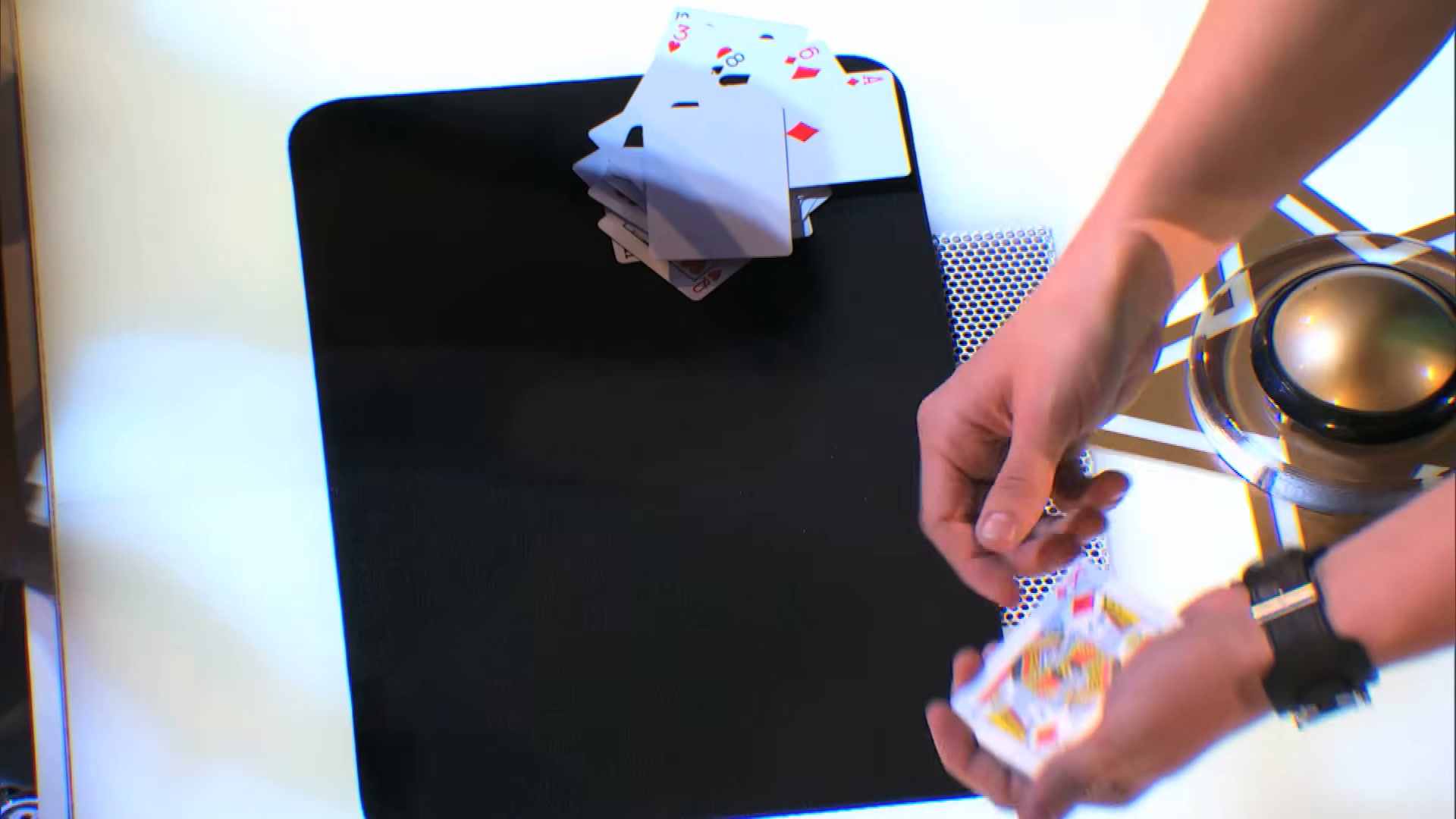
The judges’ reactions build gradually from curiosity to visible amusement. They watch closely, laugh at the customized references, and respond to the way the cards seem to align with people and details they recognize.
The live audience follows the same arc, first observing with interest and then warming as the routine becomes more inventive. Applause and laughter arrive not only because something impossible seems to be happening, but because the impossible is attached to a personal and familiar narrative.
Franco’s nervousness remains part of the charm, especially because it contrasts with the control shown in his hands and pacing. He does not try to appear mysterious or untouchable, instead presenting himself as approachable, quick, and genuinely excited to share the moment.
That approach helps distinguish him from performers who rely on theatrical distance. His magic feels conversational, as if he is letting the judges in on a story while still keeping the secret safely out of reach.
The audition also works because it connects biography with performance style. A child who learned by watching, rewinding, and practicing alone becomes an adult who understands that attention to detail can create wonder.
His grandmother’s support, mentioned earlier in the segment, lingers in the background of the act. Every clean movement and confident joke suggests the invisible history behind the routine, including the failed attempts that came before the polished version onstage.
By the end, the performance has become more than a card demonstration. It is a compact origin story, a tribute to persistence, and a clever use of the America’s Got Talent setting itself.
The audition’s appeal comes from that combination of skill, humility, and structure. Franco proves that a small deck of cards can fill a large theater when the performer knows how to make technique, personality, and story work together.