
America’s Got Talent built this 2019 audition segment around a familiar but still effective contrast, placing extreme physical artistry beside an animal act charged with visible uncertainty. The result was a compact reminder of why the show thrives on variety, since one performance invited amazement through precision while another drew attention through risk, atmosphere, and judge reactions.
The most celebrated moment belonged to a contortion and dance group from Kyrgyzstan, whose members introduced themselves with a mix of confidence, humility, and clear purpose. They explained that their dream had been shaped partly by watching earlier dance acts on the same stage, turning their audition into both a tribute to the franchise and a personal test of whether inspiration could become opportunity.
Their performance combined contortion, synchronized movement, and theatrical staging in a way that made the panel lean forward almost immediately. Bodies folded, twisted, and flowed through shapes that seemed to challenge normal expectations of anatomy, yet the act never felt loose or accidental because every transition appeared rehearsed to exact timing.
What made the routine stand out was not only flexibility, but control under pressure. Many contortion acts rely on shock value alone, yet this group added rhythm, musicality, and ensemble awareness, making each impossible-looking position part of a larger dance language rather than a disconnected display.
The judges responded with surprise that quickly turned into open admiration, with Simon Cowell remarking that the performers did not look human in the middle of their most uncanny movements. His comment captured the room’s reaction without reducing the act to a stunt, because the performance had already proved that its strongest quality was discipline, not novelty.
Other panelists focused on how articulate, impactful, and tight the routine felt, praising the group for making difficult material look clean rather than chaotic. That distinction mattered because America’s Got Talent often rewards danger and spectacle, but here the danger was internalized through years of training, then presented as polished entertainment.
The audience also played a large role in the moment, reacting not only to individual poses but to the cumulative sense that the group kept raising the level. Applause grew into standing approval, and by the time voting arrived, the decision felt less like suspense than confirmation of what everyone in the theater had already signaled.
The unanimous yes votes gave the group a clear path forward and positioned them as one of the audition’s strongest success stories. Their segment worked because it balanced backstory, skill, and immediate visual impact, creating a complete television arc without needing manufactured conflict or excessive explanation.
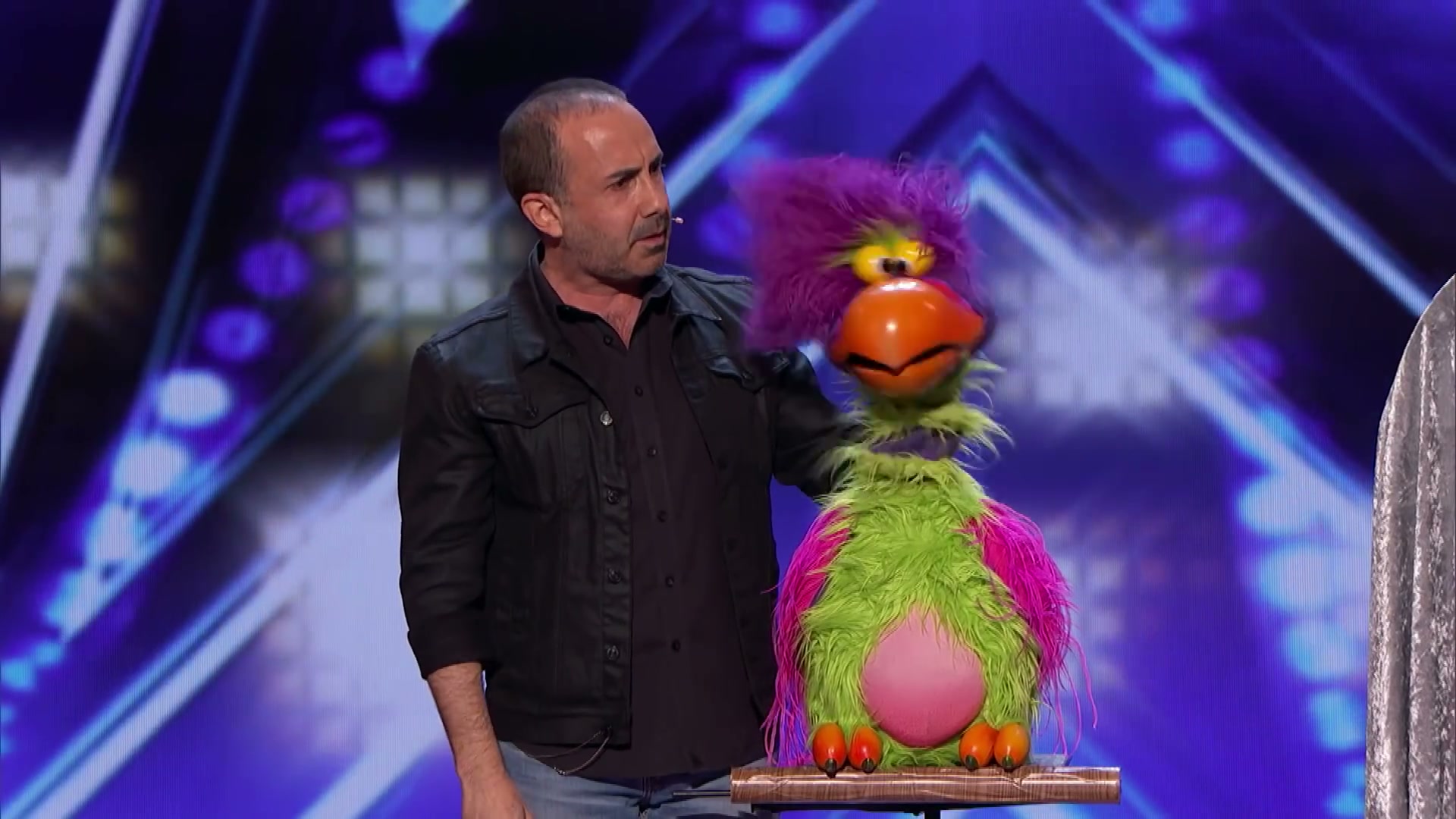
The episode then shifted tone with an exotic bird trainer from Philadelphia, who entered with a bird of prey and changed the energy in the room almost at once. Instead of presenting flexibility or choreography, his act relied on animal behavior in a loud studio filled with lights, cameras, movement, and unpredictable audience energy.
Before the demonstration, he explained that working with such animals carries real challenges because they respond to instinct, environment, and stress. That framing was important, since it helped viewers understand why even a simple greeting or flight-related moment could feel tense when performed live in front of a large crowd.
The judges’ body language showed that tension clearly, as they watched with a mix of curiosity, respect, and unease. Animal acts on talent shows can create memorable television, but they also raise stakes beyond normal stagecraft because success depends on trust between trainer and animal as much as rehearsal.
In this case, the bird’s presence created suspense even when the action was limited, proving that risk can be communicated through atmosphere rather than constant movement. The audience waited for each cue, the judges tracked every reaction, and the act became less about spectacle in motion than about whether calm control could hold inside an unnatural performance setting.
That difference made the two auditions useful mirrors of each other. The contortion group showed human bodies trained to seem impossible, while the bird act showed a trained animal whose natural power remained visible even within a controlled routine.
Both segments also highlighted the judging panel’s role as emotional guide for viewers at home. When they smiled, gasped, flinched, or stood, those reactions helped define whether each act should be read as beautiful, strange, dangerous, or impressive.

The best reality competition auditions often depend on this layered response, where performance and reaction become inseparable. Viewers are not only assessing talent; they are watching professionals and celebrities process uncertainty in real time, then using those responses as part of their own judgment.
For the contortion group, that response became celebration because the act delivered clear excellence from start to finish. Their movements were extreme, but the structure was readable, the teamwork was obvious, and the overall presentation suggested that they had more material ready for later rounds.
For the bird trainer, the response remained more complicated because live animal performance carries a different set of expectations. A calm outcome can still feel dramatic, while a restrained routine may leave some viewers wanting more visible payoff after such a tense setup.
That balance between admiration and anxiety is central to the show’s appeal. America’s Got Talent sells possibility, but it also sells the feeling that anything might happen when performers bring unusual skills, uncommon partners, or physically demanding ideas to a national stage.
The episode did not treat talent as one fixed category, and that breadth gave the hour its texture. Dance, contortion, animal handling, showmanship, and nerve all competed for attention, proving that variety remains the format’s greatest advantage.
Still, the clearest winner of the segment was the group whose act combined shock with refinement. Their audition gave judges language for astonishment, gave viewers images hard to forget, and showed how an act from far outside the usual pop performance lane could command a major American stage.
By pairing that triumph with a bird act built on controlled uncertainty, the episode captured both sides of high-risk audition television. One act made danger look elegant, another made control feel fragile, and together they showed why America’s Got Talent continues turning brief stage appearances into memorable tests of skill, trust, and nerve.