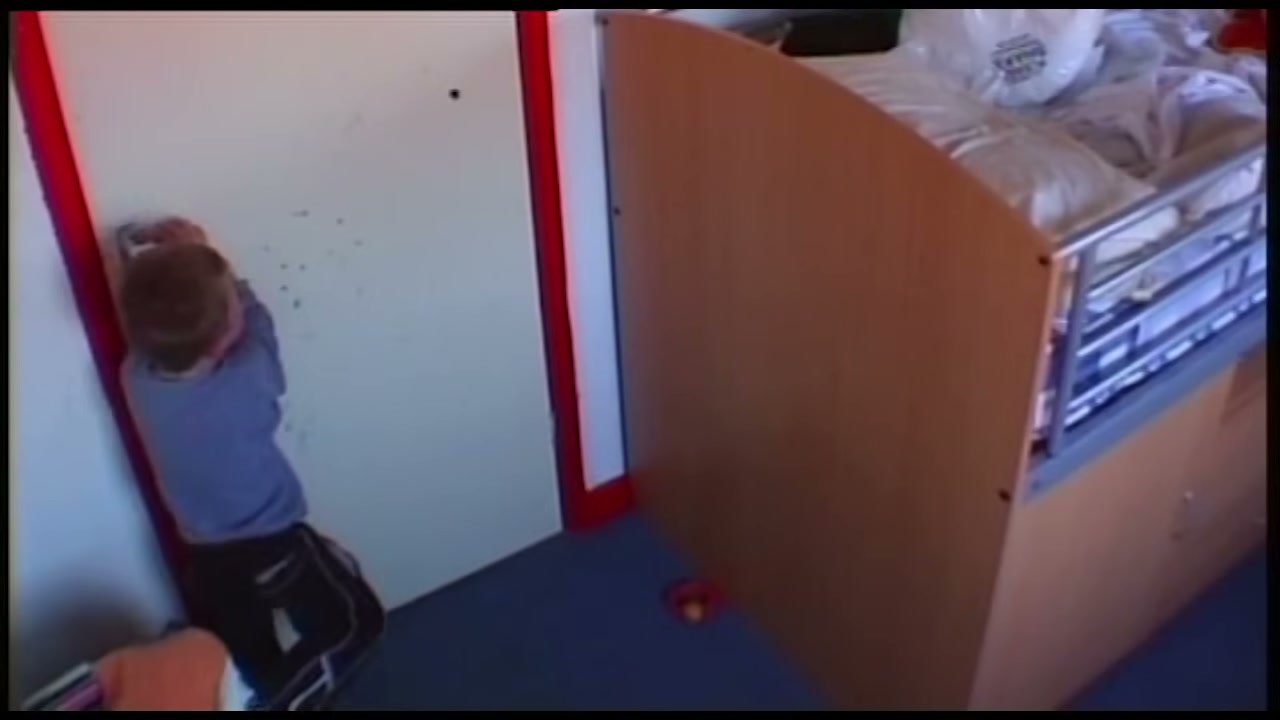
During a tense dinner featured on Supernanny, a four year old boy again controlled the pace of family life while his parents struggled to respond. What began as another difficult mealtime quickly became a revealing test of discipline, consistency, and communication inside a household already strained by repeated conflict.
The clip opens with the child being called to the table, where his mother asks him to sit down and eat. Instead of settling, he continues to challenge the routine, prompting his father to intervene as the evening turns from ordinary frustration into a sharp family confrontation.
The breaking point comes when the boy spits at his mother, an act that alarms both parents and draws immediate attention from the parenting expert. His father reacts by taking him to his bedroom, framing the move as a firm consequence for behavior he says cannot be tolerated.
What follows is less a simple timeout than an emotional display of how discipline in the home has become confused and highly charged. The father raises his voice, expresses deep frustration, and appears determined to show that the child must understand the seriousness of his actions.
Watching closely, Supernanny identifies a familiar pattern, saying the child is seeking attention through negative behavior rather than learning calm boundaries. She notes that the spitting is part of a wider cycle that also includes banging and kicking.
The father explains that his approach is meant to signal clearly that such conduct is unacceptable, and he insists he is trying to be firm. Yet he also admits that leaving the boy in his room until he calms down often fails, with some standoffs lasting for hours.
In one of the clip’s most revealing moments, he acknowledges how intensely angry he becomes when the behavior continues despite repeated warnings. He describes feeling his emotions rise beyond a comfortable limit, suggesting that his discipline is as much about his own frustration as the child’s conduct.

The mother, however, responds to the escalating tension in a very different way, moving toward comfort and de escalation. She goes upstairs, tries to distract the child from his upset, and asks whether he is prepared to apologize, offering reassurance at a moment her partner sees as premature.
That contrast exposes the central issue in the family: the parents are not operating from the same plan when conflict strikes. While one wants consequences to remain in place, the other worries mainly about overwhelming emotion and reaches first for soothing, undermining consistency in the process.
Supernanny presses both adults on whether they are truly on the same page, and the answer is an unmistakable no. She points out that a child who is removed for misbehavior but then receives cuddles and kisses may struggle to understand what boundary was actually set.
The father argues that this softer response wipes away the message he tried to deliver by sending the boy to his room. From his perspective, any progress made through firmness disappears once comfort arrives too quickly and suggests that the incident has no lasting consequence.
The mother counters that physical force is not the answer, saying there is no need to drag a four year old into a bedroom. At the same time, she concedes that she feels hurt by the lack of respect shown to her and openly questions her own effectiveness as a parent.
Her comments reveal a deeper insecurity beneath the argument, as she admits she is not handling the situation as well as she wants. That vulnerability shifts the scene from a dispute over one episode at dinner to a broader portrait of parents losing confidence under constant pressure.
The father responds by accusing his partner of abandoning strategies when they do not work quickly enough, saying she simply walks away. She rejects that account and says his interventions have already complicated matters before she tries a different response, deepening a rift that now extends beyond parenting technique.

As the argument escalates, another important detail emerges: the father says he sometimes leaves the house and goes for a drive to calm down. He explains that he does so because his anger and frustration build to a point where he fears what might happen if he stays in the moment.
That admission lands heavily, because it shows the conflict is no longer limited to a child’s misbehavior but has become a family safety concern. Supernanny recognizes that the couple’s relationship is being damaged by repeated cycles of provocation, anger, comfort, and blame with no shared structure.
The dinner table scene therefore serves as more than a dramatic television moment; it becomes a case study in conflicting parental messages. Experts in family dynamics have long warned that children test boundaries most intensely when adults appear divided, uncertain, or emotionally flooded during discipline.
Supernanny’s intervention in the clip centers on that principle, urging both parents to see that consistency matters as much as consequence. A calm, united response, rather than one driven by anger or immediately softened by mixed signals, is presented as the clearest path toward change.
For viewers, the segment offers an uncomfortable but recognizable portrait of family stress, showing how small dinner disputes can expose much larger fractures. By the end of the exchange, the most pressing question is not only how to correct one young child, but how two adults can rebuild trust, agreement, and control together.
The video description frames the moment as a close look at a father’s style of discipline when his four year old misbehaves over dinner. Within that short setup, however, the clip also captures a mother seeking tenderness, a professional challenging both sides, and a couple confronting unresolved tension in real time.
Its enduring message is that successful discipline depends not on louder reactions, but on steady limits, emotional control, and parental unity. Until those pieces align, the family’s nightly struggles are likely to continue, regardless of who wins any single argument for long.