
The segment presents a familiar modern conflict in a sharper and more personal form, as a teenage creator’s hunger for viral attention collides with the limits of family patience. At the center is 17-year-old Jack Doherty, whose online prank videos have drawn large audiences while raising concerns among relatives who say the stunts can be reckless, disruptive, and hurtful.
Dr. Phil frames the discussion around a central question that reaches beyond one household, asking when comedy stops being harmless fun and starts creating real consequences for other people.
The show does not treat online success as meaningless, but it challenges the idea that views, likes, and laughter from strangers automatically justify what happens behind the scenes.
The most dramatic example involves Jack taking his older brother Michael’s luxury car without permission, even though he did not have a license. The prank may have been designed as shareable content, but the footage shows the situation quickly becoming tense when Michael realizes what has happened.
For Michael, the issue is not simply that a car was moved or that a joke went too far for a few minutes. He sees the incident as part of a larger pattern in which his younger brother treats other people’s boundaries as props for entertainment.
The show’s footage captures an angry confrontation between the brothers, and the physical tension gives the conversation a weight that ordinary online clips can often hide. What might appear to viewers as chaotic comedy looks very different when the person on the receiving end is a family member who feels disrespected and provoked.
Jack’s response throughout the segment is defensive, and he repeatedly describes the behavior as joking, having fun, and living life. His posture reflects a mindset common among some young creators, where a prank’s success is measured by reaction and reach rather than by whether everyone involved feels safe or respected.
Michael appears remotely and explains that the car incident was not funny to him in the moment, even if Jack later presented it as entertainment. He stresses that pranks can have lasting effects, especially when they involve property, employment, family trust, or public embarrassment.
Another example raised during the discussion involves Jack paying Michael to quit his job and confront his manager on camera. Even if money changed hands and Michael participated, the story raises questions about pressure, judgment, and whether a quick viral moment is worth damaging someone’s real-world opportunities.
The broader concern is that Jack’s brand of content appears to depend heavily on other people being shocked, upset, or placed in uncomfortable situations. That approach can generate immediate attention, but it also risks teaching a young audience that humiliation and disruption are acceptable shortcuts to popularity.
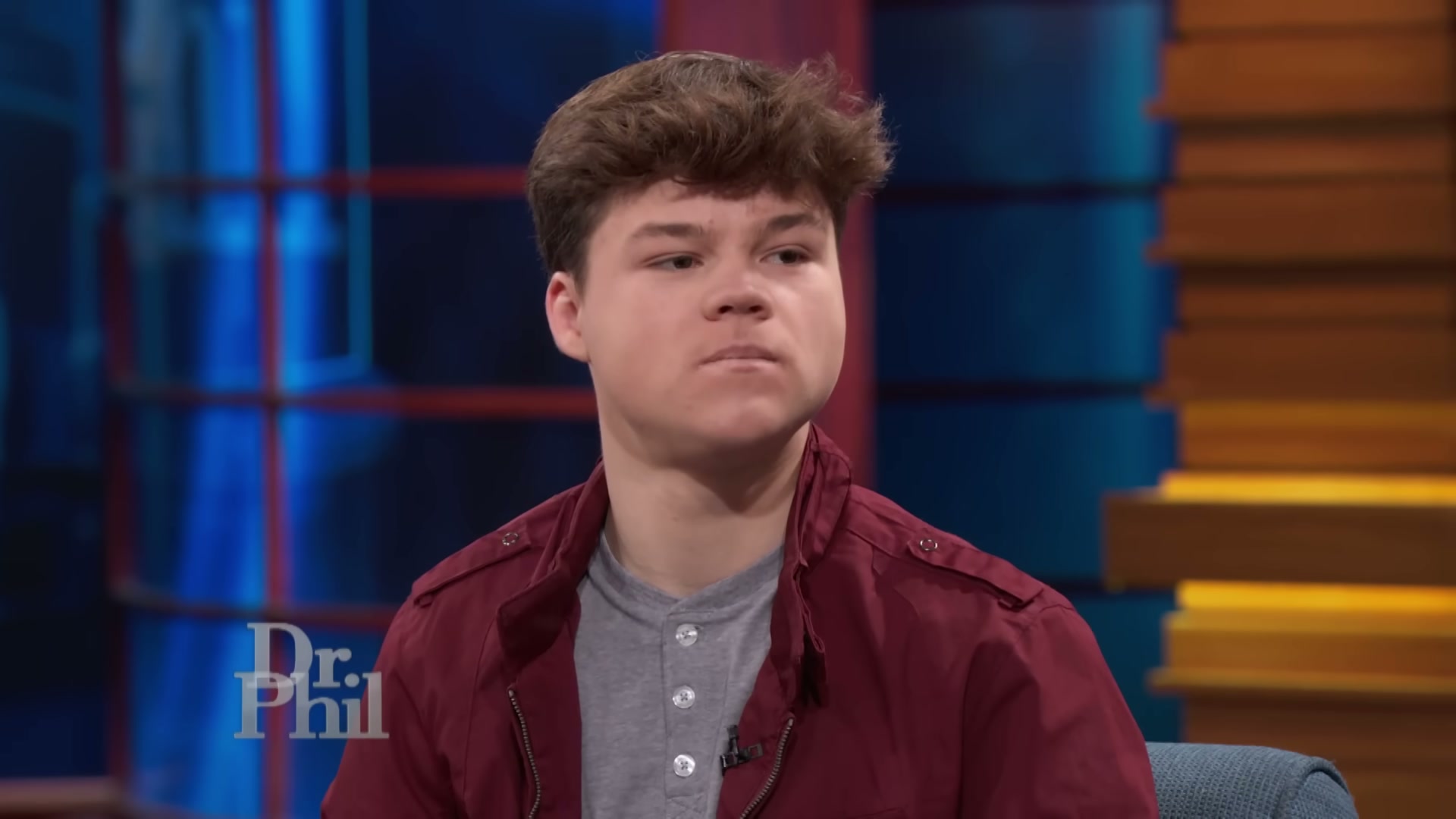
Dr. Phil attempts to redirect the conversation by drawing a distinction between comedy that targets others and comedy that makes the creator the center of the joke.
His advice is that lasting success online often comes from self-awareness, originality, and the willingness to be funny without making someone else pay the price.
This point is important because the segment is not simply a lecture against social media or youth culture. Instead, it recognizes that digital entertainment is a real field with real opportunities, while arguing that creators need judgment, empathy, and boundaries if they want a career rather than a string of controversies.
Jack does not appear eager to accept that distinction, and his interruptions become one of the defining features of the exchange. Each time Dr.
Phil tries to build a point, Jack pushes back, talks over him, or returns to the idea that the pranks are just jokes.
The tension grows because the conversation is not only about one incident, but about whether Jack can hear criticism from people who care about him. His family’s frustration seems rooted less in a desire to end his career and more in fear that he is confusing attention with approval.
Dr. Phil’s tone shifts as the interruptions continue, moving from patient explanation to visible irritation.
Eventually, he ends the exchange, signaling that advice cannot land when the person receiving it is unwilling to pause long enough to consider it.
That ending gives the segment a somewhat unresolved feeling, because the central problem remains open. Jack still has an audience, his family still has concerns, and the tension between online performance and offline accountability remains unchanged.
The family dynamic is one of the more compelling aspects of the segment because it complicates any simple reading of Jack as merely ambitious or merely careless. His relatives appear to understand that his online career matters to him, but they also want him to recognize that family members are not disposable characters in his content.
Michael’s role is especially notable because he is not presented only as an angry older brother. He becomes a representative of people who may agree to participate in online content at times, yet still feel that certain lines should not be crossed.
The car incident illustrates why consent and context matter so much in prank content. A person might laugh later, accept payment, or understand the creator’s intentions, but that does not erase the stress of being blindsided in a situation involving safety, property, or public embarrassment.

The segment also highlights a generational and cultural gap around what counts as success. For Jack, millions of views may seem like proof that the formula works, while for the adults around him, those same numbers may look like incentives pushing him toward bigger risks.
Dr. Phil’s advice about making himself the joke points toward a more sustainable creative path.
If Jack can turn the camera inward and build humor around his own vulnerability, awkwardness, or exaggerated reactions, he could keep entertaining viewers without relying on conflict with people close to him.
That kind of shift would not require him to abandon comedy or stop being bold. It would require him to understand that the strongest performers often control the joke by taking responsibility for it, rather than forcing others into uncomfortable roles.
The segment’s most balanced takeaway is that online creators can be both talented and immature, successful and in need of guidance. Jack’s ability to attract attention is not dismissed, but the show asks whether attention alone is a strong enough foundation for a young person’s future.
There is also a cautionary message for audiences who reward escalating behavior without seeing the aftermath. Every viral prank has an off-camera reality, and the people who appear for a few seconds in a clip may be dealing with anger, embarrassment, or damaged trust long after viewers move on.
For parents and siblings of young creators, the discussion reflects how difficult it can be to set limits when a teenager’s work is public, profitable, and constantly reinforced by strangers. Saying no to a prank can feel like standing in the way of success, even when the real goal is protection.
For creators, the episode offers a reminder that boundaries are not enemies of comedy. They can actually make content stronger by forcing more creativity, clearer planning, and humor that does not depend on someone else feeling violated or cornered.
By the end, the mood has moved from tense amusement to exasperation, with Dr. Phil and the family visibly disappointed that Jack will not fully listen.
The unresolved nature of the exchange may be frustrating, but it also feels honest, because changing a young creator’s mindset often takes more than one televised confrontation.
The segment ultimately portrays viral fame as both an opportunity and a test of character. If Jack can learn to value trust as much as attention, he may find a way to keep building his platform without turning the people closest to him into casualties of the next prank.