
A tense daytime talk show segment placed a 14-year-old girl’s daily marijuana use at the center of a broader debate about adolescence, parenting, risk, and accountability. What began as a direct question about how often she smokes quickly became a confrontation over whether adults around her were helping her stay safe or normalizing behavior that could affect her future.
The teenager described marijuana as part of her everyday routine, saying she used it repeatedly throughout the day and treating that admission with little visible concern. When asked whether she understood what frequent marijuana use can do to a developing teenage brain, she responded with blunt indifference, making clear that warnings had not changed her attitude.
That response set the emotional tone for the exchange, because the issue was no longer simply whether a minor was breaking rules or making a risky choice. It became a question of how a young person reaches the point of dismissing possible consequences, and what role family structure, supervision, and coping habits may have played in that process.
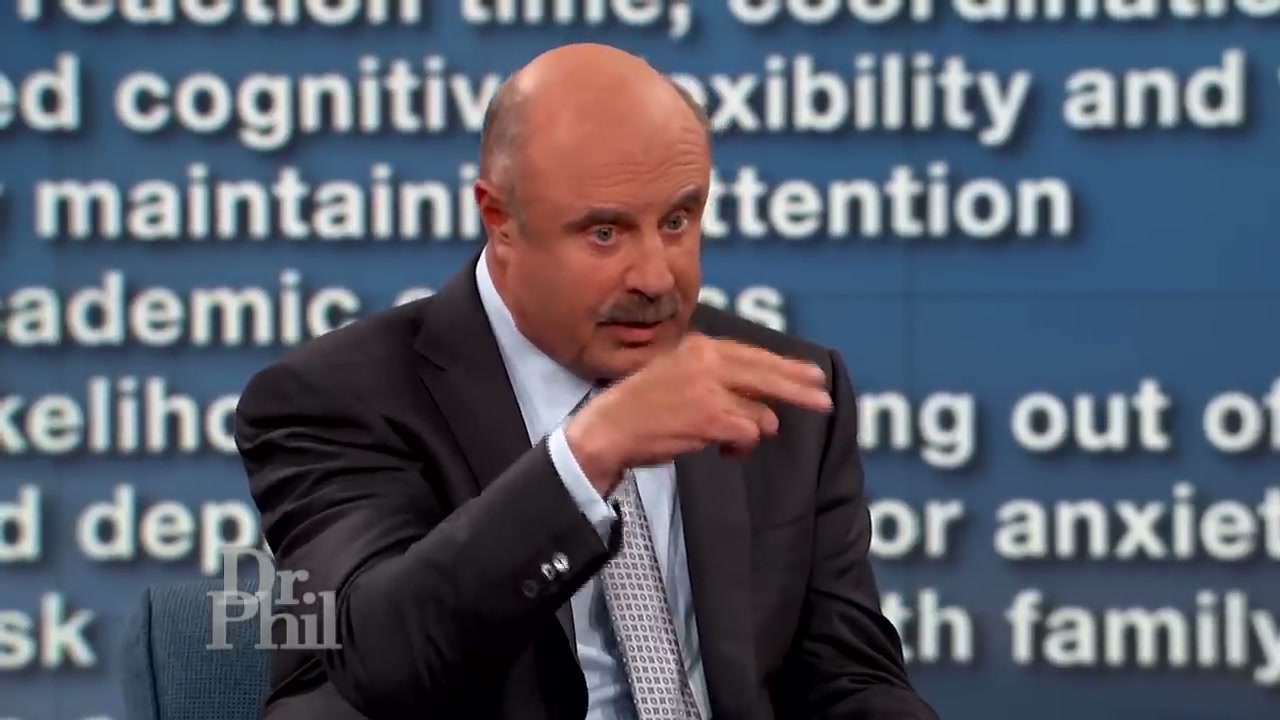
The host pressed the teenager on the health concerns linked to adolescent marijuana use, especially when use is frequent and begins early. He pointed to research associating marijuana exposure during brain development with problems involving memory, learning, attention, coordination, school performance, emotional regulation, and long-term cognitive growth.
His message was not framed as a moral lecture about one isolated act, but as a warning about repeated use during a vulnerable stage of development. The teenage brain is still forming pathways involved in judgment, impulse control, motivation, and decision-making, which is why many health professionals view heavy substance use in adolescence as especially concerning.
The teenager, however, did not appear persuaded by the list of risks. She suggested that she had heard similar warnings before, and her repeated response was that she did not care, a statement that captured both defiance and a deeper resistance to adult intervention.
That kind of reaction can be alarming, but it can also reflect the complicated psychology of adolescence. Many teenagers are naturally more focused on immediate relief, peer approval, independence, or emotional escape than on long-term outcomes that may feel distant or abstract.
The segment’s tension increased when the conversation shifted from the teenager’s choices to her mother’s actions. The mother acknowledged that she had provided marijuana, explaining that she believed it might be safer than leaving her daughter to obtain it elsewhere from unknown sources.
Her argument resembled a form of harm reduction, though presented in a highly controversial family context. She seemed to suggest that if her daughter was going to use marijuana anyway, parental involvement could at least reduce the danger of contaminated products or more serious substances.
The host strongly rejected that framing, arguing that the mother had created a false choice between providing marijuana and allowing access to something worse. In his view, the real responsibility was not to facilitate the habit under controlled conditions, but to establish boundaries, seek help, and address the reasons the teenager was using marijuana so often.
This was the central clash of the discussion, and it touched on a difficult question many families face in less dramatic forms. When a child is already engaging in risky behavior, parents may feel torn between strict prohibition, practical safety measures, emotional support, and fear that pushing too hard will drive the child further away.
Still, the fact that the teenager was only 14 made the situation especially serious. At that age, adults are expected to provide structure and protection, even when a child resists rules or insists that she is capable of making her own decisions.
The mother’s position appeared defensive, shaped by fear that her daughter could encounter greater danger outside the home. Yet the host argued that fear cannot become the foundation of parenting, because it may lead adults to surrender authority precisely when young people need guidance most.
A balanced view recognizes that parents in crisis often make decisions under pressure and may believe they are choosing the least harmful option available. However, it also recognizes that supplying a minor with marijuana can blur boundaries, weaken trust in parental judgment, and reinforce the idea that drug use is an acceptable daily coping mechanism.
The teenager’s language about using marijuana for “breakfast, lunch, and dinner” was striking because it suggested a habit woven into ordinary life rather than an occasional experiment. Whether said literally, casually, or for shock value, the phrase conveyed how normalized the behavior had become in her own mind.
Frequent use also raises questions beyond the drug itself, including what feelings or circumstances the teenager may be trying to manage. Heavy reliance on any substance at such a young age can sometimes point to stress, conflict, trauma, anxiety, depression, boredom, peer influence, or an absence of healthier coping tools.
That does not mean every teenager who uses marijuana has the same story or the same level of risk. It does mean that a pattern of daily use deserves careful assessment rather than dismissal, especially when the young person openly says consequences do not matter.
The host’s approach was confrontational, and some viewers may see that as necessary when a family appears stuck in denial. Others may question whether public confrontation is the best way to reach a defiant teenager, because shame or embarrassment can sometimes harden resistance instead of encouraging reflection.
Even so, the segment succeeded in highlighting an important public health concern. As marijuana laws and social attitudes change in many places, young people may receive mixed messages about whether cannabis is harmless, medically useful, risky, illegal, normal, or acceptable only for adults.
That confusion makes clear communication essential. Adults can acknowledge that marijuana policy is complex while still explaining that adolescent use carries different concerns from adult use, particularly when it is frequent and begins before the brain has matured.

The conversation also showed why scare tactics alone rarely work with teenagers. If a young person is already saying she does not care, simply repeating risks may not be enough unless adults also address motivation, relationships, emotional pain, and the practical steps needed to change behavior.
Effective intervention often requires more than one stern conversation. Families may need counseling, substance use evaluation, school support, mental health care, consistent boundaries, and a plan that reduces access while building healthier alternatives.
The mother’s fear that her daughter might obtain something more dangerous should not be ignored. In many communities, parents worry about unsafe products, older peers, illegal markets, and the possibility that a child experimenting with one substance could be exposed to others.
But harm reduction within a family does not have to mean providing the substance. It can mean open communication, transportation away from unsafe settings, medical consultation, monitoring, therapy, honest education, and firm expectations about what is and is not allowed at home.
The host’s criticism of the mother centered on the idea that parental love must include limits. Compassion for a struggling teenager is important, but compassion without boundaries can leave a young person without the structure needed to change course.
For the teenager, the hardest challenge may be moving from defiance to self-protection. That shift often happens only when a young person feels both accountable and supported, rather than merely attacked or abandoned.
For the mother, the challenge is different but equally difficult. She must move from reacting to her daughter’s choices out of fear to leading with a clearer plan, one that prioritizes safety without reinforcing the behavior she says she is worried about.
The segment did not offer a simple resolution, and perhaps that was its most realistic element. Families dealing with adolescent substance use rarely solve the problem in one conversation, especially when trust, control, fear, and emotional distress are already tangled together.
What it did offer was a sharp picture of a household at a crossroads. A teenager’s indifference to risk, a parent’s attempt to manage danger, and a host’s forceful challenge combined to raise a larger question about how adults should respond when a child treats a serious habit as normal.
The answer is unlikely to be found in panic, permissiveness, or public humiliation. It is more likely to come from consistent boundaries, professional guidance, honest education, and a renewed commitment to helping young people build lives that do not depend on daily substance use.