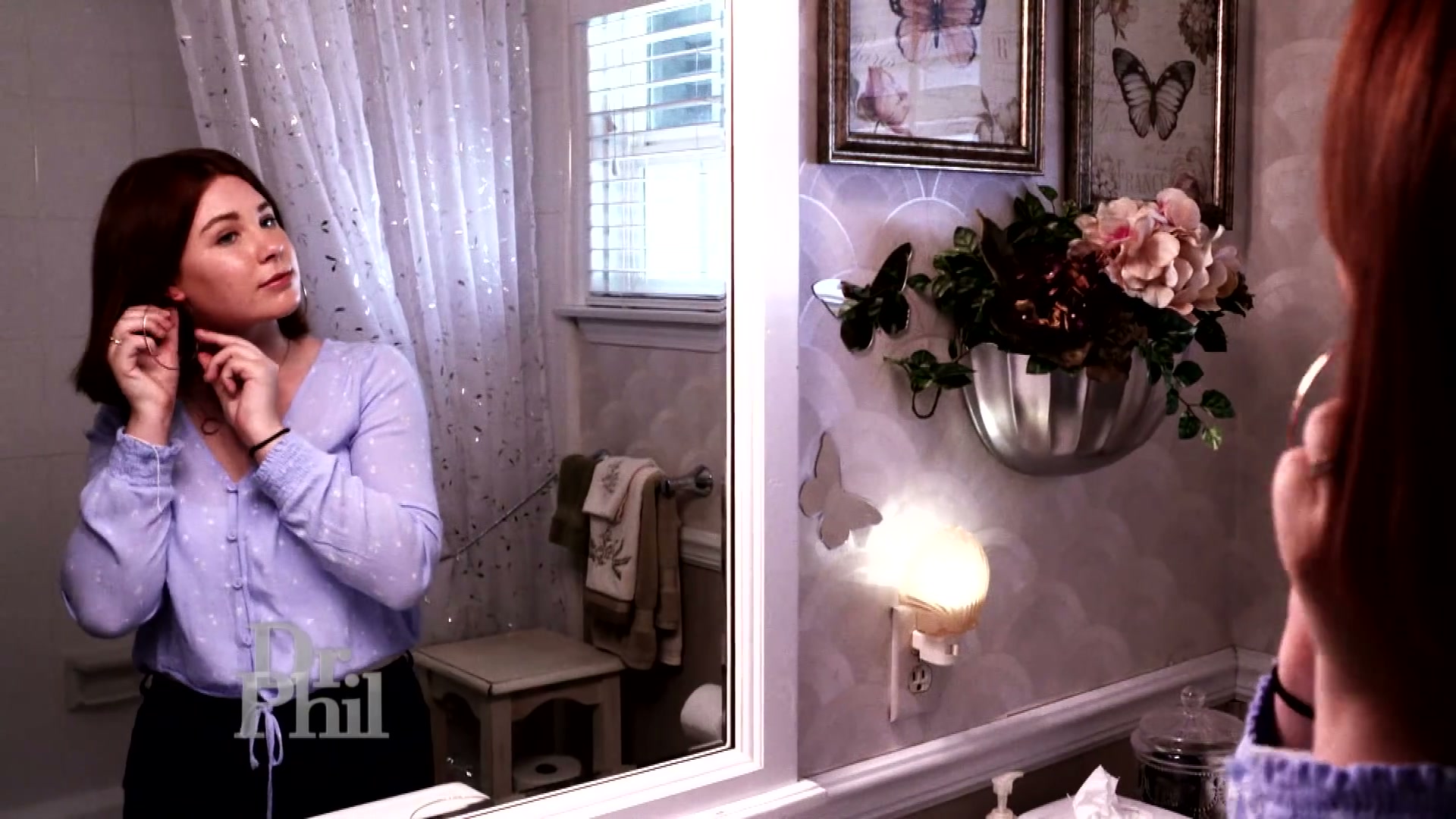
A daytime talk show segment examined a family in crisis as a 17 year old described how online gaming spaces became a place for attention, validation, and risky relationships with older men. What began as a discussion about internet behavior quickly widened into a deeper conversation about trauma, parental fear, trust, and the difficult line between protecting a teenager and losing her altogether.
The teen presented herself as a gamer who spent much of her social life in chat rooms and online communities connected to gaming. In those spaces, she said, she received attention from older men and eventually began exchanging intimate messages and images, sometimes because she wanted approval and sometimes because she wanted gifts such as video games.
Her parents said they were alarmed not only by what she had done online, but by how calmly she described it. To them, the issue was not simple rebellion, but a pattern of choices that placed their daughter within reach of adults who might misrepresent themselves, pressure her, or exploit her emotional needs.
The teen, however, framed her actions differently and resisted the idea that she was being controlled or manipulated. She argued that she understood what she was doing, that her parents were overly protective, and that her online relationships gave her a sense of being wanted that she did not always feel at home.
The most urgent concern involved an online boyfriend she believed to be 21 years old. She said they had video chatted, that she trusted him, and that she planned to move across the country to be with him after she turned 18.
Her parents saw that plan as dangerous and premature, especially because the relationship had never been tested in person. They worried that their daughter was mistaking digital familiarity for real knowledge, and that her confidence could leave her vulnerable to someone whose intentions she could not fully verify.
The host pressed on that point by asking whether the teen was moving toward love or running away from pain. That question became the emotional center of the segment, because the family’s conflict was not only about a boyfriend, but about what the teen believed she needed in order to feel safe, valued, and in control.
The parents connected her online behavior to a past sexual assault, saying they feared that unresolved trauma had shaped her choices. They described trying to respond, but the host challenged whether they had acted strongly enough when their child was clearly carrying experiences that required sustained adult support.
One of the most pointed moments came when the host criticized the idea of leaving major decisions about treatment or healing to a traumatized minor. His argument was that a young person may be old enough to speak for herself, but not necessarily equipped to evaluate the long term effects of trauma or choose the level of care she needs.

That criticism landed heavily on the parents, who appeared torn between guilt and defensiveness. They wanted to respect their daughter’s autonomy, yet they also admitted they were frightened that their attempts to avoid pushing her away may have allowed the problem to grow.
The segment avoided portraying the teen as a villain or simply as a reckless child. Instead, it showed a young person using the tools available to her, social platforms, gaming spaces, private messages, and online relationships, to seek attention in ways that carried serious emotional and physical risks.
At the same time, the conversation made clear that online attention can feel powerful to a teenager who is lonely or wounded. Compliments, gifts, and constant communication can create a sense of intimacy that feels real, even when the person on the other side of the screen may be older, more experienced, or less honest than they appear.
The teen insisted that her online boyfriend had no reason to lie about who he was. Her parents and the host pushed back by emphasizing that trust built online is not the same as trust built through shared life, accountability, and verification by people who care about her safety.
The show also highlighted the particular vulnerability of teenagers in gaming and chat communities, where casual conversation can quickly move into private exchanges. Even when a teen believes she is choosing freely, the power imbalance between a minor and an older adult can make the situation unsafe and deeply unequal.
The parents described discovering behavior that shocked them and changed how they viewed their daughter’s online life. Their reaction combined fear, anger, sadness, and helplessness, because they realized that much of her world existed beyond their supervision and outside the normal boundaries of family life.
For the teen, that hidden world seemed to offer independence and escape. For her parents, it represented a network of strangers with unknown motives, a place where their daughter could be praised, pressured, or persuaded before they even knew a conversation had begun.
The host repeatedly returned to the idea that this was not merely a discipline problem. He suggested that the family needed to address the underlying wounds, because restricting a phone or forbidding contact might not solve the deeper need for validation that was driving the behavior.
That point gave the segment a more complex tone than a simple warning about the internet. The danger was real, but the program also suggested that punishment alone could reinforce the teen’s belief that home was a place of control while the online world was a place of acceptance.

The parents appeared to understand that they were facing a narrow path. If they came down too harshly, they risked pushing her closer to the very people they feared, but if they did too little, they risked allowing her to make life altering decisions while still in a vulnerable state.
The teen’s confidence was one of the most striking parts of the discussion. She spoke as though turning 18 would settle the debate, giving her the right to leave and make her own choices, while the adults around her worried that legality and readiness were not the same thing.
That contrast revealed a common family conflict at the edge of adulthood. A teenager may feel that independence is the answer to being misunderstood, while parents may see the same independence as a doorway into consequences their child cannot yet imagine.
The host tried to reframe the issue by asking the teen to consider what she was seeking from the online relationship. Was it a stable future with someone she truly knew, or was it a promise of escape from family tension, painful memories, and the feeling of being watched or judged?
The segment did not offer an easy resolution, and that was part of its impact. Instead, it left viewers with a family still struggling to rebuild trust while facing a deadline created by the teen’s approaching adulthood and her plan to leave.
The broader lesson was not that every online friendship is dangerous or that teenagers should be cut off from digital communities. It was that secrecy, trauma, adult attention, and plans to meet strangers can combine into a situation that requires immediate, careful, and informed intervention.
For parents, the discussion underscored the importance of staying engaged with a child’s online life without relying only on fear or surveillance. It also showed why conversations about consent, manipulation, emotional needs, and digital boundaries must begin before a crisis forces them into the open.
For teenagers, the segment offered a caution about confusing attention with care. Someone who offers praise, gifts, or romance online may still be asking for access that is unhealthy, inappropriate, or unsafe, especially when there is a significant age and power difference.
The family’s pain was visible because everyone seemed to want safety, but no one agreed on what safety looked like. The teen saw distance from home as freedom, the parents saw it as danger, and the host saw unresolved trauma as the force quietly shaping both sides of the argument.
In the end, the story was less about one online relationship than about a family trying to respond after trust had already been damaged. It raised difficult questions about how adults can protect a nearly grown child, how trauma can distort a search for love, and how digital spaces can turn private pain into public risk.