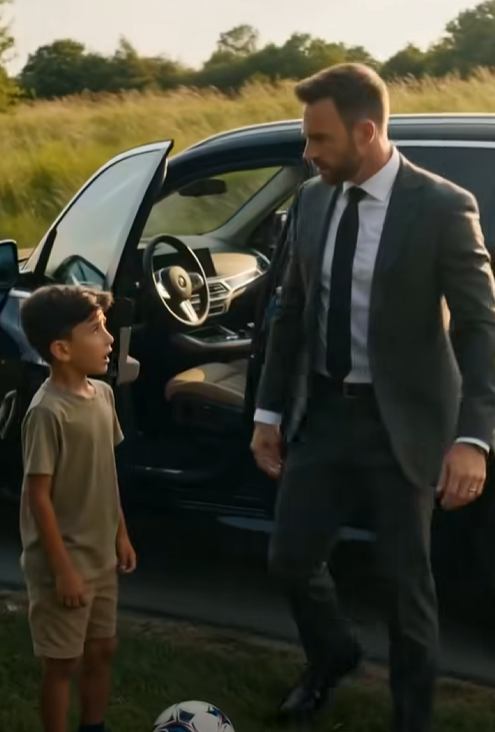
Sometimes blood announces itself not in resemblance but in instinct. He did not stop because he was kind; he stopped because something in him recoiled at the sight of a child walking barefoot over broken heat-split pavement. But the girl with the bleeding feet and guarded eyes would lead him, step by step, toward a decade-old betrayal, a woman he failed, and a daughter who had survived under a false surname while his fortune grew around the silence of her disappearance.
Gabriel Hwang first noticed the blood because it marked the concrete in small dark commas behind her.
It was late afternoon at the edge of summer, the city thick with heat and the exhausted hum of traffic. He had stepped out of a meeting with urban planners and investors near the old bus terminal, irritated by numbers, projections, and men who spoke of poor districts as though they were problems in need of elegant branding.
Near the curb, half hidden by a newspaper stand, a girl of about eleven stood selling packets of tissues and bottled water to commuters. Her dress was faded blue. Her hair, tied badly with string, had begun slipping free in damp curls around her face. And on her feet there was nothing.
The pavement had cracked in places from heat and neglect. Tiny shards of grit clung to the soles. When she shifted her weight, Gabriel saw the raw split skin near one heel.
He crossed the street before deciding whether it was wise.
“Why aren’t you wearing shoes?” he asked.
The girl looked up with the immediate suspicion of children who know adults usually want something if they stop.
“They were stolen.”
“When?”
She shrugged. “A while ago.”
He stared at the thin brave useless dignity of that answer. Nearby, shoppers passed with the practiced blindness city life trains into decent people until they are no longer decent in the way they imagine.
“Come with me,” he said.
“No.”
The refusal was so swift it almost made him smile.
“I’m not asking you to trust me,” he said. “There’s a shop there.” He pointed two storefronts down. “You can choose the shoes. Then leave.”
She weighed him. Hunger, caution, exhaustion, and pride moved visibly across her small face. Finally she nodded once.
Inside the shop the air-conditioning made her shiver. She chose the cheapest pair.
“You need socks too,” Gabriel said.
She began to protest. He silenced her with a look so familiar—even to himself—that something inside him tilted.
Her name was Hana. She lived with an aunt, she said. Her mother had died years before. No father.
He learned these details gradually over iced tea and rice buns because after the shoes came food, and after food came the sort of wary temporary truce children sometimes grant strangers who have not yet betrayed the first act of kindness. Hana had a habit of turning labels outward on bottles before drinking.
His late college lover, Yura, used to do the same. She said she disliked sticky fingers and logos touching her mouth. Gabriel remembered that trivial gesture with such force he nearly set his glass down too hard.
Yura had vanished twelve years earlier after their relationship ended under pressure from Gabriel’s family, whose empire had no use for a pregnant scholarship student with opinions and no pedigree. She wrote one last message saying she would not raise a child beneath the Hwang name only to watch that child become leverage.
Gabriel searched briefly, then weakly, then not at all once his father’s illness and succession fight consumed everything. Cowardice, he later learned, rarely feels dramatic while one is practicing it.
Hana led him to the aunt’s rooming house at dusk because he insisted on making sure the shoes fit properly and she insisted on proving she could handle herself. The aunt, drunk and startled, let slip enough in ten chaotic minutes to confirm what Gabriel already feared: Yura had died of untreated pneumonia two winters before, after years of unstable work.
The girl had her mother’s documents, her mother’s old student card, and in a rusted tin box beneath the bed, a photograph of Yura at nineteen with a young man whose face had been angrily scratched out.
Not scratched hard enough.
Gabriel recognized his own watch on the wrist.
The DNA test was almost ceremonial after that.
When he came back with the results, rain had begun—the first hard rain of the season, washing heat from the alleys and bringing from the concrete that strange scent of relief mixed with dirt. Hana stood under the rooming house awning in the new shoes he bought her, looking as though she had already decided no man in a dark car could possibly bring news worth trusting.
Gabriel got out without an umbrella.
He let the rain soak the shoulders of his suit.
“I found out who your father is,” he said.
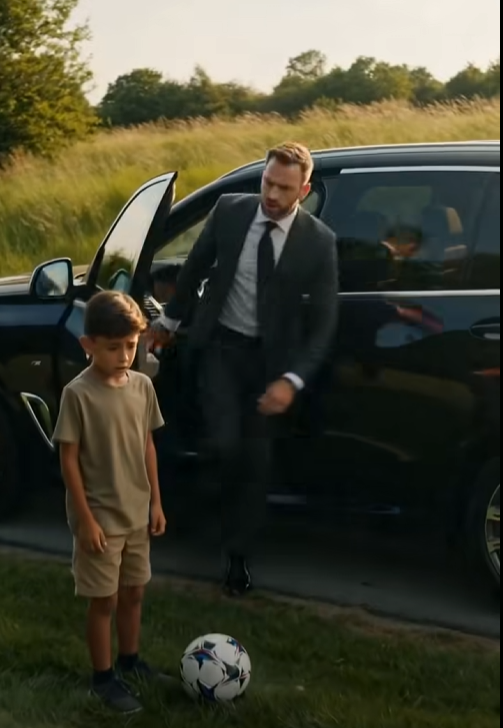
She crossed her arms. “So?”
The challenge in that tiny word would have amused him if it did not hurt.
“So,” he said, “it’s me.”
Rain drummed on the corrugated roof above them. Water ran down the narrow lane in silver streams around cigarette butts and flower petals washed from some earlier offering. Hana stared, not softened by tears, not instantly moved, only still.
“My mother hated rich men,” she said at last.
“I know.”
“She said some of them love you only when no one is watching.”
Gabriel took the blow because he had earned it years before the child standing before him ever had words.
“She may have been right about me then,” he said. “I am here now because she deserved better, and so do you.”
Hana looked down at the shoes.
Then up again.
“Are you going to leave if I make you angry?”
The question was quiet.
Terrible in its simplicity.
And Gabriel, whose entire adult life had been built on acquisition, understood with humiliating clarity that the hardest thing he would ever have to prove could not be purchased, announced, or delegated.
“No,” he said.
This time, when she believed him enough to start crying, she did it silently, as though even grief had learned not to occupy more space than necessary.
Gabriel stepped forward only when she did not step back.
And as the first summer rain washed the city clean around them, he held his daughter for the first time beneath a roof too poor to deserve such a moment and knew that every empire he had ever helped build would remain smaller than the life he almost failed to recognize.