

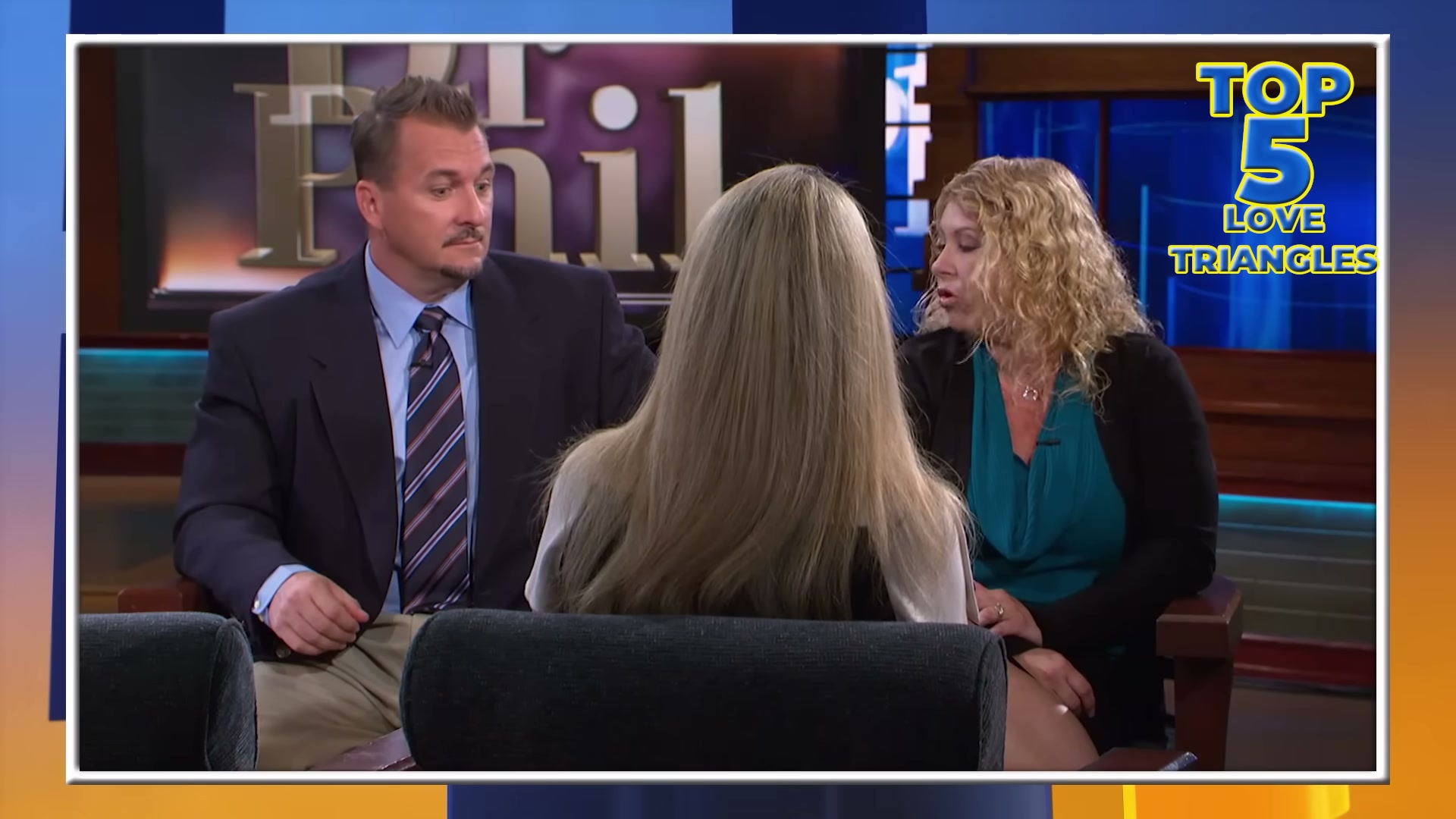
A compilation from Dr. Phil revisits five volatile relationship disputes, each centered on love triangles, broken trust, and difficult choices.
Across the hourlong episode, spouses, former partners, and outside lovers confront one another onstage, while the television host presses for accountability and asks whether damaged relationships can be repaired after long periods of hidden secrecy.
The opening case follows a woman married for thirteen years who admits maintaining an affair for roughly eighteen months with a childhood friend. She tells Dr.
Phil that her husband represents stability and loyalty, while the other man brings excitement, attention, and a rural style that revived feelings missing at home again.
In a striking exchange, the host challenges her repeated claim that the affair simply happened after a reunion at a local pub. He argues that adults make deliberate decisions, not accidental betrayals, and pointedly notes that unresolved dissatisfaction inside a marriage does not erase personal responsibility for crossing established boundaries with others.
Her husband, watching recorded scenes of the pair together, describes the experience as betrayal but still frames his wife partly as manipulated. He says he long trusted her honesty and believes the outside man used emotional pressure and guilt, a view that reveals both hurt and a reluctance to condemn her outright.
The boyfriend, however, presents the relationship as genuine love and tells the audience he wants the woman to choose him. He admits he became angry whenever she returned home to her husband, boasting that their bond was stronger and insisting that she should finally decide which future she truly wanted to pursue.
When the two men meet face to face for the first time, Dr. Phil broadens the discussion beyond one household.
He highlights that the boyfriend had also been married for more than two decades with children, then asks what allowed him to justify entering another marriage while ending his own family structure.
The second case shifts to a wife who suspected infidelity after discovering signs that her husband had resumed intimacy with his former spouse. Instead of a vague accusation, the segment focuses on evidence, confrontation, and the painful confusion that follows when a past relationship intrudes directly into a current marriage without warning.
Dr. Phil approaches that dispute as a test of transparency, urging the couple to move past denial and face the consequences of dishonesty.
The case underlines a recurring theme of the compilation, namely that unresolved attachments to earlier partners can undermine trust faster than many couples are willing to acknowledge in time.
Another segment features a mother of three who says her husband maintained a five year affair and refused to end it. According to her account, he instead pushed the idea of an open marriage, forcing both his wife and girlfriend to confront whether they would accept his terms or leave him altogether.
That conflict places unusual pressure on every person involved, because neither woman appears willing to quietly tolerate shared promises. In framing the dispute, Dr.
Phil asks whether commitment can survive once one partner openly seeks multiple romantic arrangements, suggesting that honesty alone is not enough to neutralize the pain of betrayal afterward.
The fourth story concerns newlyweds whose marriage unraveled only eight months after their wedding when the bride found her husband in bed with her best friend. The betrayal cut across two intimate bonds at once, leaving the young couple and the former friend entangled in grief, blame, and competing declarations of love.
In that segment, the husband admits he feels torn between the two women, a confession that deepens the sense of instability. Rather than a simple apology, his uncertainty becomes the main issue, as Dr.
Phil presses him to understand that indecision can prolong damage just as surely as the original deception itself.

The final case turns inward, focusing on a married woman who says she constantly seeks validation and attention from men. She describes being caught between her husband and another man she claims to love, while Dr.
Phil steers the conversation toward the deeper causes of her repeated pattern of straying from marriage.
By placing that admission in a psychological context, the program distinguishes impulsive behavior from underlying emotional needs without excusing the harm created. The host suggests that repeated infidelity may reflect unresolved insecurity or dependence on external affirmation, an explanation that broadens the discussion beyond simple moral failure and toward treatment for healing.
Taken together, the five stories reveal a familiar daytime television formula built around confession, confrontation, and personal testimony. Yet the compilation also shows why such segments continue drawing audiences: each dispute contains relatable questions about trust, loneliness, desire, and whether honesty can arrive soon enough to save a relationship under severe strain.
Throughout the program, Dr. Phil serves less as a therapist in session than as a moderator demanding clarity from people who often speak in evasions.
His questioning repeatedly returns to choice, emphasizing that dissatisfaction, temptation, and past history may explain behavior but do not remove responsibility for the commitments people have made.
That message is delivered with the showmanship typical of daytime talk television, including surprise entrances and charged face to face meetings. Still, beneath the dramatic staging sits a straightforward warning about the cost of delayed decisions, especially when several adults remain emotionally invested in contradictory promises that cannot all be kept forever.
The compilation ultimately offers no easy resolutions, because each triangle reflects years of unmet needs, poor communication, and mutual injury. What it does provide is a compressed look at how quickly private dissatisfaction can become public crisis, and how difficult rebuilding becomes once truth emerges under bright studio lights for everyone involved.
For viewers, the episode functions as both spectacle and cautionary tale, illustrating how divided loyalties ripple through marriages, families, friendships, and self image. By the end, the strongest takeaway is not who wins each triangle, but how much honesty, self knowledge, and decisive action are required before any lasting repair can begin.