
When Victor Borge stepped onto a concert stage, audiences expected what they always expected: a impeccably dressed pianist, seated at a grand instrument, ready to deliver a refined classical performance. Instead, they got one of the most deliriously funny entertainers the world of music has ever known — a man who could make a wrong note sound like the punchline of a joke and a piano stool become a springboard for slapstick.
Borge was formally trained at some of Europe’s finest music academies, yet he built his career on the radical idea that seriousness and silliness could share the same spotlight without either one losing its power. He was born Børge Rosenberg in Copenhagen in 1909, and his early years were steeped in rigorous classical discipline that laid the groundwork for a career no conservatory could have predicted.
His gifts as a pianist were genuine — he won scholarships, earned accolades, and performed Chopin and Schumann with a technical polish that impressed critics and colleagues alike. But somewhere along the way, Borge realized that audiences were not just moved by music; they could also be surprised by it, delighted by it, and made to laugh at it without feeling that the art form had been diminished.
This realization became the foundation of his act, and it transformed him from a promising young musician into a global phenomenon whose name eventually became synonymous with musical comedy.
The spark for Borge’s comic style reportedly ignited during a performance in the 1930s when he was playing a Mozart sonata and accidentally struck a wrong note. Instead of grimacing and continuing, he paused, looked out at the audience, and made the moment part of the show.
The crowd roared. That single split-second decision to acknowledge the mistake publicly — to make the audience a witness rather than a judge — established the core dynamic that would define his entire career.
From that moment, Borge began deliberately engineering the kinds of mishaps that classical pianists spent years learning to avoid, turning them into the funniest parts of his act. He would pause mid-phrase to announce to the audience that they had just heard something extraordinary, or that he needed a moment to collect himself after a particularly daring passage.
The comedy was never cruel, and it was never condescending. It was the comedy of someone who loved classical music so deeply that he felt free to play with it, to pull it close and whisper a joke in its ear.
This tone — affectionate rather than mocking — was the secret ingredient that made Borge’s act feel like a gift rather than a parody.
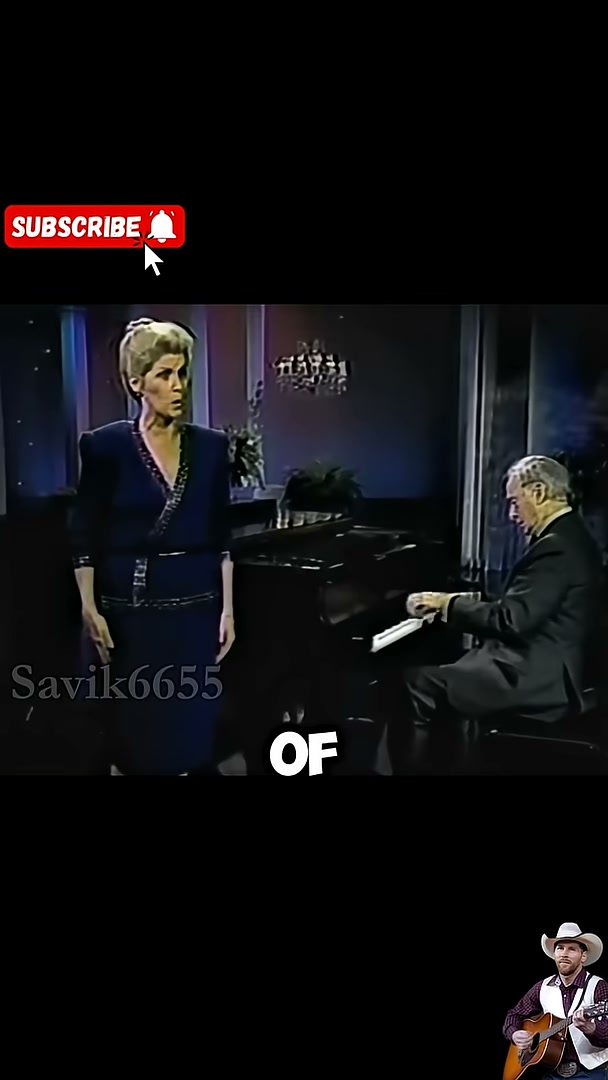
Borge’s performances followed a loosely predictable arc that audiences came to recognize and anticipate, which only deepened the laughter because the pleasure was in watching exactly how he would derail his own seriousness. He would begin each act seated at the piano with the composed bearing of a world-class soloist, and the audience would settle into the hush of a formal concert hall, ready to revere.
Then, almost immediately, something small would go wrong — or rather, something small would be made to look wrong — and the spell of formality would begin to crack. Borge would react with wildly exaggerated facial expressions, his eyebrows arching or his eyes widening as though the piano had personally betrayed him.
He might turn to the audience and gesture as if asking for sympathy, or he might lean over and peer beneath the keyboard as though the instrument itself were responsible for the error. These reactions were choreographed down to the millisecond, yet they unfolded with the breezy spontaneity of improvisation, creating an intoxicating sense that anything could happen next.
The music, crucially, never stopped; Borge was a skilled enough pianist to keep the melody alive even while his body and face were performing an entirely separate comic routine.
As each performance progressed, the comedy would escalate in layers, with each interruption building on the last to create a rhythm that felt almost musical in its own right. Borge might begin a Chopin prelude and then pause to explain, in deadpan tones, that the piece he was about to play was so moving that he would need the audience to remain absolutely silent — a silence he would then procedurally break himself by clearing his throat, adjusting his glasses, or shuffling papers that were not there.
He might crawl under the piano and play from beneath the keyboard, or he might stand up and play a trill with one hand while gesturing grandly with the other, conducting himself. The physical comedy was extraordinary for a man whose body was trained for the stillness and precision of concert performance, yet Borge moved across the stage and around the piano with the confidence of a seasoned clown.
His interactions with conductors, other musicians, and the concert hall itself all became material, and no setting was safe from his gentle, gleeful disruption. The effect was a show that felt alive in a way that a standard recital never could, because the performer was reading the room in real time and letting the audience’s energy shape the chaos.

What made Borge’s act genuinely remarkable was not merely the comedy itself but the fact that it was built on the scaffolding of real pianistic virtuosity, and this duality was the engine that powered his fame for decades. Audiences who came expecting a comedian were sometimes startled to discover that he could play a Liszt etude with fingers that moved like lightning, and audiences who came expecting a serious pianist were sometimes floored by the speed and wit of his comic timing.
That tension — between the polished musician who had earned his place on the stage and the clown who treated the piano like a playground — was the source of Borge’s most enduring appeal. It suggested that expertise did not require solemnity, that mastery of a craft did not mean losing the capacity for wonder or play.
Borge once noted that his goal was not to mock classical music but to make people fall in love with it by showing them that it could be fun, and this conviction came through in every performance. He was not undermining the repertoire; he was escorting it into a room where people felt free to laugh, to gasp, and to cheer.
The specific comic devices Borge employed became so well known that they functioned almost like signature jokes, the kind that audiences recognized and delighted in recognizing. The deliberate wrong note was perhaps his most famous device: he would play a passage flawlessly and then, on the very last note, strike a clashing tone, then freeze and slowly turn his head toward the audience as though to say, “Did you hear that?” The audience always heard it, and the audience always laughed, because the setup was so perfect that the violation felt both outrageous and inevitable.
He also developed an elaborate bit about reading the program notes aloud during the performance, commenting on the music as though he were a sportscaster calling a game, complete with play-by-play descriptions of his own technique. He would describe his fingers as if they were athletes, celebrating their teamwork or lamenting a missed note as though it were a crucial error in a championship match.
These routines were endlessly adaptable, and Borge refined them throughout his career, adding new layers and fresh variations