
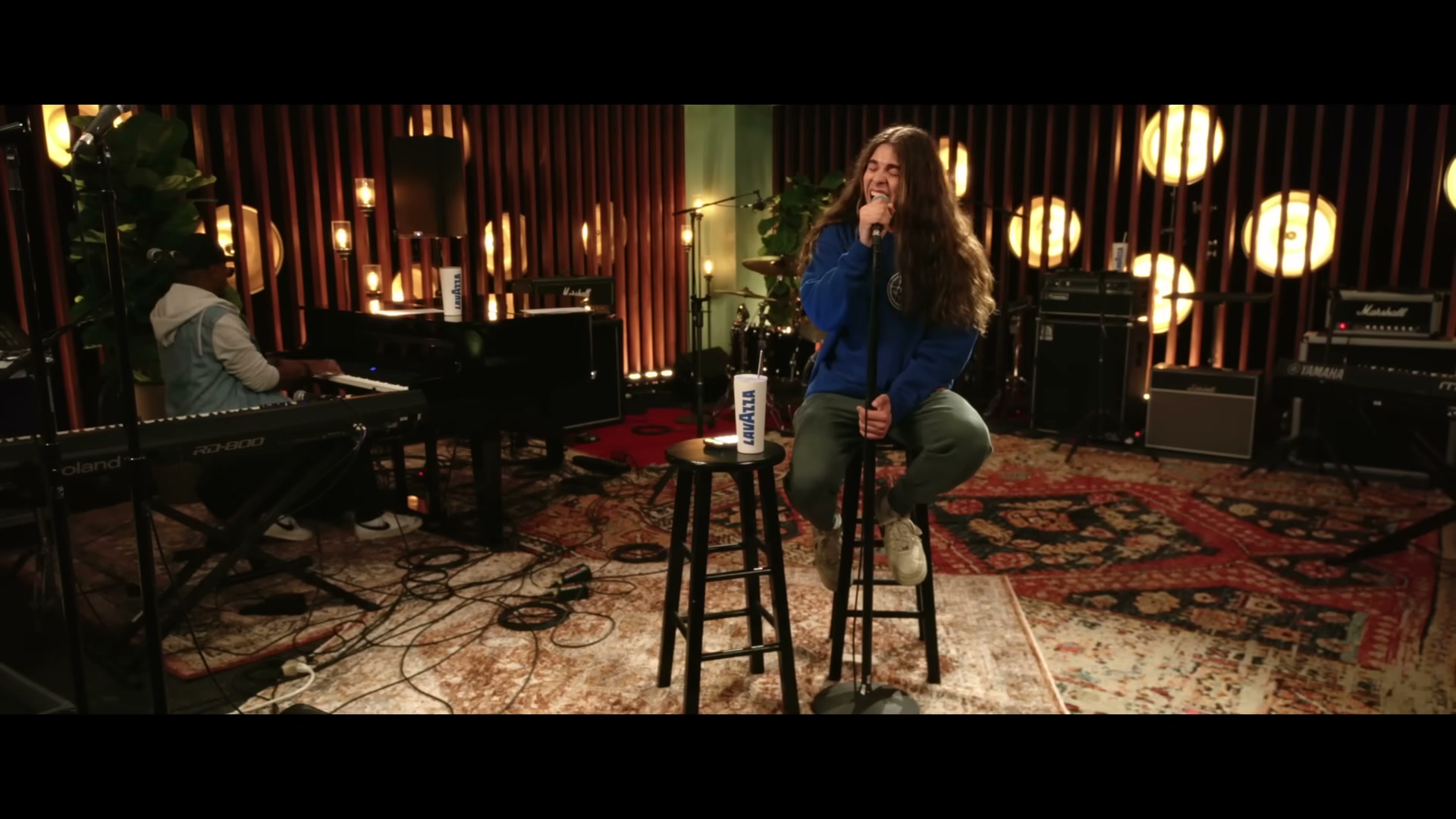
In a new digital feature from America’s Got Talent, singer Jourdan Blue stepped into the AGT Music Room and delivered an intimate version of Radiohead’s “Creep.” Presented by Lavazza, the session traded spectacle for stillness, allowing a familiar alternative rock song to emerge as a deeply personal reflection on identity and resilience.
Before singing, Blue explained why the decades old hit continues to connect with listeners, even when its original arrangement can obscure the words. He said the lyrics reveal their full emotional weight when the grungy edge is removed and the melody is reduced to little more than voice and piano for listeners.
That artistic choice shaped the entire performance, which unfolded slowly and without distraction as Blue sat at the keyboard. His reading emphasized longing, vulnerability, and the hard work of accepting oneself, echoing his comment that the song speaks to overcoming adversity and becoming comfortable with who you are despite outside judgment entirely.
The performance opened quietly with the line about not being able to meet another person’s eyes, immediately setting a hushed tone of awe and uncertainty. Rather than chasing the song’s famous eruption, Blue leaned into its tenderness, letting each phrase breathe and giving the verse the quality of a confession in confidence.
As the first chorus arrived, Blue maintained the subdued mood, turning a traditionally explosive moment into one of inward searching. His softened delivery reframed the song’s self doubting refrain as a plea for belonging, making the contrast between admiration and insecurity feel less theatrical and more painfully human to many watching online.
Midway through the session, the singer continued to build emotion through restraint rather than volume, allowing the piano to carry much of the atmosphere. He lingered over lines about wanting control, a perfect body, and a perfect soul, underscoring the song’s enduring connection to pressure, comparison, and self image in modern life.

That emphasis matched Blue’s own explanation of the song’s meaning, which he described as rising above hardship and doubt. For him, the piece is not only about yearning for acceptance from others, but also about learning not to be ruled by what other people think about you in difficult moments of life.
By the time he reached the later sections, the arrangement had grown slightly fuller, yet it never lost its close, room sized intimacy. Even the passage arrived as an emotional release rather than a display piece, with Blue choosing clarity and feeling over force as he guided the song to its close.
The final repetitions of the wish to be special landed with particular tenderness, sounding less like despair than a quiet act of acknowledgment. When Blue ended and thanked the room, the applause that followed felt like recognition not just of technical skill, but of the honesty that had defined the performance throughout.
In the accompanying remarks, Blue suggested that many people know “Creep” chiefly as a rock staple, but not necessarily as a lyrical statement. His interpretation argued the opposite, presenting the composition as a carefully written meditation on alienation, desire, and self worth once the surrounding noise is stripped away for modern audiences.
That perspective helps explain why the performance resonates beyond nostalgia, especially for viewers who may have encountered the song countless times before. By slowing everything down, Blue invited listeners to reconsider lines they thought they knew, and to hear in them a more compassionate message about endurance and personal dignity today anew.
The video also functions as a reminder of how AGT has expanded its digital storytelling around contestants and standout voices. Rather than limiting artists to the main stage, the franchise increasingly offers spaces where performers can explain their choices, connect their songs to experience and reveal dimensions that competition alone may miss.
The release arrives as America’s Got Talent celebrates its twentieth season, a milestone the show has framed as both a return and a renewal. Simon Cowell, Howie Mandel, and Sofia Vergara are back on the judging panel, while Terry Crews returns as host and Mel B rejoins the lineup for commemorative run.
Within that broader celebration, the Music Room series highlights a different kind of talent show appeal, one rooted in intimacy rather than suspense. There are no buzzers, no scorecards, and no elaborate staging in this setting, only an artist, a song, and the possibility that a stripped performance can reveal something universal.
Blue’s appearance is particularly notable because it shows confidence without unnecessary flourish, relying on phrasing and sincerity to hold attention. In an entertainment landscape often driven by bigger hooks and faster cuts, his approach suggests there is still strong audience appetite for simplicity, emotional precision, and songs that leave room for reflection.
For fans of the original, the performance offers a fresh entry point into a song that has long been associated with raw outsider feeling. For newer viewers, it may work as a first encounter with the composition’s emotional architecture, revealing how enduring pop and rock standards can shift meaning through arrangement alone.
The clip ultimately succeeds because it never overstates its intentions, even as the emotions in the room steadily deepen. Blue speaks plainly about adversity, self acceptance, and ignoring unhelpful judgment, then lets the music carry those ideas forward until they feel observed rather than announced by a performer who believes them deeply.
In that sense, the Music Room installment is more than a cover version or promotional extra tied to a television franchise. It is a concise portrait of an artist using a well known song to tell the truth about insecurity, survival, and the effort to embrace one’s own place in the world.
As audiences continue following season twenty across NBC, Peacock, and the show’s digital platforms, this quiet performance stands out. It shows that even in a competition built on spectacle, a voice, a piano, and an honest interpretation can still create the evening’s most memorable moment for viewers seeking feeling over sheer display.