
America’s Got Talent has always made room for singers, dancers, magicians, and daredevils, but its comedy acts often reveal something more unpredictable about live performance. In this 2019 comedy focused segment, the show leans into that uncertainty, presenting performers whose humor comes from strange costumes, nervous timing, deadpan wordplay, and the courage to risk looking foolish in front of millions.
The compilation works because it does not treat comedy as one narrow skill. Instead, it shows several forms of comic performance, from physical absurdity to stand up to ventriloquism and novelty stagecraft, all connected by the same question of whether an audience will follow the performer into a deliberately silly world.
One of the most unusual moments arrives with a returning performer who appears in a walrus costume and builds an entire routine around awkward movement, commitment, and confusion. The act is not designed to look polished in a traditional sense, and that is exactly where much of its comedy lives.
At first, the judges seem unsure how to process what is happening onstage. Their reactions move from puzzled silence to laughter as the performer keeps pushing the bit with full confidence, refusing to break character or apologize for how strange the routine becomes.
That persistence becomes the center of the performance. What might have collapsed as a one note gag instead turns into a test of commitment, and the audience begins responding not only to the costume but to the sheer boldness of carrying the idea all the way through.
The judges’ comments capture the odd charm of the act. They recognize that the routine is intentionally ridiculous, even describing its appeal in terms of how proudly and entertainingly foolish it is, while also acknowledging the bravery required to present such an idea on a national stage.

That distinction matters because the segment does not simply laugh at the performer. It frames the routine as a kind of comic risk, where success depends on embracing embarrassment so completely that embarrassment loses its power.
The tone shifts with the introduction of an aspiring stand up comedian from Madison, Wisconsin, whose stage presence is quieter and more fragile. Before he begins his set, the audience learns that he has dealt with severe anxiety and agoraphobia, making the simple act of standing under the lights feel significant.
His backstory gives the performance emotional weight without turning it into a purely sentimental moment. Comedy remains the purpose, but the context changes how viewers understand his nervous pauses, hesitant delivery, and determination to keep going after each line.
When his set begins, the room does not immediately explode with laughter. His style is dry, understated, and built on short jokes and wordplay, so the audience needs a moment to adjust to the rhythm and learn how to listen.
That slow start becomes part of the arc. As he settles in, the jokes begin landing more clearly, and the crowd warms to his self deprecating tone, rewarding the precision of his lines and the vulnerability beneath them.
His performance shows that comedy does not always need volume or swagger. Sometimes it depends on a performer standing still, trusting a carefully written punchline, and surviving the silence long enough for the room to catch up.
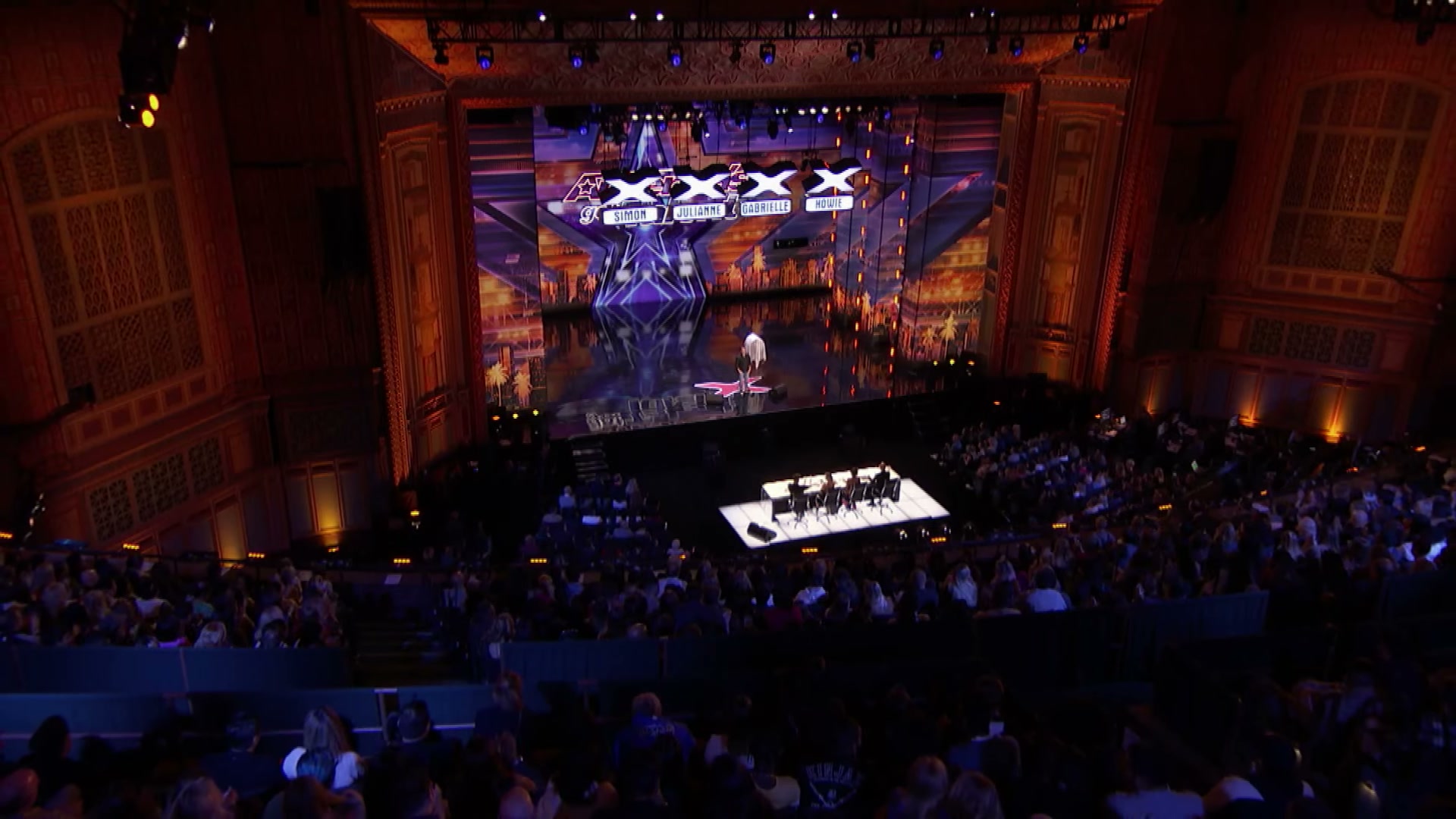
The judges respond not only to the jokes but to the personal achievement behind them. For someone who has struggled with isolation and fear, the appearance itself becomes a victory, and the laughter feels like both entertainment and encouragement.
The segment also points to other comic variety acts, including ventriloquism and intentionally cheesy novelty performance. These additions broaden the idea of what a comedy showcase can be, moving beyond microphone based stand up into puppetry, physical staging, and playful theatrical oddness.
That variety is important to the identity of the show. America’s Got Talent often thrives when it mixes sincere ambition with unusual presentation, allowing acts that might not fit a conventional comedy club to find a receptive crowd.
Across the performances, the judges play a crucial role as audience surrogates. Their visible uncertainty, surprise, laughter, and eventual praise help guide viewers through acts that might otherwise feel too strange or too understated at first glance.
The audience reactions are just as important. Applause and laughter build in stages, showing how live comedy can change second by second as performers either win the room, lose it, or somehow turn awkwardness into momentum.
What makes the segment engaging is its balance between silliness and sincerity. A walrus costume, a nervous one liner, a puppet routine, or a deliberately corny stage bit may seem lightweight on the surface, but each requires timing, nerve, and a willingness to be judged instantly.
The compilation ultimately argues that comedy on a talent show is not only about perfect jokes. It is about risk, resilience, surprise, and the strange connection that happens when performers invite a crowd to laugh with them at the edge of failure.