
The live version of a recurring “bad paid-for photos” feature turns an old comic idea into something more immediate and revealing. Instead of simply displaying awkward portraits sent in by viewers, the segment brings the people behind the pictures into the studio and lets them react alongside the audience.
The setup depends on a simple promise of spontaneity, with Ellen explaining that she has not seen the images before they appear on screen. That choice gives the comedy a loose, genuine quality, because the host’s surprise becomes part of the performance rather than something carefully rehearsed.
At the center of the segment is a familiar kind of embarrassment, the kind attached to photographs people once paid for with complete sincerity. Glamour shots, baby portraits, and modeling pictures often make perfect sense in the moment, only to look strange, funny, or wildly dated years later.
The humor also works because these are not careless snapshots taken by accident. They are posed, lit, styled, and purchased, which means each image carries a little extra confidence that becomes funnier with time.
The first guest is Stephanie from Virginia, whose photograph comes from a glamour shot party in 1993. She explains that she attended the event with her young daughter, placing the picture squarely in the era of soft-focus styling, theatrical wardrobe choices, and portrait packages people took home proudly.
When the picture is revealed, the comedy lands in the contrast between the careful studio presentation and the fashion choices that now feel trapped in another decade. Ellen focuses on the outfit, gently poking fun at the combination of hat, dress, and jacket without turning the moment into anything cruel.
Stephanie’s willingness to laugh at herself gives the exchange its warmth. She understands exactly why the image is funny, and that keeps the audience’s reaction playful rather than judgmental.
The presence of her daughter adds another layer, because the photograph is not just an embarrassing artifact but a family memory. What might have been a private joke becomes a shared story, and the studio audience is invited to enjoy the distance between how the picture once felt and how it looks now.
Ellen’s style in the exchange is teasing but controlled. She points out the odd confidence of the portrait session, the kind of confidence that made elaborate outfits and dramatic poses feel like a good investment at the time.
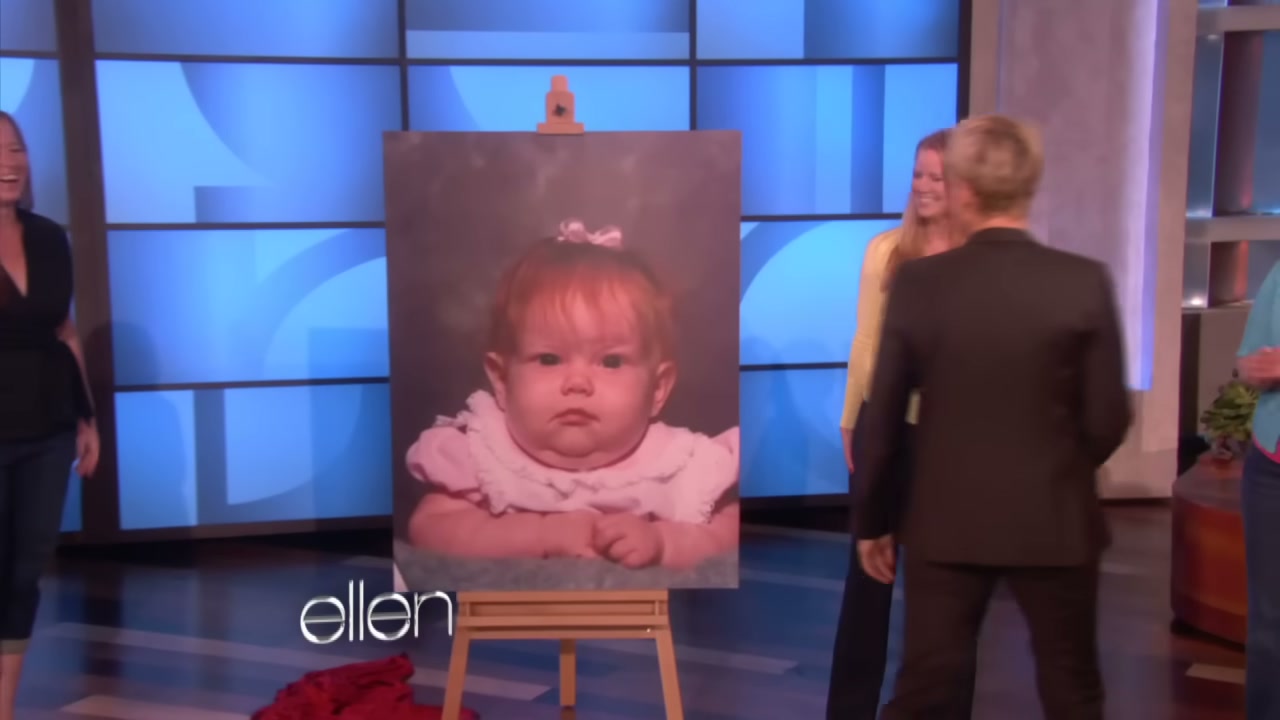
The segment then moves to Tiffany Thompson, a fifth-grade teacher from California, whose submitted image reaches even further back. Her picture is a baby portrait from when she was only three months old, and she explains that she was an unusually chubby baby.
That detail prepares the audience for a reveal built less around fashion and more around sheer surprise. When the baby photo appears, the laughter comes from recognition, affection, and the exaggeration of infant proportions that only a formal portrait can preserve so vividly.
Ellen riffs on the image with the kind of light teasing that depends on the guest’s comfort. The jokes emphasize the contrast between Tiffany as a composed adult teacher and Tiffany as a very round, expressive baby captured in a professional sitting.
The tone remains affectionate because baby pictures are usually protected by nostalgia. Even when they are funny, they are also disarming, and the audience responds with warmth rather than ridicule.
Tiffany’s childhood nickname becomes part of the exchange, adding another personal detail that helps the photo feel like a piece of family history. The segment allows viewers to laugh at the image while still seeing the person behind it, which is why the joke does not feel mean-spirited.
The final guest, Jillian Ferris Cole, brings a different kind of surprise to the stage. An NPR reporter from Flagstaff, she explains that she did not submit the photograph herself, but learned that a friend had sent it in shortly before the show.
That twist shifts the emotional dynamic, because her embarrassment is not entirely self-selected. She is still game for the reveal, but the audience understands that the image has arrived through a friendly ambush rather than a voluntary confession.
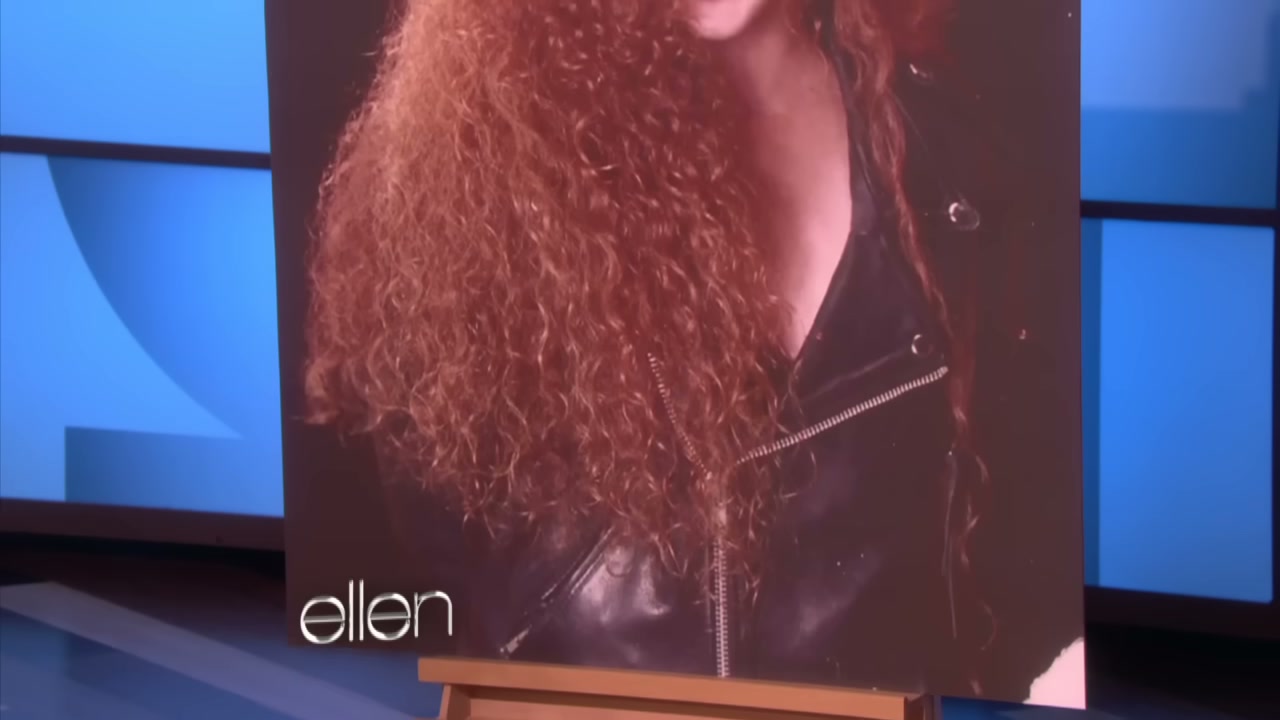
Her photograph comes from a brief hair-modeling job in the 1980s, a detail that immediately signals a highly specific visual era. Hair modeling pictures often magnify the trends of their time, turning volume, styling, and expression into a kind of professional performance.
When the photo appears, the comedy again comes from the gap between past intention and present interpretation. What may once have been a polished promotional image now reads as a perfectly preserved time capsule of style, ambition, and period-specific flair.
Jillian’s reaction matters as much as the photograph itself. Because she is confronted with an image she did not personally choose to share, her surprise gives the moment a fresh charge, while her good humor keeps it within the segment’s friendly boundaries.
Across all three reveals, the audience functions almost like an additional character. Their laughter, gasps, and applause create the live energy that separates this format from a simple slideshow of odd pictures.
The segment succeeds because it understands that embarrassing photos are rarely funny for only one reason. They combine fashion history, family memory, youthful confidence, changing beauty standards, and the universal experience of looking back at ourselves with disbelief.
Ellen’s role is to guide those reactions without overwhelming the guests. She teases the details that are visibly comic, then gives each person enough room to explain the story behind the image and join in the joke.
That balance is especially important because the photos were paid for, which means they once carried pride, hope, or at least a sense of occasion. The laughter depends on respecting that original context even while acknowledging how strange the results may look now.
The strongest moments come when the guests are not merely the targets of jokes but active participants in them. Stephanie plays along with the dated glamour shot, Tiffany accepts the affectionate baby-photo teasing, and Jillian turns an unexpected submission into a public laugh.
There is also a broader nostalgia running beneath the comedy. The portraits recall eras when professional photo sessions felt more formal, when families and individuals marked milestones through staged images meant to last.
That permanence is what makes the later reveal so entertaining. A passing fashion choice might be forgotten, but a paid portrait freezes it in high detail and keeps it ready for rediscovery years later.
The live format heightens that rediscovery by making the reveal communal. Guests, host, and audience see the images together, turning private embarrassment into a shared celebration of how much people and styles change.
By the end, the segment is less about bad photos than about good sportsmanship. It shows people accepting their past selves with humor, while the audience enjoys the relief of knowing everyone has a picture somewhere that might produce the same reaction.
The result is a bright, compact comedy piece built on surprise, memory, and mutual permission to laugh. Its charm lies in the fact that the photos may be awkward, but the people behind them are generous enough to let the awkwardness become entertainment.