
A dramatic clip from the long running parenting series Supernanny has drawn renewed attention after showing a young child take a table knife during dinner. The moment, highlighted in the episode description, quickly becomes a test of whether the household can maintain new boundaries after expert guidance ends.
The sequence begins just days after the family’s parenting coach leaves, promising to return in a week to review their progress. Her final assessment is cautious, noting that the boy is likely to keep challenging limits while his mother works to step back and enforce consequences.
At first, the parents appear to be putting the lessons into practice with some success in a busy home still adjusting to stricter routines. When the children start shouting, the father intervenes promptly, asking why there was yelling and encouraging calmer words instead.
Another encouraging sign follows as the two youngest children reportedly make it through both day and night without asking for their dummies. That detail is presented as evidence that some of the expert’s strategies are beginning to hold even after her departure.
The calm does not last, however, and the main flashpoint arrives from the same child who had already been expected to test authority. During a mealtime scene, he picks up small knives and forks from the table and points them toward his father.
The mother immediately objects, telling him that he must not play with knives and forks even if they are blunt. She stresses that the utensils can still hurt people, underscoring the safety concern at the center of the confrontation.
The father then steps in, calling the boy back and ordering him to put the items down rather than run away. He warns that people must not be threatened with knives and forks, attempting to combine a safety message with discipline.
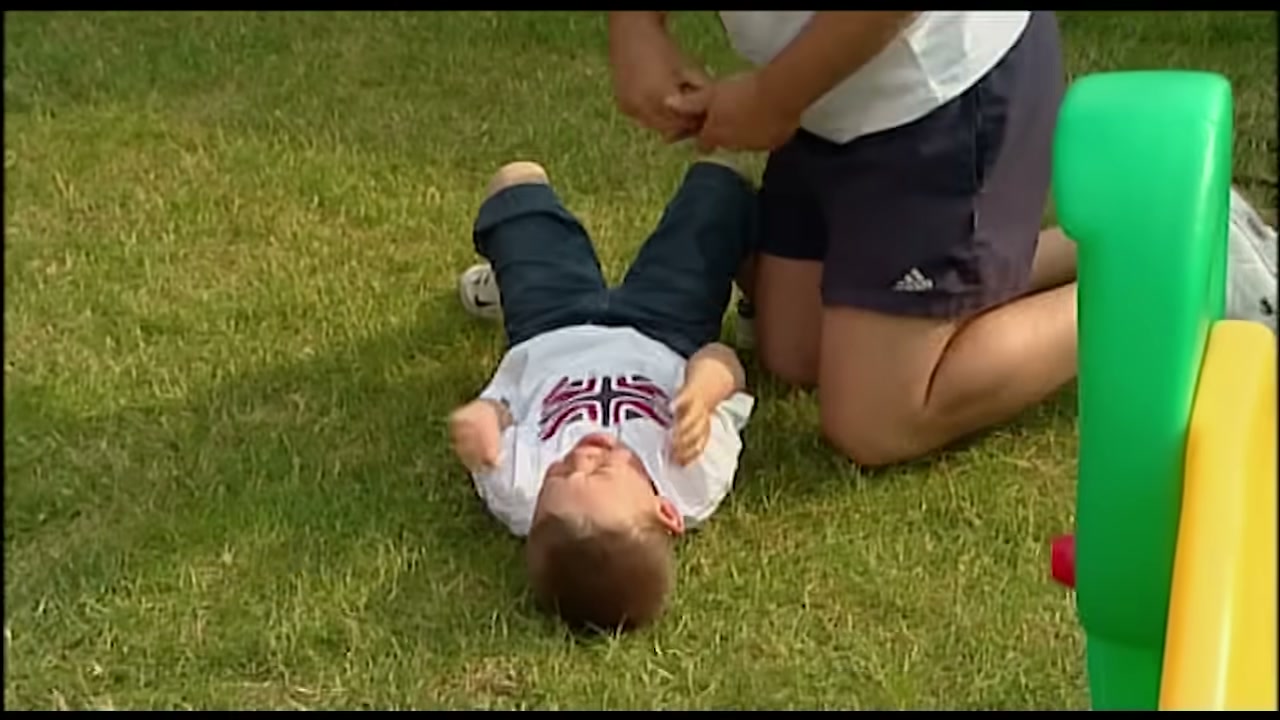
After taking the knife away, the father shifts focus to the crying that follows and issues a warning tied to the naughty bench. The scene captures a difficult parenting moment in which danger, defiance, and emotion all collide within a matter of seconds.
Yet the clip also shows how consistency can slip, because the confiscated utensil is soon handed back to the child. That decision undercuts the earlier warning and leaves the mother to complete the follow through while the boy remains upset.
She tells him directly that he has been placed on the naughty bench because he did not stop when his father told him to. The consequence is set at three minutes, matching the structured approach the family had been taught before the expert left.
While seated there, the child continues to protest, and the emotional resistance becomes part of the broader portrait of a household in transition. The program presents this not as an isolated outburst but as a familiar struggle over rules, authority, and follow through.
Three minutes later, the tension eases when a simple apology is accepted and the child is allowed to leave the bench. Even then, the clip suggests that accountability remains incomplete because it is the mother, not the child, who puts the shoes away.
For viewers, the sequence offers a compact example of what Supernanny has long emphasized about family change after television intervention. Short term improvements may appear quickly, but lasting progress depends on whether parents deliver clear instructions, consistent limits, and calm consequences.
The father’s earlier success in stopping shouting shows that the strategies can work when expectations are immediate and communication is direct. The later confusion over the utensils, however, reveals how fast discipline can lose force when a warning is not fully matched by action.

The mother’s role in the exchange is also notable because the expert had specifically urged her to let go a little while still imposing consequences when needed. By carrying out the bench time herself, she demonstrates a willingness to follow the plan, even if the household remains uneven in execution.
The clip’s appeal online likely rests in that unevenness, blending improvement, risk, and familiar parental uncertainty into a few charged moments. Audiences see not only a child pushing boundaries, but parents learning in real time how difficult it can be to respond well.
Although the program frames the event as a sharp reminder about household safety, it avoids sensationalism by keeping the focus on correction. The adults repeatedly tell the child not to point utensils at people, stressing prevention rather than panic as they manage the mealtime dispute.
That emphasis fits the broader mission described by the channel, which promotes practical, down to earth support for everyday parenting struggles. From sleep and food to toilet training and behavior, the brand positions itself as a resource meant to reassure families that they are not alone.
In this case, the most memorable image is not simply a child reaching for a knife, but a family navigating the next step. With the expert temporarily gone and a follow up visit still ahead, every small decision becomes a measure of whether new habits will last.
The episode therefore works on two levels, as gripping television and as a case study in the fragile early stages of behavior change. It shows that progress can be real, yet still vulnerable to setbacks whenever adults hesitate, disagree, or soften a boundary too quickly.
For parents watching, the lesson is less about one dramatic dinner table incident than about the repeated choices that surround it before and after. Warnings, removal of unsafe objects, timed consequences, and follow through all matter, especially when a child is upset and testing whether adults truly mean what they say.
As the family waits for the expert’s return, the clip leaves viewers with a clear picture of both promise and pressure inside the home. A quieter house, children adjusting to new expectations, and one tense encounter over table utensils together form a telling snapshot of parenting work that continues long after the cameras stop offering immediate reassurance to anxious parents watching.