In some families, neglect does not appear as violence but as distribution: one child receives the praise, another the expectation, and one—quiet, useful, undemanding—is fed on whatever remains. Julian Mercer grew up in such a house, learning early that love could be withheld politely, that disappointment could become a language, and that some children survive not by fighting for tenderness but by lowering their needs until no one notices they are starving. For years he stayed because home, however cold, still answers to the name of home. But the evening he finally chose to leave, he did not slam doors or make accusations. He simply stepped out of the life that had been shrinking him. The devastation came later, when the people who had taken his loyalty for granted discovered that silence, once withdrawn, leaves an emptiness louder than blame.
By the time Julian was old enough to understand the architecture of preference, his younger brother had already become the sun around which the Mercer household turned. Nathan was clever in the visible way adults adored—quick with a joke, gifted in school competitions, handsome enough that neighbors commented on it without invitation, charming enough to recover immediately from failures that would have remained on Julian like stains.
Their mother said Nathan had a sparkle. Their father said the boy knew how to command a room. What no one said aloud, because families prefer their injustices to remain implied, was that Julian’s role had settled early and efficiently into the negative space left behind. He was the one who did not trouble them with demands.
The one whose grades were good enough not to require praise and not extraordinary enough to interrupt discussion of Nathan’s achievements. The one sent back upstairs when guests arrived because the younger child had prepared a piano piece everyone should hear.
Neglect, when practiced over years, acquires such ordinary textures that it no longer looks like mistreatment even to those enacting it. Julian received meals, tuition, a well-made bed, winter coats, birthday gifts wrapped on time. No bones were broken. No curses filled the walls.
And yet the house was full of tiny daily verdicts that shaped a child more deeply than shouting might have. Nathan’s failures became emergencies; Julian’s needs became inconveniences. Nathan’s preferences determined vacation plans, restaurant reservations, seating arrangements, school choices. Nathan’s moods altered the emotional climate of entire evenings.
Julian learned to fold himself smaller, to say “it’s fine” before anyone asked whether he minded, to leave the last piece untouched because someone else would certainly deserve it more.
Their parents would have denied favoritism with honest offense.
They loved both their sons, they would have said.
And perhaps they believed it.
People often mistake feeling responsible for someone with loving them well.
Julian’s refuge arrived in the form of usefulness. If he could not be central, he could at least be necessary. He learned which bills were due when his father forgot. He kept spare chargers and medicine in his backpack because someone always needed them.
He picked up Nathan from parties at midnight when their mother said she was too tired and their father said the boy had to learn consequences while somehow never allowing him to experience any. He remembered birthdays, dentist appointments, forms requiring signatures.
By seventeen he had become so competent at absorbing inconvenience that the family moved around his quiet labor as though it were a feature of the house itself.
Then came the scandal that revealed how little they understood what he carried.
Nathan, at twenty-two, crashed their father’s car after leaving a club. No one was seriously injured, but there was property damage, police involvement, and enough alcohol on record to threaten the internship their father had arranged through an old friend. The call came after midnight. Julian, half asleep and home from university for the weekend, heard his mother crying downstairs and found his father pacing like a man trying to negotiate with time.
When they explained what had happened, Julian’s first response was practical. “Where is he now?”
“At the station,” his father said. “They’re deciding whether to press further.”
His mother gripped Julian’s wrist. “We can’t let this ruin his future.”
Not we need to help him. Not thank God he’s alive.
Only this: his future.
Julian stared at her, and in that instant something old and tired shifted faintly inside him.
“What do you want me to do?”
His father answered too quickly. “Say you were driving.”
The room went still.
Julian thought he had misheard. “What?”
“You’re older on paper in the file for the insurance,” his father said, talking faster now, rationality fraying at the edges. “Your record is clean. You weren’t drinking. We can manage the rest, pay what needs paying, and the matter ends there. If Nathan takes the fall now, it will follow him for years.”
Julian looked from one parent to the other.
Neither seemed ashamed enough.
His mother stepped closer. “Just this once.”
Just this once.
The phrase was almost laughable in its cruelty, because whole childhoods are built from just this once.
Julian did not raise his voice. “You’re asking me to lie to the police.”
“We’re asking you to protect your brother.”
“No,” he said quietly. “You’re asking me to protect the version of him you prefer.”
His father’s face hardened at once. There it was—the anger reserved not for Nathan’s recklessness but for the son whose refusal disrupted the machinery of indulgence. “This is not the time for bitterness.”
Julian nearly smiled at that. Bitterness. As though he had invented the weather in that house rather than lived under it.
In the end, Nathan’s case was softened through money and influence, though not erased entirely. He lost the internship anyway. For weeks afterward the house throbbed with accusation unspoken but relentless. Their mother moved around Julian with injured dignity. Their father addressed him only when necessary. Nathan, astonishingly, treated him with the sulking resentment of someone who feels betrayed by a servant declining an order.
The final fracture came three months later at their mother’s birthday dinner.
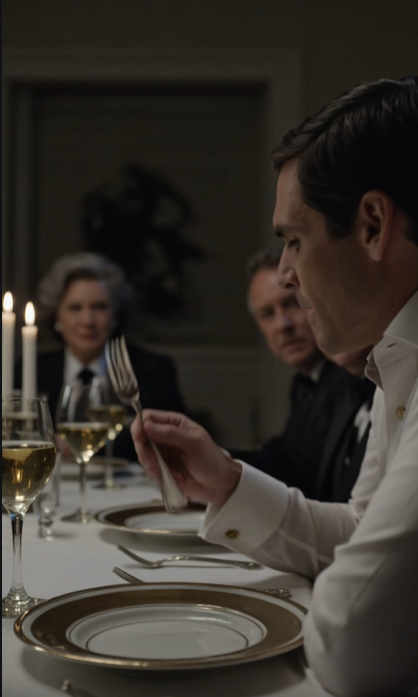
The dining room glowed with candlelight. Rain tapped softly at the windows. A dozen relatives filled the long table with polished cutlery and old family anecdotes. Julian had come only because absence would have produced a drama he was too tired to manage.
He sat near the end, as usual, answering questions politely and saying little. Nathan, restored by time and continued indulgence, had already retold the story of a recent trip in which he played both hero and victim depending on the audience.
At dessert, an aunt lifted her glass and said how grateful everyone must be that the “car incident” had not damaged the family’s reputation too severely. Laughter followed, nervous and performative. Nathan smirked. Their father added, “These things pass when people know how to handle them.”
It was such a small sentence.
So casually said.
And yet Julian felt something in him go still with a finality he recognized at once.
He set down his fork.
The room, for reasons no one could have explained then, seemed suddenly too bright.
“Actually,” he said, and even his own voice sounded unfamiliar to him because of how calm it was, “I think this is the first honest thing this family has been given in years.”
Conversation stopped.
His mother frowned. “Julian.”
He looked at her, not angrily, not pleadingly, simply as a man might look at a door he had decided not to enter again. “You all speak as though reputation is something that can be polished from the outside. But what exactly is it you think survived? Decency? Accountability? Love?”
“Not tonight,” his father warned.
Julian nodded once. “No. Not tonight. That’s the point, isn’t it? Never tonight. Never when guests are present, never when Nathan is fragile, never when mother is tired, never when the truth might embarrass us.”

Nathan pushed back his chair. “Are you seriously doing this again?”
Julian turned to him. “I am doing nothing again. That’s what none of you understand. I have spent my entire life doing less than what I felt because it made your comfort easier to maintain.”
“Don’t be dramatic,” their mother said, but her voice shook.
The irony would have amused him once. Not now.
He rose from the table.
There was no speech prepared. No satisfying monologue sharpened in secret. Real departures are rarely eloquent in the moment. They come from exhaustion so complete that performance becomes impossible.
“I’m leaving,” he said.
His father laughed once, disbelieving and annoyed. “Where exactly do you plan to go?”
“Somewhere,” Julian answered, “that does not require me to disappear in order to be tolerated.”
Their mother stared as though the sentence were in a language she had never learned.
“This is because of one mistake?” Nathan said.
Julian looked at him then with a sadness deeper than contempt. “No. It’s because of a lifetime of them. Only not mine.”
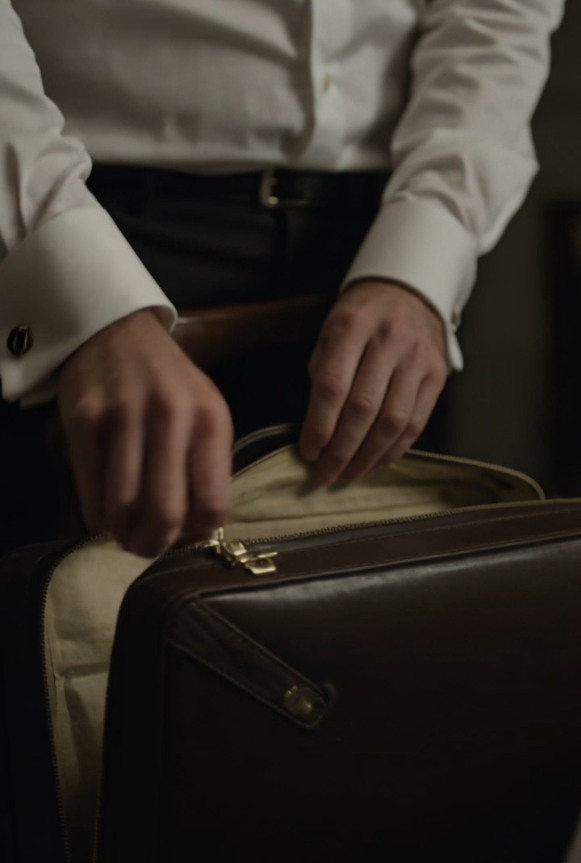
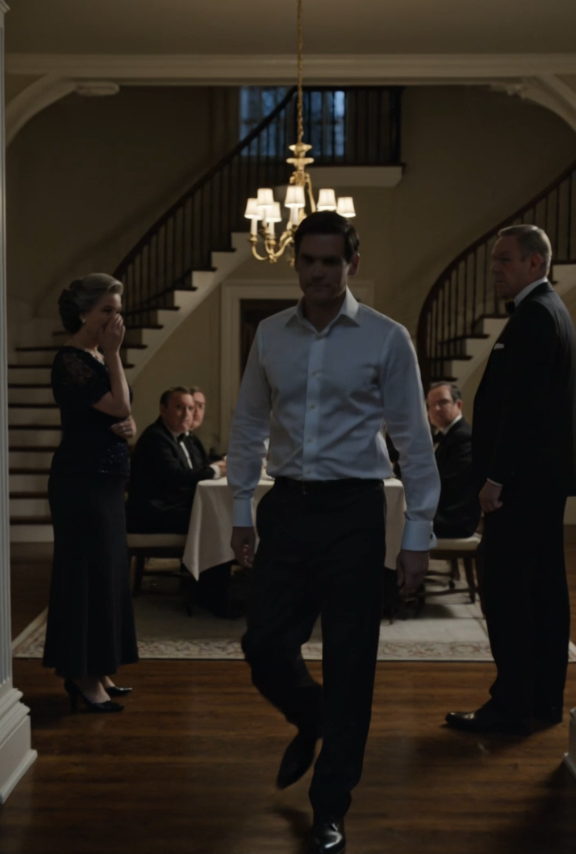
He left the dining room, crossed the hall, went upstairs, and packed one suitcase. No one followed immediately. Families accustomed to taking someone for granted often believe departure is theatrical until the evidence acquires shape. By the time he returned to the foyer with his coat on and keys in hand, the others had gathered at the staircase and archway in varying states of offense and disbelief.
His mother descended first. “You are overreacting.”
He almost told her that overreaction belongs to people who still expect to be heard. What he felt was quieter than that. It was resolution.
“I’m done,” he said.
“With what?”
He looked around the house where every polished surface reflected a childhood of self-erasure. “With being the son you remember only when you need something from him.”
The sentence landed hardest on his father, perhaps because it was phrased not as accusation but as fact.
For a second the older man seemed on the verge of saying something honest—something that might have mattered years ago. Instead he fell back on authority. “If you walk out now, don’t expect to come back when life becomes difficult.”
Julian rested his hand on the door.
“Life has been difficult here,” he said. “The difference is that outside this house, at least it will belong to me.”
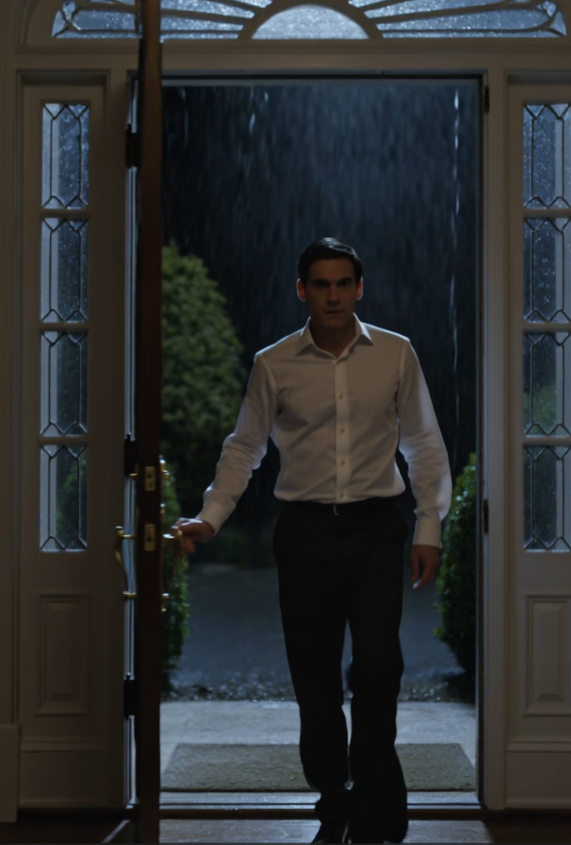
Then he opened the door.
Cold night air entered at once, carrying the scent of rain and wet stone. It touched his face like awakening.
Behind him his mother’s voice broke. “Julian—”
He paused, but he did not turn.
Not because he did not love them. That was the tragedy of it. He did. Children do not stop loving their parents simply because they are poorly loved in return. They stop surviving the terms under which that love is demanded.
When the door closed, the sound was not loud.
Yet it moved through the Mercer house like a crack forming in glass.
The devastation did not arrive immediately. At first there was anger, then indignation, then the brittle confidence that he would return after a night or two. But morning came without him. So did the next evening, and the one after that. The practical gaps appeared first. Bills forgotten.
Nathan stranded without help. Their mother unable to find the document Julian always kept in order. Their father realizing no one had reminded him of his medical appointment. But beneath inconvenience something deeper gathered—the dawning recognition that the quiet son they had treated as supplementary had been, in a thousand unseen ways, holding the household together.
Months later, when his mother stood in his abandoned room and touched the dust-free desk he had always kept meticulously ordered, she began to cry not because he had left, but because she was finally forced to confront the possibility that he had spent years leaving in smaller ways while living under her roof. Every unasked question. Every praise withheld. Every easy assumption that he would absorb hurt and remain.
Julian built a life elsewhere—not easy, not painless, but honest. He rented a narrow apartment with unreliable heating and a window that looked onto a fire escape instead of a garden. He learned what it meant to cook for one without sadness. He made friends who noticed when he grew quiet and asked why.
He worked too hard, healed too slowly, and sometimes woke from dreams in which he was still walking through the Mercer foyer, suitcase in hand, waiting for one voice to stop him in a way that mattered.
But he had done the most difficult thing already.
He had left before the house could finish convincing him he deserved its coldness.
And back in that polished home where love had once been distributed like inheritance, the people who remained came at last to understand that the child who asks for least often carries the deepest hunger. By the time they recognized the shape of their cruelty, it was no longer surrounding them invisibly as habit. It stood in every room as absence.
And absence, unlike blame, cannot be argued with.